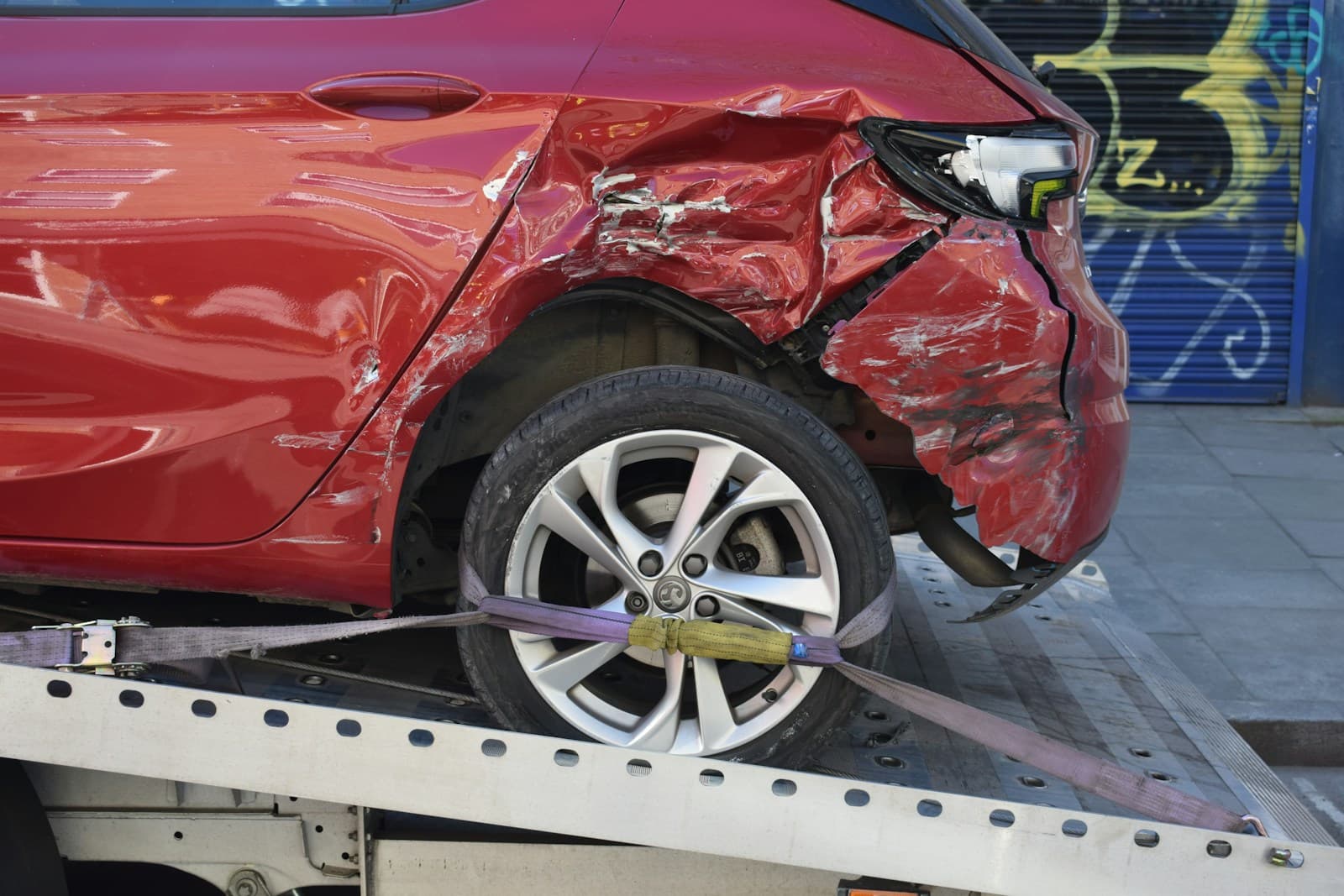
You've driven for 40+ years with a clean record, but one serious at-fault accident can triple your premium overnight — and most carriers don't clearly explain how long you'll pay the surcharge or which state programs might still offer you affordable coverage.
How At-Fault Accidents Affect Senior Driver Premiums
A single serious at-fault accident can increase your premium by 40% to 300% depending on the severity, your state, and your carrier. The variation is enormous: in California, a $50,000+ bodily injury claim might add $1,200–$1,800 annually to your premium, while in Florida the same accident could add $2,400+ per year. Seniors often face steeper percentage increases than younger drivers because carriers price age and accident history together — you're now in a higher-risk actuarial cell.
The surcharge typically lasts 3–5 years from the accident date, not from when you reported it or when the claim closed. Most states allow carriers to apply surcharges for three years, but some — including California and Massachusetts — extend to five years for serious accidents involving injury or significant property damage. Your declaration page won't always show the surcharge as a separate line item; it's often baked into your base rate, which is why comparing your pre-accident and post-accident premiums is the only way to see the true cost.
If you're on a fixed retirement income, a $150/month increase becomes $1,800 annually — money that wasn't in your budget six months ago. Carriers won't reduce the surcharge mid-term, and they won't remind you when it expires. You'll need to track the accident date yourself and request a re-quote once you're outside the lookback window, which varies by state and carrier.
Why Switching Carriers Immediately After an Accident Usually Backfires
Your instinct after a major rate increase might be to shop around immediately. That's usually the wrong move. When you apply for a new policy, the carrier pulls your motor vehicle report and CLUE report — they see the recent at-fault accident and price you as a new customer with a serious recent claim. You lose all tenure-based discounts: continuous coverage, policy longevity, multi-policy bundling seniority. For senior drivers who've been with the same carrier for 10+ years, those discounts often total 15–25% of the premium.
A senior driver in Texas who switched carriers two months after an at-fault accident paid $2,340/year with the new insurer versus $1,980/year had they stayed with their original carrier — despite the accident surcharge. The difference was a 20% long-term customer discount and a 10% claim-free discount that was grandfathered for non-injury claims prior to the recent accident. Switching erased both.
The smarter strategy: stay with your current carrier through the surcharge period unless they non-renew you. Once the accident ages beyond your state's lookback period — typically 3 years for property damage, 5 years for bodily injury — then shop aggressively. At that point you're a senior driver with a clean recent record, and you can leverage mature driver course discounts and low-mileage programs that some carriers weight more heavily than others.
Compare rates from carriers that specialize in senior drivers
Mature driver discounts, low-mileage rates, and coverage reviews — see what you're actually eligible for.
Get Your Free Quote✓ Mature Driver Discounts✓ No Obligation✓ Licensed Carriers✓ All 50 States
State Programs and Assigned Risk Pools for Senior Drivers
If your carrier non-renews you after a serious accident, you're not without options, but the next step depends entirely on your state. Some states operate assigned risk pools (also called residual markets) that guarantee coverage to drivers who can't obtain it in the voluntary market. California's California Automobile Assigned Risk Plan (CAARP), for example, assigns you to a participating carrier that must offer you state-minimum liability coverage. Premiums are higher than voluntary market rates — often 25–50% above standard — but it's guaranteed coverage.
Other states don't have formal assigned risk pools but require all carriers writing auto policies in the state to participate in a "shared market" program. North Carolina and Massachusetts use this model. In North Carolina, if you're refused coverage by two carriers, you can apply through the North Carolina Reinsurance Facility, which assigns your risk to a carrier. These programs don't discriminate by age, but they do require proof of refusal from the voluntary market.
Senior drivers in states with mature driver course mandates — like Florida, which requires insurers to offer discounts for approved courses — can sometimes offset part of the accident surcharge by completing a state-certified defensive driving course. The discount is typically 5–15%, applied for three years. It won't erase the accident surcharge, but on a $2,000 annual premium, a 10% mature driver discount saves $200/year. That's $600 over three years for an 8-hour online course that costs $25–$40.
Coverage Adjustments That Make Sense After an Accident
After a serious at-fault accident, many senior drivers reflexively consider dropping collision or comprehensive coverage to lower the premium. That's sometimes correct, but not always. If your vehicle is paid off and worth less than $4,000–$5,000, the math often supports dropping collision. A 2015 sedan worth $4,200 with a $1,000 deductible leaves you with a maximum $3,200 payout in a total loss — but collision coverage on that vehicle might cost $400–$600 annually after the accident surcharge is applied. You're paying 12–19% of the vehicle's value annually to insure it.
Comprehensive coverage is different. It covers theft, vandalism, weather damage, and animal strikes — perils unrelated to your driving. The cost is typically much lower than collision ($150–$300/year), and dropping it saves less while leaving you exposed to risks you can't control. If you park in a driveway in a hail-prone state or a region with high deer collision rates, keeping comprehensive usually makes sense even on an older paid-off vehicle.
Don't reduce liability limits to save money. If the accident that triggered the surcharge involved $50,000 in bodily injury, you now understand exactly how fast those costs accumulate. Dropping from 100/300/100 to state minimums might save $200–$400 annually, but it leaves you personally liable for anything beyond the policy limits. For senior drivers with retirement accounts, home equity, or other assets, that's a catastrophic financial risk. Liability is the one coverage you should never underbuy, especially after you've already filed a serious claim.
How Medical Payments Coverage and Medicare Interact After an Accident
If you're 65 or older and on Medicare, you might assume medical payments coverage (MedPay) is redundant. It's not. Medicare doesn't cover every cost immediately after a car accident — it has deductibles, copays, and gaps. MedPay on your auto policy covers medical expenses for you and your passengers regardless of fault, and it typically pays out before Medicare processes claims. For a senior driver recovering from injuries after an at-fault accident, MedPay can cover ambulance bills, emergency room copays, and initial treatment costs without triggering Medicare's complex secondary payer rules.
In no-fault states like Florida or Michigan, Personal Injury Protection (PIP) is mandatory and works similarly but with higher limits — often $10,000 or more. PIP covers your medical bills and lost wages (if you're still working part-time) regardless of who caused the accident. For senior drivers in these states, PIP is your primary payer before Medicare, which reduces out-of-pocket costs and speeds up reimbursement.
Carrying $5,000–$10,000 in MedPay costs roughly $50–$150 per year in most states. If you were injured in the accident that caused your rate increase, you've already seen how quickly medical bills accumulate. That coverage often pays for itself in a single incident and doesn't count against your liability limits.
When the Surcharge Ends and How to Shop Strategically
Your carrier won't notify you when the accident surcharge expires. Most surcharges drop off automatically at renewal once the accident falls outside the state's lookback period, but not all carriers use the same window. Some apply surcharges for exactly three years from the accident date; others use a "three-year rolling window" that checks your record at each renewal. The difference can cost you 6–12 months of unnecessary surcharges if your renewal happens to fall before the exact three-year mark.
Six months before the accident's third anniversary (or fifth, if it involved serious injury), request a re-quote from your current carrier and two competitors. Tell them explicitly: "I had an at-fault accident on [date]. I'm approaching the end of the surcharge period and want to compare rates assuming a clean record going forward." Many carriers will provide a future-dated quote showing what your rate would be once the accident ages out. That gives you a clear comparison point.
This is also the time to maximize senior-specific discounts you might not have been using. If you've retired and now drive fewer than 7,500 miles per year, ask about low-mileage discounts — they typically save 5–15%. If you haven't taken a mature driver course in the last three years, complete one before shopping; the discount applies immediately and signals to carriers that you're actively managing your risk. The combination of an aged-out accident, a mature driver discount, and a low-mileage profile can often get you back to pre-accident rates or close to it.
State-Specific Considerations for Senior Drivers After an Accident
Rate increases and surcharge durations vary significantly by state, and senior drivers need to understand their state's specific rules. In California, Proposition 103 limits how much carriers can surcharge for a first accident — typically no more than doubling your premium — but the surcharge can last up to five years for serious accidents. California also prohibits carriers from using your credit score, which protects seniors whose credit may have declined due to fixed income or medical expenses unrelated to driving.
In Florida, carriers can apply accident surcharges for three years, but the state mandates a mature driver course discount for seniors who complete an approved program. Florida also has high minimum PIP requirements ($10,000), which increases base premiums but provides strong medical coverage regardless of fault — critical for senior drivers managing Medicare and supplemental insurance.
Texas allows carriers wide discretion in surcharge amounts and durations, and it's one of the few states where shopping immediately after an accident sometimes makes sense if you find a carrier that weights tenure less heavily than others. Texas also doesn't mandate mature driver discounts, but many carriers offer them voluntarily — you must ask explicitly. Each state's Department of Insurance website lists approved mature driver courses, mandatory discount programs, and assigned risk pool information if you need guaranteed coverage.