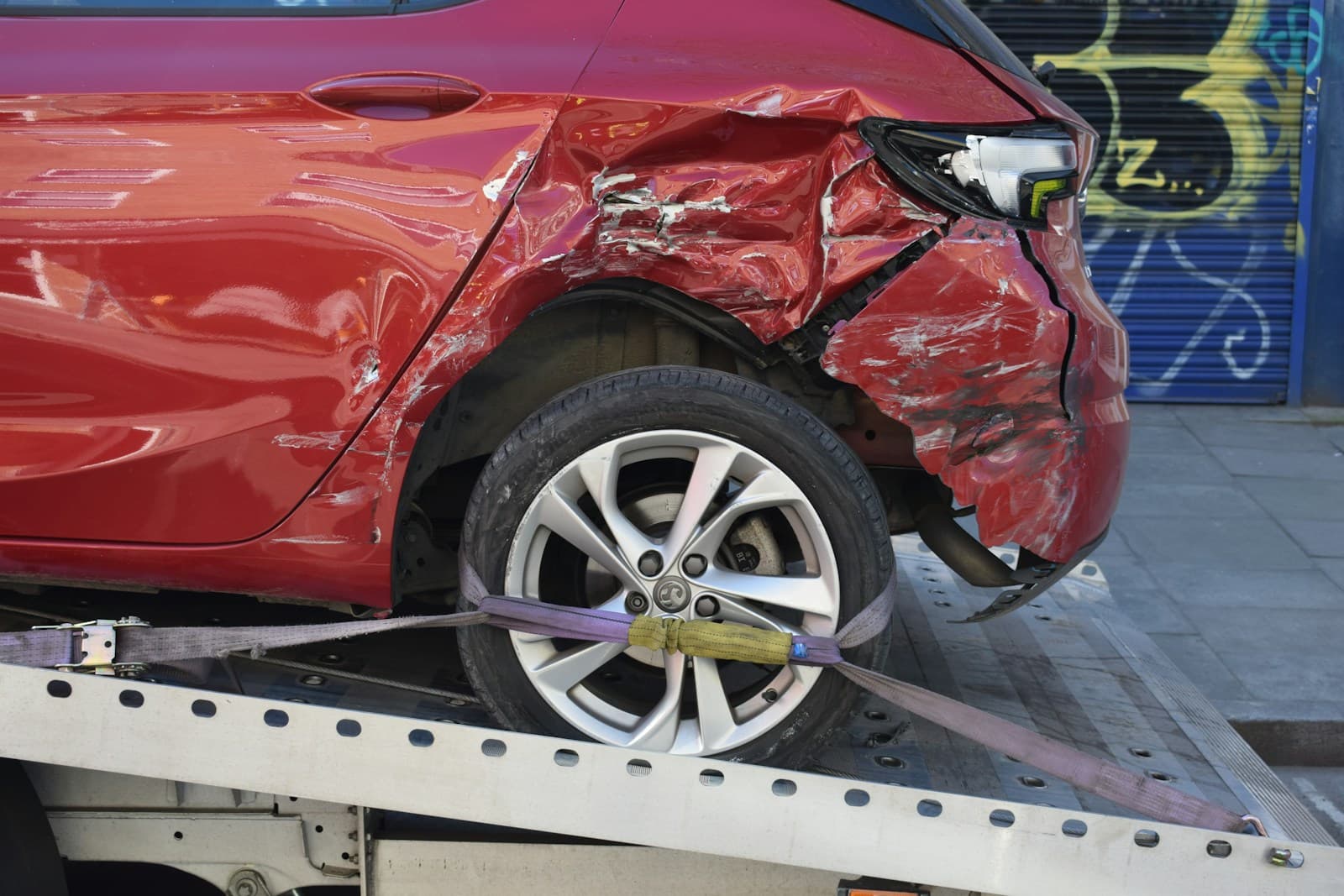
You just made your last car payment, and now you're wondering whether you still need the same insurance coverage you've carried for years — especially with premiums creeping up despite your clean driving record.
What Changes When You Pay Off Your Vehicle
The bank no longer requires you to carry collision and comprehensive coverage once your loan is satisfied, but that doesn't mean those coverages automatically stop making sense. The real question is whether the annual premium cost justifies the potential payout based on your vehicle's current actual cash value and your financial ability to replace it without insurance.
For a vehicle worth $8,000, you might pay $800–$1,200 annually for collision and comprehensive coverage combined, depending on your deductible and location. If your vehicle depreciates to $5,000 over the next two years while you continue paying the same premium, you're approaching a point where you'll have paid in premiums what the vehicle is worth — and any claim payout will be further reduced by your deductible.
This calculation matters differently at age 65+ than it did at 45. If you're on a fixed retirement income and have $10,000 in accessible savings, you may be in a stronger position to self-insure a $6,000 vehicle than to continue paying $900 annually for coverage that maxes out at that vehicle's depreciated value minus your deductible. But if that same $6,000 represents your emergency fund, the decision flips.
The Strategic Middle Ground Most Insurers Don't Mention
Dropping to liability-only is the default suggestion, but there's a more nuanced approach that protects your specific risk profile as a senior driver: keeping comprehensive while dropping collision, or raising both deductibles to $1,000 or higher.
Comprehensive coverage costs roughly 30–40% less than collision in most states and protects against theft, vandalism, weather damage, and animal strikes — risks that have nothing to do with your driving ability and everything to do with where you park and pure chance. A deer strike in a rural area or hail damage during storm season can total a paid-off vehicle just as easily as a collision, and comprehensive claims typically don't increase your rates the way at-fault collision claims do.
Collision coverage, by contrast, pays for damage you cause to your own vehicle in an at-fault accident. If you have a decades-long clean record, drive fewer than 7,000 miles annually in retirement, and avoid high-risk driving conditions like rush hour or night driving, your statistical likelihood of filing a collision claim is significantly lower than a working-age commuter. This is where the cost-benefit analysis often tips toward dropping collision first.
Raising your deductible from $500 to $1,000 can reduce your collision and comprehensive premiums by 15–25% immediately. If you can cover a $1,000 repair out of pocket without financial strain, this is often the most cost-effective adjustment — you keep the catastrophic protection while lowering the annual cost.
Compare rates from carriers that specialize in senior drivers
Mature driver discounts, low-mileage rates, and coverage reviews — see what you're actually eligible for.
Get Your Free Quote✓ Mature Driver Discounts✓ No Obligation✓ Licensed Carriers✓ All 50 States
How State Requirements and Programs Affect Your Coverage Decision
Every state mandates minimum liability coverage, and those minimums vary widely — but they're almost never adequate for senior drivers with assets to protect. The most common state minimum is 25/50/25 ($25,000 per person for bodily injury, $50,000 per accident, $25,000 for property damage), but a single serious accident can exceed those limits in under two minutes of emergency room care.
If you own a home, have retirement accounts, or carry any assets beyond your paid-off vehicle, you need liability limits well above state minimums — typically 100/300/100 or higher. An at-fault accident that exceeds your liability coverage can result in a lawsuit targeting your home equity or retirement savings, and you can't discharge that debt through bankruptcy in many cases. This is not a coverage to reduce just because your vehicle is paid off.
Several states offer mature driver course discounts that are mandated by law, not optional carrier programs. Completing an approved course — typically 4–8 hours, available online in most states — can reduce your premium by 5–15% for three years. In states like New York, Florida, and Illinois, insurers must offer the discount if you complete an approved course. The course costs $20–$40 in most cases, and the premium reduction typically recovers that cost within 2–3 months.
Some states also operate low-mileage or usage-based insurance programs specifically designed for drivers who no longer commute. If you drive fewer than 7,500 miles annually — common for retirees — you may qualify for mileage-based discounts of 10–25%. These programs vary by state and carrier, but they reward the behavioral reality of retirement driving patterns rather than penalizing age as a blanket risk factor.
Medical Payments Coverage and Medicare: What Actually Coordinates
One coverage that becomes more complex after age 65 is medical payments coverage (MedPay), which pays for your medical expenses after an accident regardless of fault. Many senior drivers carry this coverage out of habit from their working years, unaware that Medicare now functions as their primary health coverage — including for auto accident injuries.
Medicare Part A and Part B will cover your accident-related medical expenses, but there's a critical gap: Medicare doesn't pay immediately at the scene or during transport, and it doesn't cover your deductible or the 20% coinsurance under Part B. MedPay can cover those out-of-pocket costs, but you need to understand the coordination of benefits to avoid paying for redundant coverage.
If you carry a Medicare Supplement plan (Medigap) that covers your deductibles and coinsurance, MedPay becomes largely redundant, and you can often drop it or reduce it to the minimum available level. If you're on Original Medicare without a supplement, carrying $5,000–$10,000 in MedPay can cover the gap between what Medicare pays and what you owe out of pocket, especially in the first 48 hours after an accident when Medicare hasn't yet processed claims.
Some states offer Personal Injury Protection (PIP) instead of or in addition to MedPay. PIP is mandatory in no-fault states and covers medical expenses plus lost wages. Since you're likely not earning wage income in retirement, the lost wage portion provides no value, but you're still required to carry it in no-fault states. Check whether your state allows you to reduce PIP limits or opt out if you have Medicare — rules vary significantly by state.
When Full Coverage Still Makes Sense on a Paid-Off Vehicle
There are clear situations where keeping full coverage remains the right financial decision even after your loan is satisfied. If your vehicle is worth more than $10,000 and you don't have liquid savings equal to that amount, paying $800–$1,200 annually for comprehensive and collision coverage is cheaper than the risk of replacing the vehicle out of pocket after a total loss.
If you live in an area with high rates of vehicle theft, frequent severe weather, or significant animal collision risk, comprehensive coverage continues to provide value regardless of your driving habits. A stolen 2018 sedan in a high-theft metro area can represent a $15,000 loss, and your driving record is irrelevant to that risk.
Senior drivers who lease a replacement vehicle or enter a new loan after paying off their previous car will be required to carry full coverage again, but this is also a moment to reassess coverage limits and deductibles. You're not locked into the same policy structure you carried for the past decade — this is an opportunity to adjust based on your current financial situation and risk tolerance.
How to Compare Your Options Without Starting Over
You don't need to switch insurers to adjust your coverage — start by calling your current carrier and asking for a quote comparison between your current coverage and three alternatives: liability-only, liability plus comprehensive, and your current coverage with a $1,000 deductible. Request all three quotes in writing with annual premium totals, and ask specifically about mature driver discounts, low-mileage discounts, and any telematics programs available to drivers in your age group.
If you've been with the same insurer for more than five years, you likely qualify for a loyalty discount, but that discount can quietly disappear if newer competitors are offering better base rates. Comparing quotes from at least two other carriers gives you a baseline to determine whether your loyalty discount is actually saving you money or just reducing an inflated base rate.
When comparing quotes, make sure you're comparing identical liability limits, not just the collision and comprehensive decision. A quote that's $200 cheaper but drops your liability from 100/300/100 to 50/100/50 is not a better deal — it's a coverage reduction that leaves you exposed. Write down the exact coverage limits from your current policy before you start comparing, and use those as your baseline.
Most state insurance departments publish average premium data by age group and coverage level, and several states operate consumer hotlines specifically for senior drivers navigating coverage questions. These are free resources staffed by people who understand the state-specific programs and requirements that apply to your situation, and they have no financial incentive to sell you a particular policy.