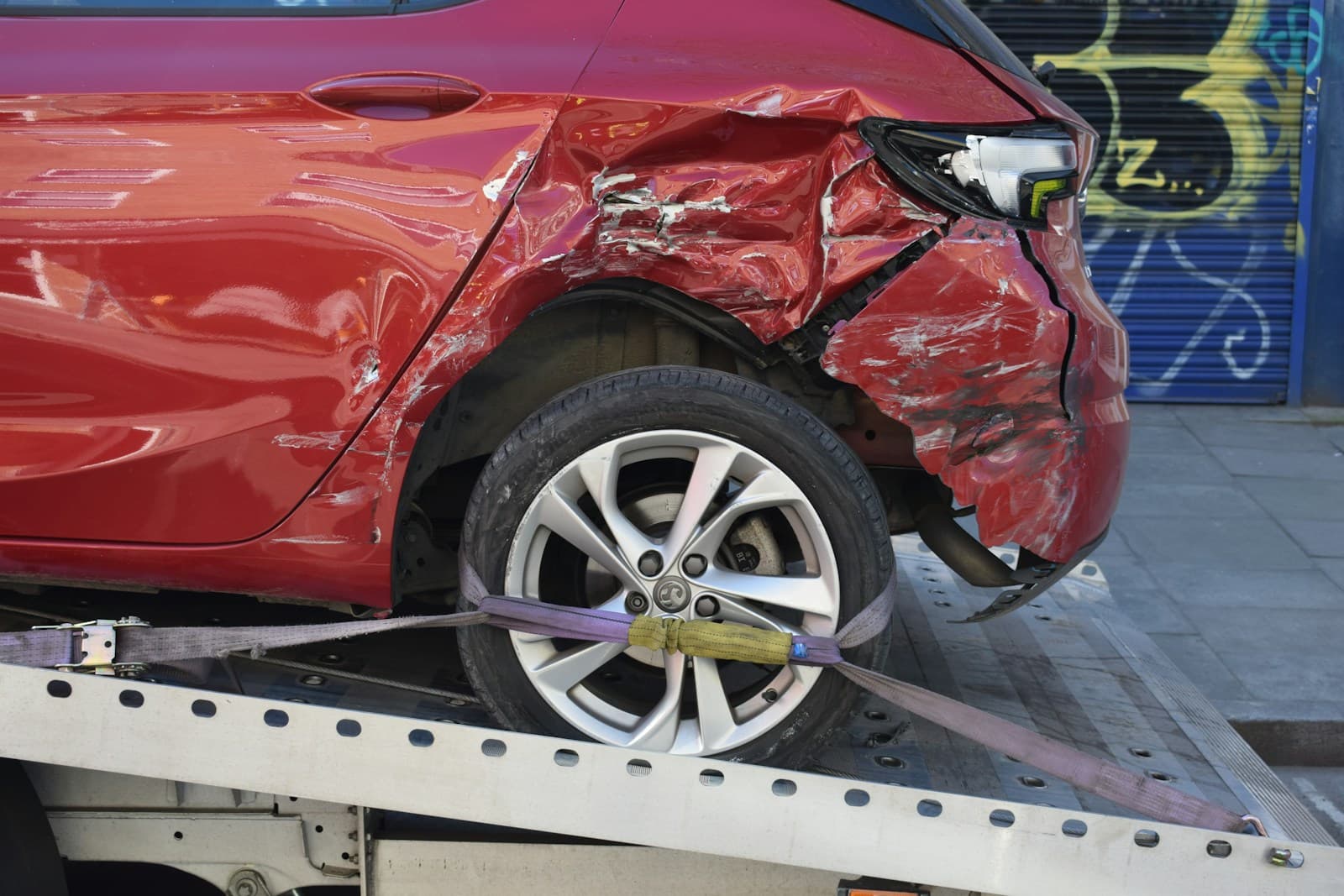
Two DUI convictions put you in the highest-risk insurance category regardless of age, but senior drivers face compounding rate factors that most comparison tools and generic advice don't account for — and state programs that can reduce costs by 15–40% if you know where to look.
Why Two DUIs Hit Senior Drivers Harder Than Younger High-Risk Drivers
A second DUI conviction typically increases your insurance premium by 180–300% over a standard rate, depending on your state. For senior drivers aged 65 and older, that multiplier applies to a baseline rate that's already climbing due to actuarial age factors — most carriers begin increasing rates for drivers over 70, with steeper jumps after 75. This means you're facing two separate rate penalties that compound rather than simply add together.
Most online rate calculators assume a middle-aged driver with average credit and no claims history when they quote "DUI rates." As a senior driver, your actual rate will reflect your age bracket, the years elapsed since each conviction, whether you're still required to carry SR-22 certification, and your state's lookback period for violations. In California, for example, DUI convictions remain on your driving record for 10 years; in Florida, they stay for 75 years. That difference fundamentally changes your rate trajectory and available coverage options.
The practical result: a 68-year-old driver in Texas with two DUIs from 2019 and 2022 will typically pay $320–$480/mo for state minimum liability coverage, compared to $95–$140/mo for a senior with a clean record in the same ZIP code. Full coverage on a financed vehicle can exceed $650/mo. These aren't scare numbers — they're the market reality for drivers in the highest-risk classification who are also aging into a higher-rated actuarial bracket.
SR-22 Requirements and What They Actually Cost Senior Drivers
After a second DUI, most states require you to file an SR-22 certificate — a form your insurance carrier submits to your state's DMV proving you carry at least the minimum required liability coverage. The SR-22 itself typically costs $15–$50 to file, but the real cost is access: not all carriers write policies for drivers who need SR-22 certification, and those that do charge significantly higher premiums because you're classified as high-risk.
SR-22 requirements usually last three years from your license reinstatement date, though some states mandate five years after a second DUI. During this period, any lapse in coverage — even one day — triggers an automatic notice to the DMV, which can result in immediate license suspension. For senior drivers on fixed income, this creates a financial tightrope: you must maintain continuous coverage at high-risk rates with zero margin for missed payments or policy cancellations.
Some senior drivers assume they can simply stop driving and cancel their insurance until the SR-22 period expires. This doesn't work. The SR-22 clock stops when your policy lapses, meaning a three-year requirement can stretch to five or six years if you don't maintain continuous coverage. If you're not driving, you'll need a non-owner SR-22 policy, which costs $45–$85/mo depending on your state and violation history — less than a standard policy, but still a mandatory monthly expense with no vehicle to show for it.
Compare rates from carriers that specialize in senior drivers
Mature driver discounts, low-mileage rates, and coverage reviews — see what you're actually eligible for.
Get Your Free Quote✓ Mature Driver Discounts✓ No Obligation✓ Licensed Carriers✓ All 50 States
Which Carriers Actually Write Policies for Seniors With Two DUIs
After two DUI convictions, you're typically excluded from standard and preferred carriers — the companies that advertise heavily and offer mature driver discounts to seniors with clean records. Your available market shifts to non-standard and high-risk carriers, which include The General, Direct Auto, Acceptance Insurance, and state assigned-risk pools. Not all of these carriers operate in every state, and their appetite for senior drivers with multiple DUIs varies significantly by region.
State assigned-risk pools — sometimes called "insurance of last resort" — guarantee you can obtain coverage but at the highest possible rates. In North Carolina, the NCREIP (Reinsurance Facility) assigns high-risk drivers to participating carriers; in Maryland, the MAIF (Maryland Auto Insurance Fund) serves a similar function. Monthly premiums through assigned-risk programs typically run $380–$550/mo for minimum liability coverage, with no discounts for low mileage, mature driver courses, or bundling.
A handful of regional carriers specialize in senior high-risk drivers and may offer slightly better rates than assigned-risk pools if you meet specific criteria: completion of a state-approved DUI education program, installation of an ignition interlock device for a required period, three years since your most recent conviction, and no other moving violations during that time. These carriers rarely advertise online, so you'll typically need to work with an independent agent who writes high-risk policies in your state. Expected rate range: $280–$420/mo for liability coverage, which is still steep but 15–25% below assigned-risk pricing.
State-Specific Programs That Can Lower Your Premium by 15–40%
Even in the high-risk market, several state-specific programs can reduce your premium if you qualify. Twenty-three states mandate that carriers offer a mature driver course discount to policyholders aged 55 or older who complete an approved defensive driving or driver improvement course. The discount typically ranges from 5–15% and applies for three years before you need to recertify. Critically, this discount applies even to high-risk policies — carriers must offer it regardless of your violation history.
In California, the DUI education and treatment programs required for license reinstatement (SB 38 programs) can sometimes qualify for a "risk reduction" discount of 8–12% with high-risk carriers if you complete all phases and maintain sobriety monitoring for 18 months beyond the required period. Florida's Advanced Driver Improvement course offers a 10% discount that stacks with the mature driver discount if you're 55 or older, potentially reducing your rate by nearly 20% combined. New York's PIRP (Point and Insurance Reduction Program) provides both point reduction and a mandatory 10% insurance discount for three years.
Most carriers will not automatically apply these discounts to high-risk policies — you must request them specifically and provide proof of completion. If you completed a mature driver course two years ago but didn't notify your current carrier, call them this week. The discount applies retroactively in some states, meaning you may be owed a partial refund. This is not theoretical: AARP's driver safety program reports that fewer than 30% of eligible senior drivers in the high-risk market claim the mature driver discount they've already qualified for.
Full Coverage vs. Liability-Only: The Fixed-Income Calculation
If you own your vehicle outright — no loan, no lease — you're not legally required to carry collision or comprehensive coverage. For a senior driver paying $420/mo for full coverage after two DUIs, dropping to liability-only can cut your premium to $190–$240/mo, a savings of $2,160–$2,880 per year. That's a significant portion of a fixed retirement income, and the math often favors liability-only even if your vehicle has moderate value.
The break-even calculation: if your vehicle is worth $6,000 and your collision/comprehensive deductible is $1,000, you're paying roughly $230/mo ($2,760/year) to insure a maximum potential payout of $5,000 after deductible. You'll recover your annual premium cost only if you total your vehicle within 22 months. If your vehicle is older than 10 years or worth less than $4,000, liability-only almost always makes financial sense for senior drivers in the high-risk category.
One critical exception: if you live in a state with frequent severe weather (hail in Texas and Oklahoma, hurricanes in Florida and the Carolinas), comprehensive coverage may be worth retaining even if you drop collision. Comprehensive typically costs $40–$70/mo on a high-risk policy and covers weather damage, theft, and vandalism — events that aren't related to your driving record. You can carry comprehensive without collision, which gives you storm protection while avoiding the higher cost of accident coverage.
Medical Payments Coverage and Medicare: What Senior Drivers Actually Need
Most senior drivers aged 65 and older already have Medicare Part A and Part B, which cover hospitalization and medical services after an accident. This raises a common question: do you still need medical payments coverage (MedPay) or personal injury protection (PIP) on your auto policy? The answer depends on your state and your Medicare supplement situation.
Medicare is always secondary to auto insurance for accident-related injuries, meaning your auto policy's medical coverage pays first, up to its limit, before Medicare kicks in. If you carry a $5,000 MedPay limit and incur $12,000 in emergency room and treatment costs after an accident, MedPay pays the first $5,000 and Medicare covers the remaining $7,000 (minus any deductibles or copays). In no-fault states like Florida, Michigan, and New York, PIP coverage is mandatory regardless of your Medicare status, so you don't have a choice.
For senior drivers in at-fault states, the decision comes down to gap coverage. If you have a comprehensive Medicare Supplement (Medigap) plan that covers Part A and Part B deductibles and copays, you may not need MedPay at all — your supplement will handle the costs Medicare doesn't cover. If you're on Original Medicare without a supplement, a small MedPay policy ($2,000–$5,000 limit) can cover your out-of-pocket costs and costs $18–$35/mo even on a high-risk policy. That's often worth it for the peace of mind, particularly if you're managing medication costs or other fixed medical expenses and can't absorb a $1,500 emergency room deductible.
How Long You'll Pay High-Risk Rates and What Comes Next
DUI convictions affect your insurance rates for 3–10 years depending on your state's lookback period, but the steepest rate impact occurs in the first three years after each conviction. If your second DUI occurred in 2022, you'll see the most dramatic rate decrease between 2025 and 2027 as that conviction ages past the three-year mark. Expect your premium to drop 20–35% at that milestone if you've maintained continuous coverage and added no new violations.
After five years from your most recent DUI, you may qualify to move from a non-standard high-risk carrier back to a standard carrier, though you'll still pay more than a driver with a clean record. At the seven-year mark in most states, some carriers will begin offering you their standard senior rates with the mature driver discount applied, effectively treating you as a preferred-risk senior driver again. The total timeline from second DUI to full rate recovery typically runs 7–10 years, depending on your state and whether you've completed all court-ordered programs and maintained a spotless record during that period.
During this recovery period, every six-month policy renewal is an opportunity to re-shop your coverage. Carriers re-evaluate risk differently, and a company that wouldn't insure you in 2023 may offer you a competitive rate in 2026 once your violations have aged. Work with an independent agent who can quote you with multiple carriers simultaneously — your goal is to move out of the high-risk market as quickly as your driving record allows, and that requires active monitoring, not passive renewal with the same carrier year after year.