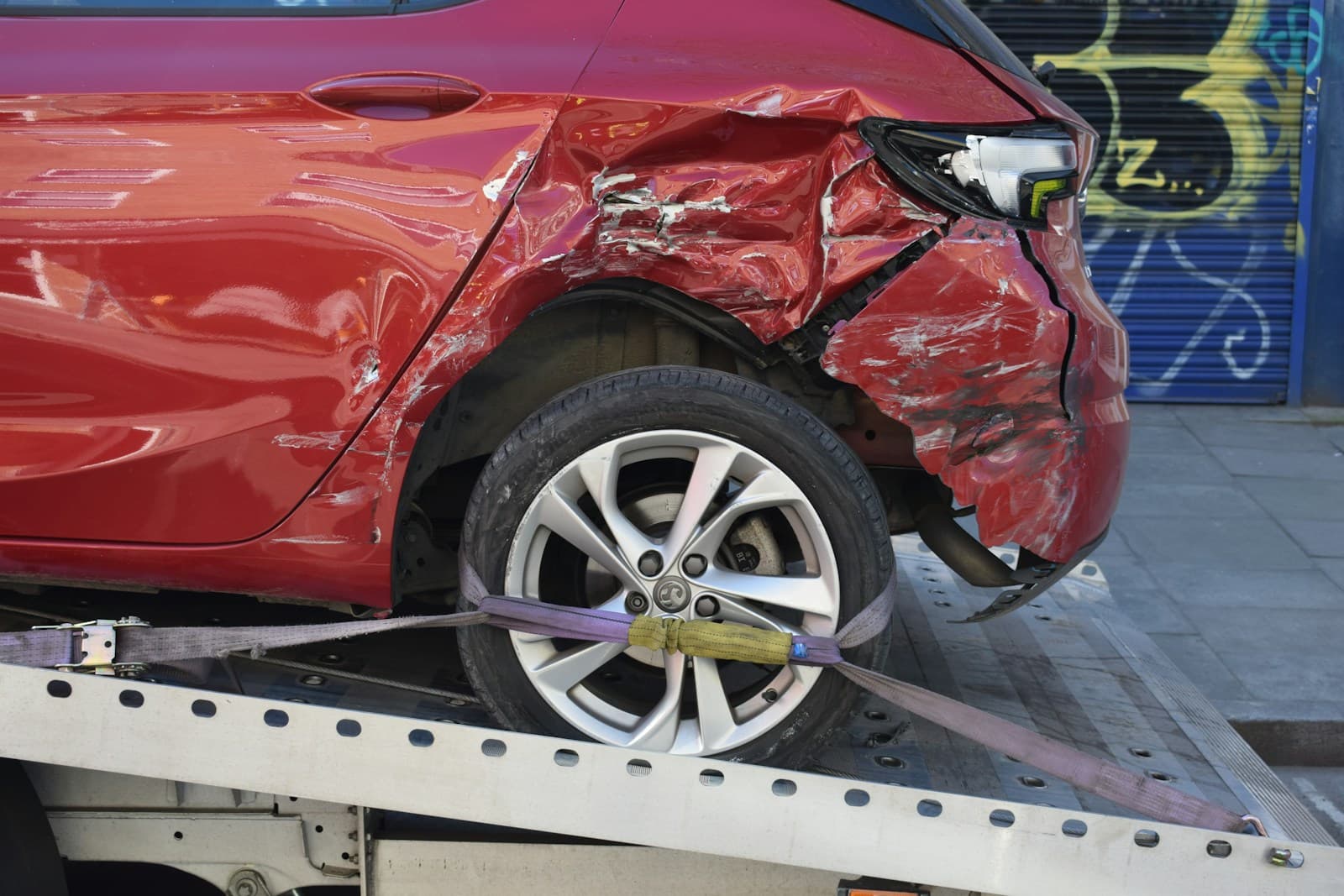
If you're a senior driver who picked up a speeding ticket or at-fault accident and saw your premium spike or your carrier drop you entirely, Dairyland specializes in non-standard coverage — but their rates and acceptance criteria work differently than what you experienced with your previous insurer.
Why Senior Drivers End Up Researching Dairyland After a Violation
Most senior drivers maintained clean records for decades with the same standard carrier, paying progressively lower rates through loyalty and safe driver discounts. A single at-fault accident or moving violation can trigger non-renewal from carriers like State Farm or Allstate, particularly for drivers over 70, leaving you searching for coverage in the non-standard market where Dairyland operates. The shock isn't just the violation itself — it's discovering that your 40-year relationship with an insurer offers no protection against immediate cancellation or a renewal offer with rates doubled.
Dairyland Insurance Company, founded in 1953 and now part of the Sentry Insurance Group, built its business model specifically around drivers who standard carriers reject or price prohibitively. For senior drivers, this means Dairyland evaluates your violation in isolation rather than compounding it with age-based risk adjustments the way most standard carriers do. A 68-year-old with one speeding ticket receives similar base consideration as a 45-year-old with the same violation, though state-specific rating factors still apply.
The trade-off is straightforward: Dairyland's base rates run 20–40% higher than what you paid as a preferred customer with a clean record, but they're often 30–50% lower than what a standard carrier quotes after adding violation surcharges to age-based increases. If you're comparing a $180/mo renewal quote from your current carrier against a $140/mo Dairyland quote, the savings are immediate and sustained for the 3–5 years most violations remain on your record.
Which Violations Dairyland Accepts for Senior Drivers
Dairyland writes policies for moving violations including speeding tickets 1–15 mph over the limit, failure to yield, improper lane changes, and single at-fault accidents with property damage under $5,000. They also cover drivers with one DUI or reckless driving conviction in most states, though acceptance criteria vary by state and your driving history prior to the violation. What matters most to Dairyland is the number and severity of incidents within the past three years, not your age at the time of the violation.
Senior drivers often face non-renewal for violations that wouldn't trigger cancellation for younger drivers, particularly minor at-fault accidents in parking lots or low-speed backing incidents. Standard carriers apply age-based risk models that treat a 72-year-old's backing accident as predictive of cognitive decline, while Dairyland evaluates it as a single incident with specific damage costs. This difference in underwriting philosophy explains why Dairyland quotes can come in 40–60% below what your previous carrier offered at renewal.
Dairyland typically declines coverage for drivers with multiple violations within 36 months, any violation combined with a license suspension, or at-fault accidents exceeding $10,000 in damages. They also restrict coverage in some states for drivers over 75 with recent violations, requiring state-specific review. If you accumulated points on your license from multiple tickets, your state's point system directly affects whether Dairyland will offer coverage and at what rate tier.
Compare rates from carriers that specialize in senior drivers
Mature driver discounts, low-mileage rates, and coverage reviews — see what you're actually eligible for.
Get Your Free Quote✓ Mature Driver Discounts✓ No Obligation✓ Licensed Carriers✓ All 50 States
How Dairyland Prices Senior Drivers Compared to Standard Carriers
Dairyland uses a non-standard rating model that weights violation type and claim history more heavily than age, producing counterintuitive results for senior drivers accustomed to age-based premium increases. A 70-year-old with one speeding ticket might pay $135/mo with Dairyland while a standard carrier quotes $195/mo for the same coverage limits, but a 70-year-old with a clean record would still pay less — around $95/mo — with a standard carrier if they'd accept you. The value proposition appears only after a violation makes you uninsurable in the standard market.
State-specific rate variations are extreme with non-standard carriers. Dairyland operates in 45 states but prices senior drivers with violations dramatically differently: a 68-year-old with one at-fault accident might pay $128/mo in Wisconsin, $167/mo in Texas, or $203/mo in Michigan for identical 100/300/100 liability coverage. These differences reflect state insurance regulations, mandatory coverage requirements, and local claim costs rather than your individual risk profile. Your state's Department of Insurance filing requirements determine whether Dairyland can offer discounts for mature driver courses or low mileage, which aren't universally available in the non-standard market.
Dairyland rarely offers the multi-policy bundling discounts or loyalty reductions you received from your previous carrier. Their business model assumes short-term relationships — most customers leave Dairyland within 3–5 years once their violations age off and they can return to standard market carriers. For senior drivers on fixed retirement income, this means your premium with Dairyland represents a transitional cost, not a permanent rate structure. Planning to switch back to a standard carrier once your record clears can save $600–$1,200 annually compared to staying with Dairyland long-term.
Coverage Options Dairyland Offers Senior Drivers
Dairyland provides state minimum liability coverage through full coverage with comprehensive and collision, but policy options are more restricted than standard carriers offer. Most senior drivers can purchase 100/300/100 liability limits, which provide $100,000 per person and $300,000 per accident for bodily injury plus $100,000 property damage — adequate for most retirement situations where asset protection matters more than minimum compliance. Dairyland also offers uninsured motorist coverage in states where it's not already mandatory, though the premiums run 15–25% higher than standard market rates for the same limits.
Comprehensive and collision coverage availability depends on your vehicle's age and value. Dairyland typically declines collision coverage on vehicles older than 12 years or valued below $4,000, which affects many senior drivers who own paid-off sedans from the early 2010s. If your 2012 Honda Accord is worth $5,800, Dairyland might offer collision with a $1,000 deductible at $47/mo, making the annual cost $564 to protect an asset that depreciates $600–$800 per year. The math rarely justifies full coverage on vehicles worth under $6,000, particularly when you're already paying elevated rates due to a violation.
Medical payments coverage through Dairyland functions differently than standard carriers because non-standard policies often exclude or restrict med pay to reduce claim costs. Senior drivers with Medicare Part B already have accident-related medical coverage, but Medicare doesn't cover all immediate emergency costs or the $226 Part B deductible in 2024. Dairyland offers $5,000 or $10,000 med pay limits in most states, costing $8–$15/mo, which can cover ambulance transport and emergency room deductibles before Medicare processes claims. The coverage duplicates some Medicare benefits but provides faster payment for providers who don't accept Medicare assignment.
State-Specific Considerations for Senior Drivers Using Dairyland
State insurance regulations determine whether Dairyland can offer mature driver course discounts, how violations affect your rates, and what coverage options are available. California requires all carriers including non-standard companies to offer a mature driver discount of up to 10% for drivers who complete an approved course, making a $145/mo Dairyland premium drop to $130/mo after completing a $25 online course. Florida mandates similar discounts but caps them at 10% for drivers 55 and older, while Texas leaves mature driver discounts optional and Dairyland doesn't offer them to Texas policyholders.
States with no-fault insurance systems like Michigan, New York, and Florida require personal injury protection (PIP) coverage that significantly increases Dairyland's premiums for all drivers. A 69-year-old Michigan resident with one speeding ticket might pay $187/mo for minimum coverage with Dairyland compared to $118/mo for the same driver in Ohio, with the difference almost entirely attributable to Michigan's mandatory unlimited PIP coverage before recent reforms. If you live in a no-fault state and are considering whether to maintain full coverage on an older vehicle, the PIP costs alone often exceed the value of collision coverage on cars worth under $8,000.
Some states restrict non-standard carriers from writing policies for drivers over certain ages or require additional underwriting review. Pennsylvania, New Jersey, and New York apply stricter oversight to non-standard policies for drivers over 75, sometimes requiring medical certifications or restricted coverage territories. Dairyland handles these state-specific requirements differently — in Pennsylvania they might require an annual driving record review for drivers over 75 with violations, while in Arizona no additional requirements apply. Checking your state's specific regulations through your Department of Insurance reveals whether age-based restrictions will affect your policy terms beyond the standard violation surcharges.
When Dairyland Makes Sense and When to Look Elsewhere
Dairyland delivers the most value to senior drivers who need coverage immediately after a violation, plan to maintain clean records going forward, and intend to shop for standard market coverage once the violation ages off in 3–5 years. If you're 67 with one at-fault accident, currently quoted $189/mo by your previous carrier or facing non-renewal, and can get $142/mo from Dairyland, the annual savings of $564 justifies the switch even though you're paying more than your pre-violation rate. The key is treating Dairyland as transitional coverage, not a permanent solution.
Senior drivers who own vehicles worth under $5,000 and only need liability coverage should compare Dairyland against state assigned risk pools and other non-standard carriers like The General, Bristol West, or Acceptance Insurance. Dairyland's liability-only rates for senior drivers with violations typically run $95–$140/mo depending on state and limits, which can be 20–35% higher than assigned risk pool rates in states like California, North Carolina, or Maryland. Your state's assigned risk pool operates as the insurer of last resort, usually offering lower rates than voluntary non-standard carriers but with slower claims service and limited coverage options.
If you've had multiple violations within three years, a DUI with another moving violation, or any accident involving injuries, Dairyland will likely decline coverage or quote rates 60–80% higher than their standard non-standard pricing. At that point, working with an independent agent who specializes in high-risk senior driver placement makes more sense than applying directly to Dairyland. Agents with access to 10–15 non-standard carriers can often find coverage $30–$50/mo cheaper than Dairyland's declined-risk quotes, though policy terms and claims service vary significantly across carriers most senior drivers have never heard of.