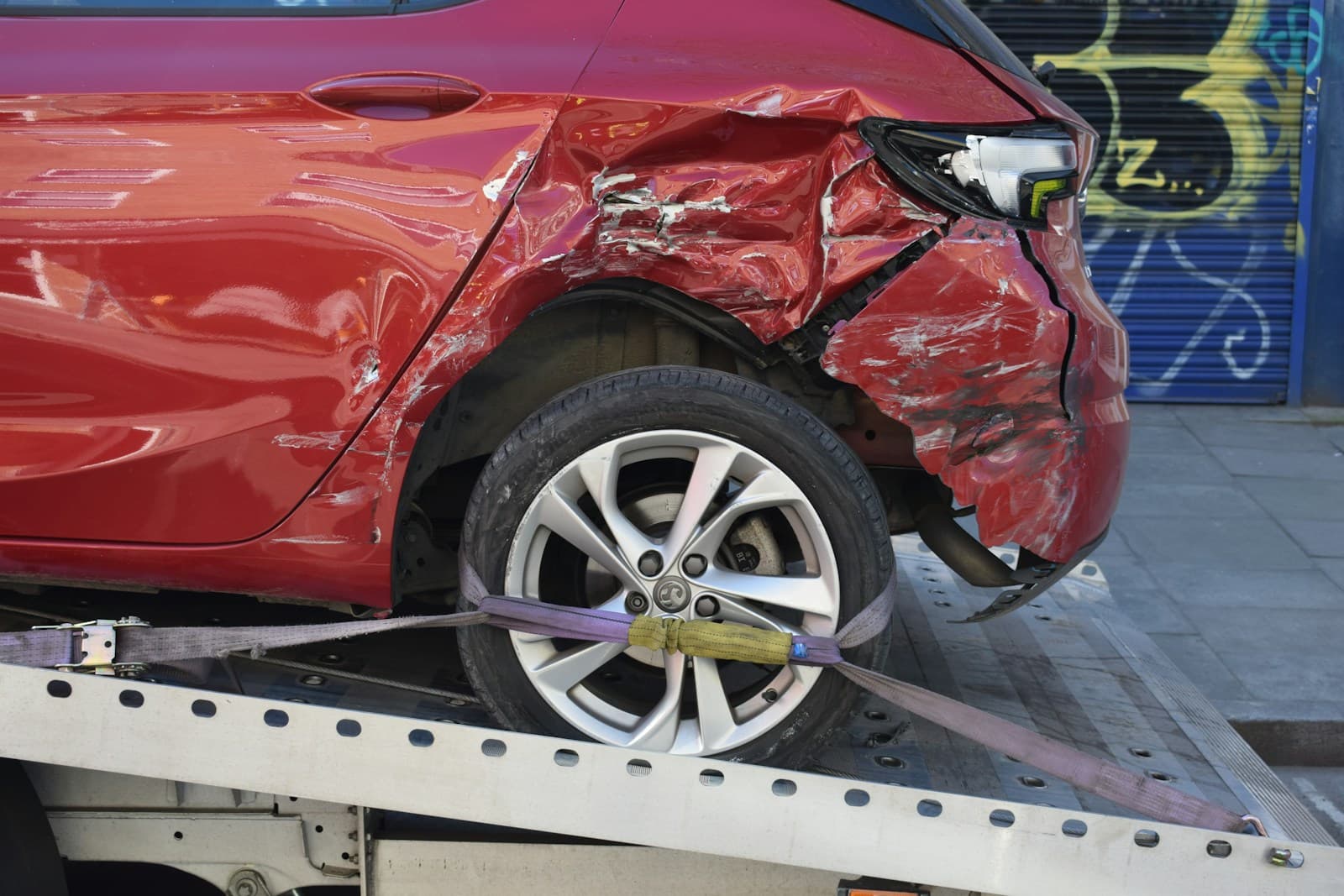
If you're 65 or older and involved in a car accident, understanding which coverage pays first — your auto insurance or Medicare — can save you thousands in out-of-pocket costs and prevent claim denials.
Why Medicare Doesn't Pay First After a Car Accident
Medicare operates under strict coordination of benefits rules that classify auto insurance as a primary payer for accident-related injuries. This means if you're in a crash at age 68, your car insurance medical payments (MedPay) or personal injury protection (PIP) must pay your hospital bills before Medicare processes any claim — even though you've paid Medicare premiums for years. Medicare becomes the secondary payer only after your auto coverage limits are exhausted.
This sequencing creates a critical decision point for senior drivers evaluating whether to drop medical coverage from their auto policy. If you eliminate MedPay or PIP to reduce premiums, Medicare still won't pay immediately — you'll face the full cost of emergency room visits, ambulance transport, and initial treatment until you can prove to Medicare that no auto coverage exists. That verification process typically takes 30 to 90 days, during which providers may send bills to collections or demand upfront payment.
The financial stakes vary dramatically by state. In fault-based states like California or Arizona, MedPay is optional and typically ranges from $1,000 to $10,000 in coverage, costing $3 to $8 per month. In no-fault states like Florida or Michigan, PIP is mandatory and covers $10,000 to unlimited benefits, with monthly costs ranging from $25 to $90 depending on the state and your zip code.
How Your State's Insurance System Changes the Medicare Interaction
The coordination between Medicare and auto insurance operates differently depending on whether your state uses a fault-based or no-fault system. In the 12 no-fault states — including Florida, Michigan, New York, and Pennsylvania — your own car insurance pays your medical bills regardless of who caused the accident, through personal injury protection (PIP) coverage. Medicare remains the secondary payer until those PIP limits exhaust, which in states like Michigan with unlimited PIP can mean Medicare never pays accident costs at all.
Fault-based states create a different dynamic for senior drivers. In these 38 states, medical payments coverage is optional, and the at-fault driver's liability insurance is supposed to cover your injuries. But liability claims can take months or years to settle, especially if fault is disputed. During that gap, you'll either pay out-of-pocket, use your own MedPay if you purchased it, or attempt to navigate Medicare's secondary payer process — which requires submitting a liability insurance exhaustion letter before Medicare will consider payment.
Several states have created specific carve-outs that affect senior drivers. Pennsylvania offers a choice between full tort and limited tort, with limited tort restricting your right to sue but reducing premiums by 20 to 40 percent — a trade-off that matters more when Medicare is your primary health coverage. New Jersey's verbal threshold system works similarly, allowing senior drivers to accept lawsuit limitations in exchange for lower rates, but requiring careful coordination with Medicare if serious injuries occur.
Compare rates from carriers that specialize in senior drivers
Mature driver discounts, low-mileage rates, and coverage reviews — see what you're actually eligible for.
Get Your Free Quote✓ Mature Driver Discounts✓ No Obligation✓ Licensed Carriers✓ All 50 States
When Dropping Medical Coverage Creates Dangerous Gaps
Many senior drivers on fixed incomes consider eliminating MedPay or reducing PIP limits to lower monthly premiums, especially when they already pay for Medicare Parts A and B. This decision makes financial sense in some situations but creates serious exposure in others. The critical variable is how quickly you need medical bills paid and whether you can afford to front costs while insurance claims process.
Medicare's Conditional Payment rule means the program will eventually pay accident-related medical bills if no other coverage exists, but it classifies those payments as loans. If you later receive a settlement from the at-fault driver's insurance — even two years after the accident — Medicare has a legal right to recover every dollar it paid from your settlement proceeds. For a senior driver who suffers $25,000 in injuries and later receives a $30,000 settlement, Medicare can claim full reimbursement, leaving you with $5,000 before attorney fees.
The immediate cash flow problem is often more pressing than the reimbursement issue. Emergency room visits for accident injuries average $1,500 to $3,000 in most states, and ambulance transport adds $800 to $2,000. If you're injured on a Saturday and lack MedPay, you'll present your Medicare card at the hospital — but the hospital will likely ask whether the injuries resulted from a car accident. Once you confirm they did, billing departments are trained to pursue auto insurance first, and many will demand a credit card or payment plan before treating non-emergency injuries.
The cost-benefit calculation depends on your state and driving patterns. In fault-based states where MedPay costs $5 to $8 monthly for $5,000 in coverage, keeping the coverage makes sense for most senior drivers — it's $60 to $96 annually for immediate accident payment and settlement protection. In no-fault states where reducing PIP from $10,000 to the state minimum might save $15 to $30 monthly, the decision is harder and depends on your Medicare Supplement coverage and available savings.
How Medicare Advantage Plans Change the Coordination Rules
Senior drivers enrolled in Medicare Advantage (Part C) plans instead of Original Medicare face a different coordination scenario. Medicare Advantage plans are offered by private insurers and typically include lower out-of-pocket costs for medical care, but they also introduce network restrictions and prior authorization requirements that don't exist with Original Medicare.
When you're injured in a car accident and have Medicare Advantage, your plan still operates as the secondary payer behind your auto insurance. But unlike Original Medicare, which pays providers directly based on fee schedules, Medicare Advantage plans may require you to use network hospitals and doctors even for emergency accident care. If the nearest trauma center after a serious crash is out-of-network, you could face significantly higher cost-sharing even after your auto insurance medical coverage exhausts.
The appeals and reimbursement process also differs. Medicare Advantage plans handle their own claims and have their own subrogation departments to recover costs from auto insurers or at-fault drivers. Some plans are more aggressive than Original Medicare in pursuing these recoveries, while others are slower to pay initial claims while they investigate whether auto coverage exists. If you're considering switching from Original Medicare to Medicare Advantage or vice versa, understanding how your plan coordinates with your auto insurance MedPay or PIP is worth a direct call to the plan's member services before the accident occurs.
What to Do Immediately After an Accident When You're on Medicare
The first 72 hours after an accident determine how smoothly the insurance coordination process unfolds. At the scene or in the emergency room, provide your auto insurance information first, before your Medicare card. This establishes the primary payer relationship from the start and prevents Medicare from accidentally processing claims that your auto coverage should handle.
Notify your auto insurance carrier within 24 hours, even for minor accidents where you don't think you're injured. Soft tissue injuries, concussions, and internal trauma often don't present symptoms until days later, and most auto policies require prompt reporting. When you file the claim, explicitly state that you're on Medicare and ask the claims adjuster to confirm whether your MedPay or PIP will pay medical bills directly to providers or reimburse you after you pay out-of-pocket. This distinction matters enormously for cash flow.
Request a letter of coverage from your auto insurance within the first week. This document confirms your medical payment coverage limits and claim number, and you'll need it if you seek follow-up care beyond the emergency room. Give copies to every medical provider who treats your accident injuries, along with clear instructions to bill your auto insurance first. Most providers have experience with this coordination, but smaller practices sometimes bill Medicare automatically when they see a patient over 65 — creating claim denials and billing confusion that takes months to unwind.
If you're in a no-fault state, understand your PIP deadlines. Florida requires you to seek medical treatment within 14 days of the accident to qualify for PIP benefits. Michigan requires you to file your PIP claim within one year. Missing these deadlines can disqualify your claim entirely, forcing you to rely on Medicare with all the secondary payer complications that entails. These state-specific time limits don't extend just because you're on Medicare — the coordination rules layer on top of existing state requirements, they don't replace them.
How to Evaluate Whether You Need Medical Payments Coverage
The decision to keep, drop, or adjust medical payments coverage depends on four factors: your state's insurance system, your Medicare Supplement coverage, your available savings, and your annual mileage. Senior drivers in no-fault states often have no choice — PIP is mandatory, and the only decision is whether to select higher optional limits beyond the state minimum.
In fault-based states, start with your current premium. Request a quote from your carrier showing your rate with and without MedPay at $1,000, $5,000, and $10,000 limits. The difference is typically $3 to $15 monthly depending on the limit. Then evaluate your Medicare Supplement (Medigap) plan. If you carry Plan F or Plan G, your out-of-pocket costs for Medicare-covered services are minimal — but remember those plans don't help during the 30 to 90 day window when Medicare refuses to pay because auto coverage should apply.
Your emergency savings create the real buffer. If you can comfortably pay $5,000 to $10,000 in medical bills and wait three to six months for reimbursement from an at-fault driver's insurance or Medicare's conditional payment process, dropping MedPay may make financial sense, especially if you drive fewer than 3,000 miles annually. If that cash flow disruption would force you to carry credit card debt or skip other necessary expenses, the $60 to $180 annual cost of MedPay is worthwhile insurance.
Consider liability exposure separately. Medical payments coverage only pays your own injuries. The at-fault driver's liability coverage pays your injuries in fault-based states, but if that driver is uninsured or underinsured, you're left filing a claim against your own uninsured motorist coverage — which operates under completely different rules and often requires arbitration or litigation to collect. Uninsured motorist coverage is a separate discussion, but it's worth understanding that dropping MedPay doesn't increase your uninsured motorist protection — it just eliminates the immediate payment source if you're injured.