When you pay off your car loan, you gain the legal right to drop collision and comprehensive coverage — but whether you should depends on your vehicle's current value, your emergency savings, and replacement options on a fixed income.
What Actually Changes When Your Lender Releases the Lien
The lien holder — your bank or credit union — required collision and comprehensive coverage to protect their financial interest in the vehicle, not yours. Once they release the lien, that contractual obligation disappears immediately. Your state minimum insurance requirements don't change at all; you still need the same liability coverage you needed before.
What changes is your freedom to make a cost-benefit decision about physical damage coverage. If your 2015 sedan is worth $6,800 according to current market values and you're paying $78/mo for collision and comprehensive combined, you'll spend $936 per year to insure an asset that depreciates roughly $800–$1,200 annually. Within two years, your premiums will equal or exceed the vehicle's total value.
Many senior drivers on fixed incomes continue paying for full coverage out of habit, unaware that the lender requirement ended months or even years ago. The average senior driver keeps a paid-off vehicle 6–8 years after the loan closes, meaning they may be spending $5,600–$7,500 insuring a depreciating asset when those same dollars could fund a replacement vehicle purchase if needed.
The Real Math: When Full Coverage Stops Making Financial Sense
Insurance exists to protect you from losses you cannot afford to absorb. If you have $15,000 in accessible savings and drive a vehicle worth $5,200, you can afford the loss. If you have $2,000 in savings and drive a vehicle worth $12,000, you probably cannot.
The break-even analysis is straightforward: divide your vehicle's current market value by your annual collision and comprehensive premium. If that number is less than 3, you're paying more than 33% of the vehicle's value every three years just to insure it. For a 2014 vehicle worth $7,200 with combined physical damage premiums of $82/mo ($984/yr), you'll pay $2,952 over three years — 41% of the car's current value — to protect an asset that will be worth perhaps $4,500 by year three.
Most financial advisors suggest dropping physical damage coverage when annual premiums exceed 10% of vehicle value, or when you have liquid savings equal to at least twice the vehicle's replacement cost. For senior drivers on fixed incomes, that threshold often arrives between vehicle ages 7 and 10, depending on the make and depreciation curve.
Compare rates from carriers that specialize in senior drivers
Mature driver discounts, low-mileage rates, and coverage reviews — see what you're actually eligible for.
Get Your Free Quote✓ Mature Driver Discounts✓ No Obligation✓ Licensed Carriers✓ All 50 States
State-Specific Rules You Need to Verify After Lien Removal
No state requires collision or comprehensive coverage by law — those are private lender requirements. But some states do mandate specific coverage types that interact with your decision to drop physical damage protection, and those rules vary significantly.
States with no-fault insurance systems — including Florida, Michigan, New York, and New Jersey — require personal injury protection (PIP) regardless of whether you carry full coverage. If you drop collision and comprehensive in these states, your PIP requirement and cost remain unchanged. In Michigan specifically, senior drivers aged 65+ often carry PIP that duplicates Medicare coverage, creating an opportunity to adjust PIP limits after lien removal and potentially save an additional $30–$60/mo beyond the collision and comprehensive savings.
Some states offer uninsured motorist property damage (UMPD) coverage as a lower-cost alternative to collision coverage. In states like Virginia and Illinois, UMPD premiums run 40–60% less than collision premiums while still providing protection if an uninsured driver damages your vehicle. This middle-ground option works well for senior drivers who want some physical damage protection without paying full collision rates on an older vehicle. State-specific rules about deductibles, coverage triggers, and insurer requirements determine whether this option makes sense in your location.
Medical Payments Coverage Becomes More Important, Not Less
When you drop collision and comprehensive, many senior drivers instinctively reduce other coverage types to maximize savings. That's the wrong move for medical payments (MedPay) coverage, which becomes more valuable after age 65, not less.
Medicare doesn't cover all accident-related costs immediately. You'll face Part B deductibles ($240 as of 2024), coinsurance percentages, and potential gaps in coverage for ambulance transport, emergency room facility fees, and initial treatment before Medicare processes claims. MedPay coverage of $5,000–$10,000 costs most senior drivers $8–$15/mo and pays those out-of-pocket expenses immediately, without waiting for Medicare coordination of benefits.
If you're dropping $75/mo in collision and comprehensive premiums, redirecting $10/mo of those savings to increase MedPay from $2,000 to $10,000 provides substantially better financial protection for the risks you actually face as a senior driver. The likelihood of a serious at-fault collision that totals your paid-off 2013 vehicle is relatively low; the likelihood of needing immediate payment for accident-related medical expenses that Medicare doesn't cover immediately is considerably higher.
How to Notify Your Insurer and Adjust Coverage Correctly
Lien removal doesn't automatically change your policy. Your insurer will continue billing for full coverage until you explicitly request the change, and some carriers make that process deliberately cumbersome hoping you won't follow through.
You have three notification options: call your agent or the carrier's service line, submit the request through your online account portal, or send written notice by email or mail. Verbal requests by phone are fastest but create no paper trail; written requests take 2–5 business days but document your instruction and the effective date. Request the change effective the first day of your next billing period to avoid mid-term pro-rata calculations and potential refund confusion.
Before finalizing the change, ask your insurer to quote three scenarios: liability-only with current limits, liability-only with increased limits (e.g., 100/300/100 instead of your current 50/100/50), and liability-only with increased MedPay. The premium savings from dropping physical damage coverage often makes it cost-neutral to increase liability limits by one tier, giving you better protection against the risk that actually threatens your retirement assets — a serious at-fault injury accident. For most senior drivers, the difference between 50/100/50 liability and 100/300/100 liability runs $12–$22/mo; if you're saving $78/mo by dropping collision and comprehensive, you can afford the upgrade and still net $56–$66/mo in savings.
What Happens If You Total Your Car After Dropping Coverage
This is the scenario that keeps senior drivers paying for coverage they don't need: "What if I total my car next month after dropping collision?" The answer requires honest assessment of your financial position and replacement options.
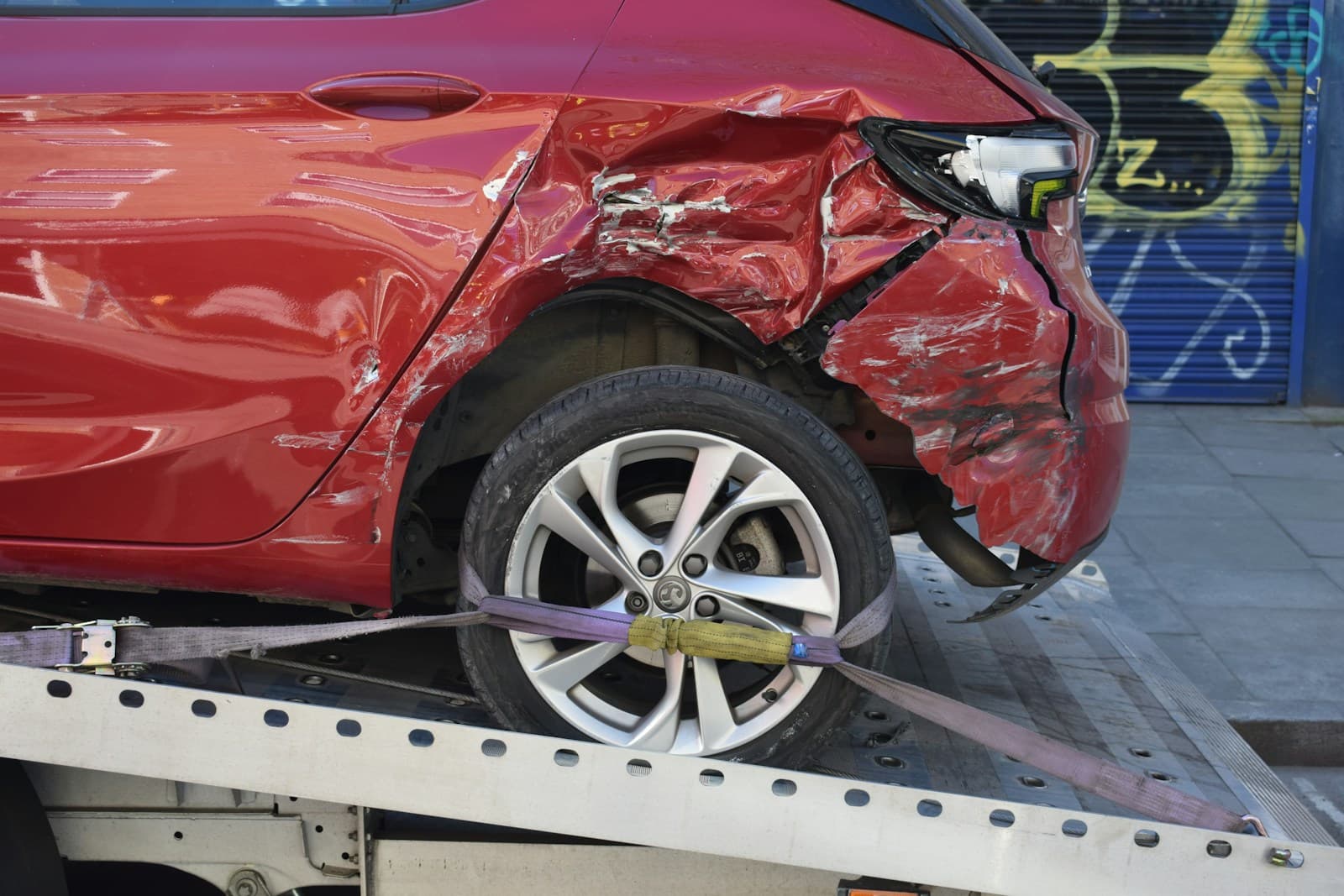
If you total a vehicle worth $6,500 and you have $18,000 in accessible savings, you lose $6,500 — painful, but not catastrophic. You can replace the vehicle with a comparable used car for $6,000–$7,500 and maintain transportation. If you had kept collision coverage with a $1,000 deductible, you would have received $5,500 from the insurer after the deductible, saved $3,000 in premiums if the accident happened three years after dropping coverage, and netted $2,500 in insurance benefit. That $2,500 benefit cost you $3,000 in premiums — a negative return.
The calculus changes if you have limited savings or no access to replacement vehicles. Senior drivers with less than $5,000 in liquid savings and no family support for vehicle replacement face genuine risk if they drop coverage and total their only car. In that situation, maintaining collision coverage with the highest deductible available ($1,000 or $2,500) reduces premiums by 20–35% compared to a $500 deductible while preserving catastrophic protection. Alternatively, some senior drivers in this position deliberately drive older vehicles worth $3,000–$4,000, making self-insurance viable even with modest savings.