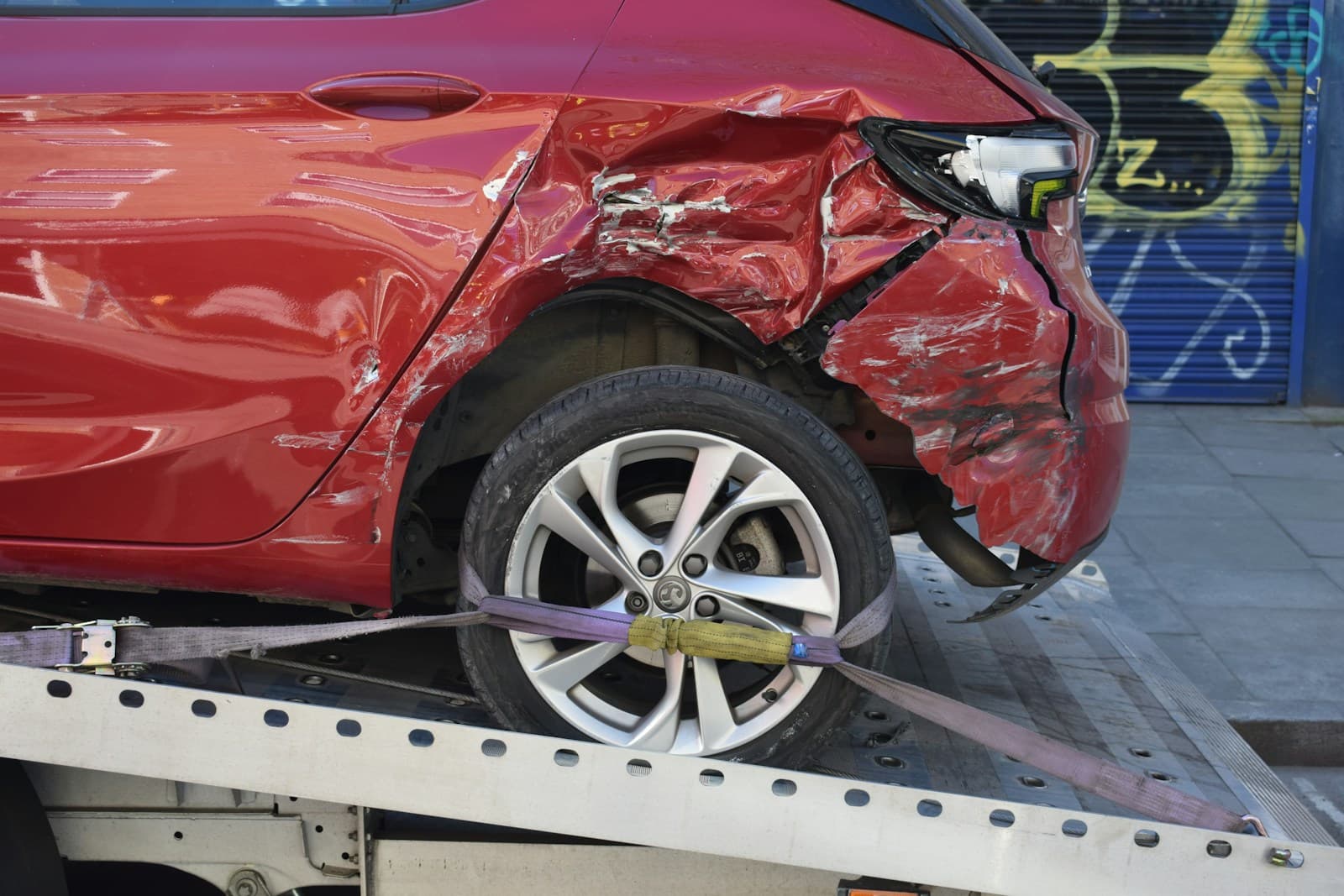
A DUI, at-fault accident, or license suspension after age 65 doesn't just raise your rates — it can make you uninsurable with standard carriers. The path back requires specific state filings, high-risk coverage periods, and often costs you didn't face earlier in your driving career.
Why Serious Violations Hit Senior Drivers Harder Than Younger Drivers
A DUI or reckless driving conviction at age 68 affects your insurance differently than the same violation would have at age 40. Standard carriers that previously offered you preferred rates based on decades of clean driving now move you into high-risk classifications — and many won't insure you at all during the 3–5 year period immediately following a major violation. The actuarial penalty stacks: you're assessed both for the violation itself and for your age bracket, which already faces steeper rate curves after 70 in most states.
The financial impact is compounded by timing. If you're on a fixed retirement income, an immediate rate increase of 150–200% following a DUI or at-fault accident with injury creates budget pressure that didn't exist when you had employment income to absorb premium spikes. Many senior drivers in this situation discover they're paying $250–400/mo for state minimum liability through a non-standard carrier, compared to the $80–120/mo they paid before the violation with their longtime insurer.
The violation also triggers state-mandated filings that younger drivers face but that senior drivers often haven't encountered in 40+ years of driving. An SR-22 or FR-44 certificate of financial responsibility must be filed by your insurer directly with your state DMV, and lapses result in immediate license suspension. These filings typically cost $25–50 to process and must remain active for 3 years in most states, but the real cost is the high-risk insurance required to maintain them.
The Immediate Steps: Regaining Your License and Finding Coverage
After a serious violation, your first priority is preventing or ending a license suspension. In most states, a DUI, reckless driving conviction, or accumulation of 12+ points within 12 months triggers an automatic suspension period ranging from 30 days to 12 months depending on offense severity and prior history. You cannot legally drive during this suspension, and reinstatement requires paying fines (typically $200–500), completing any court-ordered programs such as DUI school or substance abuse evaluation, and filing proof of financial responsibility.
Once eligible for reinstatement, you must secure insurance from a carrier willing to file an SR-22 or FR-44 on your behalf before your state will restore your license. Standard carriers like State Farm, Allstate, or USAA typically will not insure drivers with recent major violations — you'll need to obtain quotes from non-standard or high-risk insurers such as The General, Bristol West, or state assigned risk pools. These carriers specialize in high-risk drivers but charge premiums 2–3 times higher than standard market rates. Expect to pay $200–400/mo for state minimum liability if you're over 65 with a recent DUI.
The SR-22 filing itself must be requested from your insurer and submitted electronically to your DMV. Processing takes 3–10 business days in most states. If your policy lapses or is cancelled for any reason during the required filing period (usually 3 years), your insurer must notify the state within 10 days, and your license will be suspended again immediately. This creates a continuous coverage requirement that many senior drivers on tight budgets find difficult to maintain, particularly if they're paying monthly and miss a payment.
Compare rates from carriers that specialize in senior drivers
Mature driver discounts, low-mileage rates, and coverage reviews — see what you're actually eligible for.
Get Your Free Quote✓ Mature Driver Discounts✓ No Obligation✓ Licensed Carriers✓ All 50 States
The High-Risk Period: What to Expect for 3–5 Years
After securing SR-22 coverage and regaining your license, you enter a mandatory high-risk insurance period that typically lasts 3 years for the filing requirement itself, but 5+ years before standard carriers will consider insuring you again. During this window, your options are limited to non-standard insurers, and your rates will remain elevated even if you drive without incident. A 70-year-old driver with a DUI at age 68 will pay roughly $3,600–4,800/year for minimum liability coverage during this period, compared to $960–1,440/year they likely paid before the violation.
Your coverage options are also more restrictive. Most high-risk carriers offer only liability coverage or require significantly higher premiums for comprehensive and collision. If you own a paid-off vehicle worth $8,000–12,000, adding full coverage might cost an additional $150–200/mo, making it financially unjustifiable for many senior drivers. The trade-off is accepting that any at-fault accident or theft will be an out-of-pocket loss, which creates real financial risk if the vehicle is still essential for medical appointments or daily errands.
Some states operate assigned risk pools for drivers who cannot obtain coverage in the voluntary market. These programs guarantee coverage but at rates 30–50% higher than even non-standard carriers. If you're over 70 with a serious violation and underlying health conditions that standard carriers cite as additional risk factors, you may be placed in the assigned risk pool automatically. Premium relief during this period is limited: mature driver course discounts are rarely available through high-risk carriers, and telematics programs that reward safe driving are uncommon in the non-standard market.
Rebuilding Your Record: The Path Back to Standard Coverage
Your violation will remain on your motor vehicle record for 3–10 years depending on your state and offense type. A DUI typically stays visible for 10 years in most states, while reckless driving or at-fault accidents remain for 3–5 years. Insurance carriers look back 3–5 years when underwriting new policies, meaning you won't qualify for standard market coverage until the violation moves outside that window — even if it's still on your official DMV record.
Once your SR-22 filing period ends (usually 3 years), you can request that your insurer stop filing. This does not automatically lower your rates or make you eligible for standard coverage — it simply removes the state monitoring requirement. To transition back to a standard carrier, you'll need to shop actively once the violation is 4–5 years old. Expect quotes from standard carriers to still reflect a 40–60% surcharge compared to what you paid before the violation, because the incident remains in your insurance history even after it stops affecting license status.
During the rebuilding period, maintain continuous coverage without lapses. A coverage gap of even 30 days will be treated as a separate risk factor and can delay your eligibility for standard market coverage by an additional 6–12 months. If you're 72 and trying to move back to a standard carrier after a violation at 68, a lapse at year 4 can reset the timeline and keep you in the high-risk market into your mid-70s, when age-related rate increases accelerate further.
Completing a state-approved defensive driving or mature driver course can demonstrate risk reduction, and some standard carriers will offer small discounts (5–10%) if the course was completed within the past 3 years. AARP and AAA both offer mature driver programs accepted in most states, with course fees typically $20–30 for online versions. While the discount is modest, it signals to underwriters that you've taken active steps to address the violation, which can be a tiebreaker when multiple carriers are evaluating your application.
State-Specific Requirements and How They Affect Senior Drivers
Violation penalties, filing requirements, and reinstatement processes vary significantly by state, and these differences have outsized effects on senior drivers managing fixed incomes. Florida and Virginia require FR-44 filings instead of SR-22 for DUI offenses — FR-44 mandates higher liability limits ($100,000/$300,000 vs. state minimums), which increases premiums by an additional 20–30%. A 68-year-old Florida driver with a DUI may pay $350–450/mo just for the minimum FR-44 coverage, compared to $250–300/mo in a state requiring standard SR-22.
California, Texas, and New York have assigned risk pools with different structures. California's assigned risk program caps premiums at a maximum percentage above voluntary market rates, offering some protection for senior drivers who would otherwise face unaffordable quotes. Texas requires proof of financial responsibility for 2 years instead of 3, shortening the high-risk period slightly. New York allows drivers to self-insure by posting a $25,000 bond, but this option is rarely practical for seniors on retirement income.
Some states mandate mature driver course discounts but exempt high-risk carriers from offering them. Illinois and Florida require insurers to offer mature driver discounts of at least 5% to drivers over 55 who complete approved courses — but non-standard carriers operating in the high-risk market are not bound by this mandate. A senior driver in Illinois with an SR-22 filing may complete an AARP course and find that their high-risk insurer offers no discount at all, while a driver with a clean record in the standard market receives the mandated reduction.
License reinstatement fees also vary. Georgia charges $210 for DUI reinstatement plus $25 for SR-22 filing. Michigan assesses a $125 reinstatement fee but requires a substance abuse evaluation costing $150–300 before reinstatement is approved. These upfront costs, combined with first-month premiums of $250–400, create an immediate financial barrier of $500–900 that many senior drivers must absorb before they can legally drive again.
Managing Costs During the High-Risk Period
If you're facing 3–5 years of high-risk premiums on a fixed retirement income, cost management becomes essential. The first decision is coverage level: maintaining comprehensive and collision on a paid-off vehicle worth less than $10,000 rarely makes financial sense when the added premium is $1,800–2,400/year. Dropping to liability-only reduces your premium by 35–50%, but accept that you're self-insuring for vehicle damage or loss.
Pay-per-mile insurance is occasionally available through non-standard carriers and can reduce costs significantly if you're driving fewer than 5,000 miles annually. Metromile and Nationwide's SmartMiles program have offered usage-based policies to some high-risk drivers, with base rates of $40–60/mo plus 5–7 cents per mile. A senior driver covering only 3,000 miles/year could pay $150–180/mo instead of $300/mo for traditional high-risk coverage, though availability varies by state and underwriting criteria.
Some drivers consider selling their vehicle and relying on rideshare, family assistance, or senior transit programs during the high-risk period to avoid insurance costs entirely. This is financially viable only if you live in an area with robust public or senior transit options and have family or community support for medical appointments and errands. The trade-off is loss of independence and flexibility that many seniors find unacceptable, even if the financial logic is sound.
If your violation resulted from a medical event — a seizure, diabetic episode, or medication interaction — and you can document successful treatment or management, some states allow medical review boards to reduce suspension periods or waive SR-22 requirements. This process requires physician documentation and often a driving evaluation, but it can shorten the high-risk period by 12–24 months in cases where the violation was clearly tied to a now-controlled medical condition.
What Changes Permanently and What Doesn't
Even after your violation drops off your motor vehicle record and you transition back to a standard carrier, some rating effects persist permanently. Carriers maintain internal claim and violation histories that extend beyond state MVR lookback periods. A DUI at age 68 may still appear in your insurance history at age 78, particularly if you remain with the same carrier. This doesn't always trigger a surcharge after 10 years, but it can affect your eligibility for preferred or elite rate tiers that reward decades of clean driving.
Your baseline rate post-violation will likely be 20–40% higher than your rate before the incident, even 10 years later. This is because you lose longevity and loyalty discounts that took years to accumulate, and re-entering the standard market places you in a new customer pricing tier rather than restoring your prior status. A driver who paid $95/mo at age 67 before a violation may find that their best available rate at age 77 is $135–150/mo, even with no additional incidents in the intervening decade.
Some carriers will never insure you again after a serious violation. USAA, for example, typically will not re-quote drivers with DUI history, even decades later. This is particularly difficult for senior drivers who had USAA coverage through military service for 40+ years and expected to remain with that carrier for life. The loss is both financial — USAA often offers competitive senior rates — and emotional, as longtime customers lose a relationship they valued beyond just pricing.
The final permanent change is eligibility for certain senior-specific programs. Some insurers offer specialized products for drivers over 70 with clean records, featuring accident forgiveness, diminishing deductibles, or guaranteed renewal. A serious violation disqualifies you from these programs indefinitely, even if the violation itself no longer appears on your record. This means you age into a demographic that faces rate increases while simultaneously being excluded from the products designed to mitigate those increases.