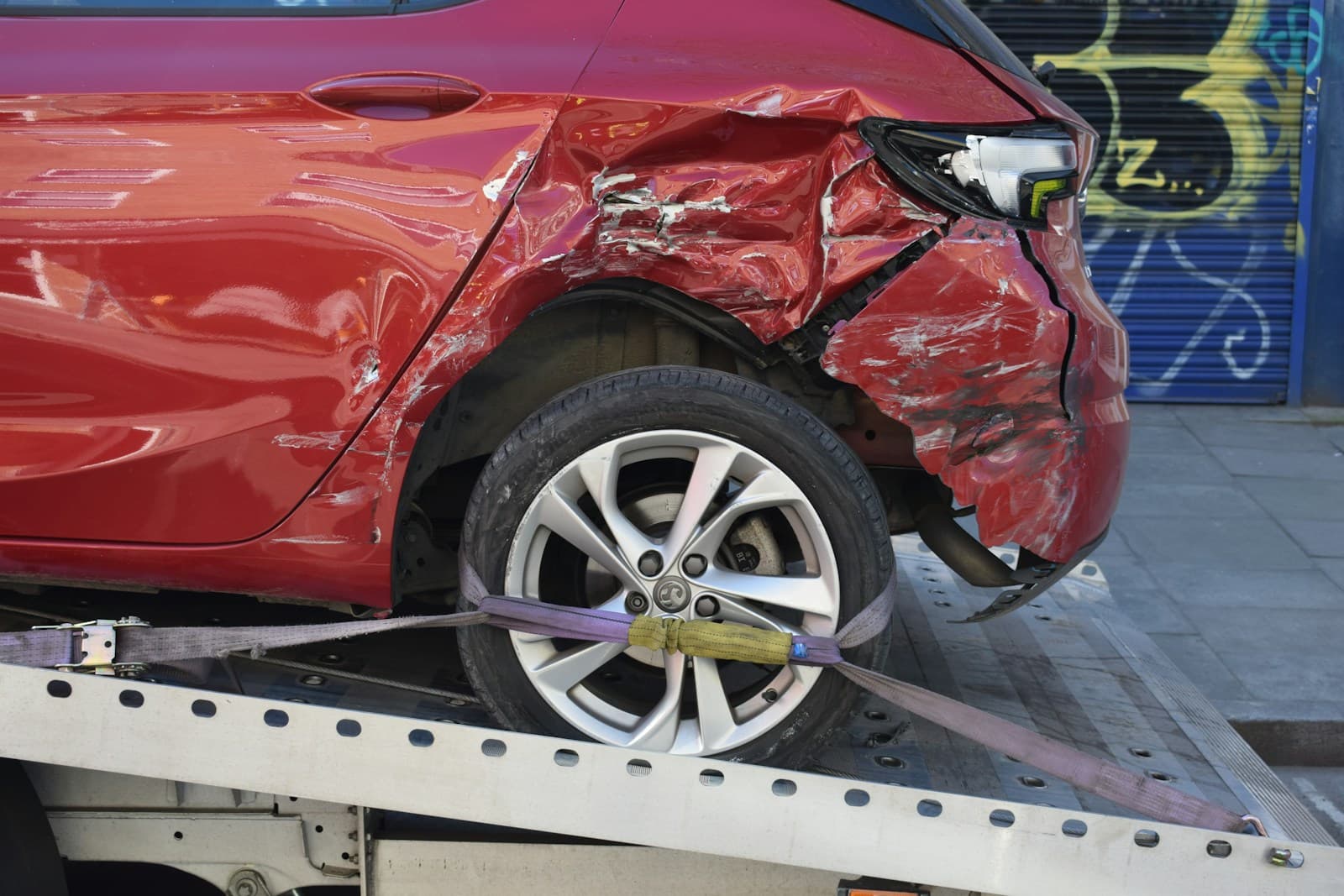
If you're retired and living on a fixed income, the deductible you chose when you were earning a full salary may no longer match your financial reality—or your driving patterns.
Why Your Working-Years Deductible May Not Fit Your Retirement Budget
The $1,000 deductible you selected at age 55 made sense when you had emergency savings cushion and regular paychecks. At 68, on Social Security and a fixed pension, that same deductible represents a month or more of discretionary income. The premium savings from choosing a high deductible—typically $15 to $40 per month depending on your state and vehicle—look appealing until you run the math on whether you could cover that deductible tomorrow without touching retirement accounts or delaying other expenses.
Most carriers offer deductible options ranging from $250 to $2,000 for collision and comprehensive coverage. The difference in annual premium between a $500 and $1,000 deductible averages $180 to $300 nationally, but varies significantly by state and insurer. That's $15 to $25 per month—meaningful savings, but only if the higher deductible doesn't create financial strain when you actually need to use your coverage.
The calculation changes further if you're driving fewer miles than you did during working years. According to the Federal Highway Administration, drivers aged 65 and older average 7,600 miles annually compared to 13,500 miles for drivers aged 35-54. Lower mileage typically correlates with lower accident frequency, which means you're less likely to file a collision claim—but that reduced risk doesn't eliminate the need to afford your deductible if an accident does occur.
The Three-Month Rule for Deductible Selection on Fixed Income
A practical framework for seniors on retirement income: your deductible should not exceed three months of your discretionary monthly budget—the amount left after fixed expenses like housing, utilities, medications, and food. If you have $400 per month in truly discretionary income, a $1,000 deductible sits right at that threshold. A $1,500 or $2,000 deductible would require dipping into funds you've earmarked for other purposes or tapping retirement savings.
This three-month guideline accounts for the fact that most seniors can adjust non-essential spending over a quarter to absorb an unexpected expense, but cannot easily increase income to cover a gap. It also reflects the reality that collision and comprehensive claims often coincide with other expenses—rental car costs during repairs, increased insurance premiums at renewal, or medical copays if injuries occurred.
Run this test: If you filed a claim tomorrow and paid your full deductible, would you need to skip a planned expense, delay a home repair, or reduce your grocery budget for the next several months? If yes, your deductible is set too high for your current financial situation. The premium savings aren't worth the financial disruption a claim would cause.
Compare rates from carriers that specialize in senior drivers
Mature driver discounts, low-mileage rates, and coverage reviews — see what you're actually eligible for.
Get Your Free Quote✓ Mature Driver Discounts✓ No Obligation✓ Licensed Carriers✓ All 50 States
How State Requirements and Vehicle Age Affect Your Deductible Decision
Your state's minimum liability requirements don't dictate your deductible choice, but they do influence the overall cost structure of your policy—and therefore how much margin you have to adjust your collision and comprehensive deductibles. States with higher liability minimums like Alaska (50/100/25) or Maine (50/100/25) typically see higher base premiums than states with lower floors like California (15/30/5), which affects how sensitive your total premium is to deductible changes.
Some states mandate specific discounts for mature driver course completion that can offset the cost of lowering your deductible. For example, Florida requires insurers to offer discounts to drivers who complete an approved mature driver course, with savings typically ranging from 5% to 15% depending on the carrier. Rhode Island and Connecticut have similar mandates. If you haven't taken a mature driver course in the past three years, the premium reduction from that discount may cover most or all of the cost increase from lowering your deductible from $1,000 to $500.
Vehicle age matters significantly here. If you're driving a paid-off vehicle worth $6,000 to $8,000, the maximum collision payout you could receive—actual cash value minus your deductible—may not justify carrying collision coverage at all, regardless of deductible level. A $6,000 vehicle with a $1,000 deductible leaves a maximum $5,000 claim payment. If your annual collision premium is $400, you'd recover your premium cost in 12.5 years of claim-free driving—unlikely for most seniors. In this scenario, dropping collision coverage entirely and self-insuring often makes more financial sense than optimizing your deductible. You can evaluate whether full coverage still makes sense for your situation based on your vehicle's current value and your savings capacity.
Comprehensive Deductibles Deserve Separate Consideration
Most drivers choose the same deductible for collision and comprehensive coverage, but seniors on fixed income should evaluate them separately. Comprehensive covers non-collision losses—theft, vandalism, weather damage, hitting a deer. The claim patterns differ from collision, and so should your deductible strategy.
Comprehensive claims are often unavoidable and unpredictable. You can reduce collision risk by driving carefully and avoiding high-traffic hours, but you can't prevent a hailstorm or a tree branch falling on your parked car. Because comprehensive coverage is typically less expensive than collision—often 30% to 50% of the collision premium—lowering your comprehensive deductible costs less in premium increase than lowering your collision deductible by the same amount.
Consider a split deductible approach: keep a higher deductible on collision (which you can partially control through defensive driving) and choose a lower deductible on comprehensive (which you cannot control). For example, a $1,000 collision deductible with a $250 comprehensive deductible might cost only $10 to $15 more per month than $1,000 on both, while significantly reducing your out-of-pocket exposure for the weather and theft events most likely to occur while your vehicle is parked.
When Medical Coverage Should Influence Your Deductible Choice
If you carry medical payments coverage or personal injury protection (PIP) on your auto policy—and many seniors should, even with Medicare—your deductible decision intersects with your health coverage strategy. Medicare covers injuries from auto accidents, but it doesn't cover everything immediately, and it doesn't cover passengers in your vehicle who aren't Medicare-eligible.
Medical payments coverage on your auto policy pays regardless of fault and typically has no deductible, covering expenses from the first dollar up to your policy limit (commonly $1,000 to $10,000). This coverage can fill Medicare gaps like Part B deductibles ($240 in 2024) and copays for emergency room visits or ambulance transport. If you're carrying robust medical payments coverage—say, $5,000 or more—you have a financial cushion for injury-related expenses that doesn't exist for vehicle damage, which may justify a slightly higher vehicle deductible than you'd otherwise choose.
The inverse is also true: if you've minimized or dropped medical payments coverage because you have Medicare and supplemental insurance, you may want to lower your collision and comprehensive deductibles to ensure you can afford vehicle repairs without straining your budget, since you've already committed more of your coverage dollars to health protection. Your total out-of-pocket exposure across all coverage types matters more than any single deductible in isolation.
Testing Different Deductible Scenarios With Your Current Carrier
Before changing your deductible, request specific premium quotes from your current insurer for at least three deductible combinations. Most carriers can provide these quotes by phone or through online portals without requiring a formal policy change. Ask for exact six-month or annual premium amounts for $250, $500, $1,000, and $1,500 deductibles on both collision and comprehensive.
Calculate the annual premium difference between each option, then divide by the deductible difference to find your breakeven claim frequency. For example, if a $500 deductible costs $240 more per year than a $1,000 deductible, you're paying $240 to reduce your potential out-of-pocket by $500. You'd need to file a claim every 2.1 years to break even on that cost—unlikely for most drivers, but the real question is whether you can afford the $1,000 if a claim happens next month, not whether it's statistically optimal.
If you're considering adjusting coverage in multiple ways—lowering a deductible, dropping collision on an older vehicle, or adding low-mileage discounts—request bundled quotes that show the combined effect. Some premium changes offset others. Dropping collision coverage entirely on a vehicle worth under $5,000 might save enough to lower your comprehensive deductible to $100 while still reducing your total premium. State-specific programs can affect these calculations; for instance, New York seniors should check mature driver discount availability before finalizing deductible changes.
When to Keep a Higher Deductible Despite Fixed Income
A higher deductible remains the right choice in specific circumstances, even on retirement income. If you have liquid emergency savings equal to six months of expenses and a vehicle worth more than $15,000, the premium savings from a $1,000 or $1,500 deductible can be redirected to other insurance needs—higher liability limits, for example, which matter more for seniors with home equity and retirement assets to protect.
Drivers with extraordinarily clean records—no claims in 15-plus years and no at-fault accidents in their driving history—face genuinely low statistical risk of filing a collision claim. If you've never filed a collision claim and drive fewer than 5,000 miles annually in low-traffic conditions, the probability of needing your collision coverage in any given year is below 2%. For this subset of drivers, maximizing premium savings through high deductibles and investing the difference in interest-bearing accounts makes mathematical sense.
Some carriers offer disappearing deductible programs that reduce your deductible by $50 to $100 for every claim-free year, up to a maximum reduction. If your insurer offers this and you've been claim-free for several years, your effective deductible may already be $250 to $500 lower than your stated deductible, which changes the affordability calculation. Verify your current effective deductible before making changes—you may already have the coverage you need.