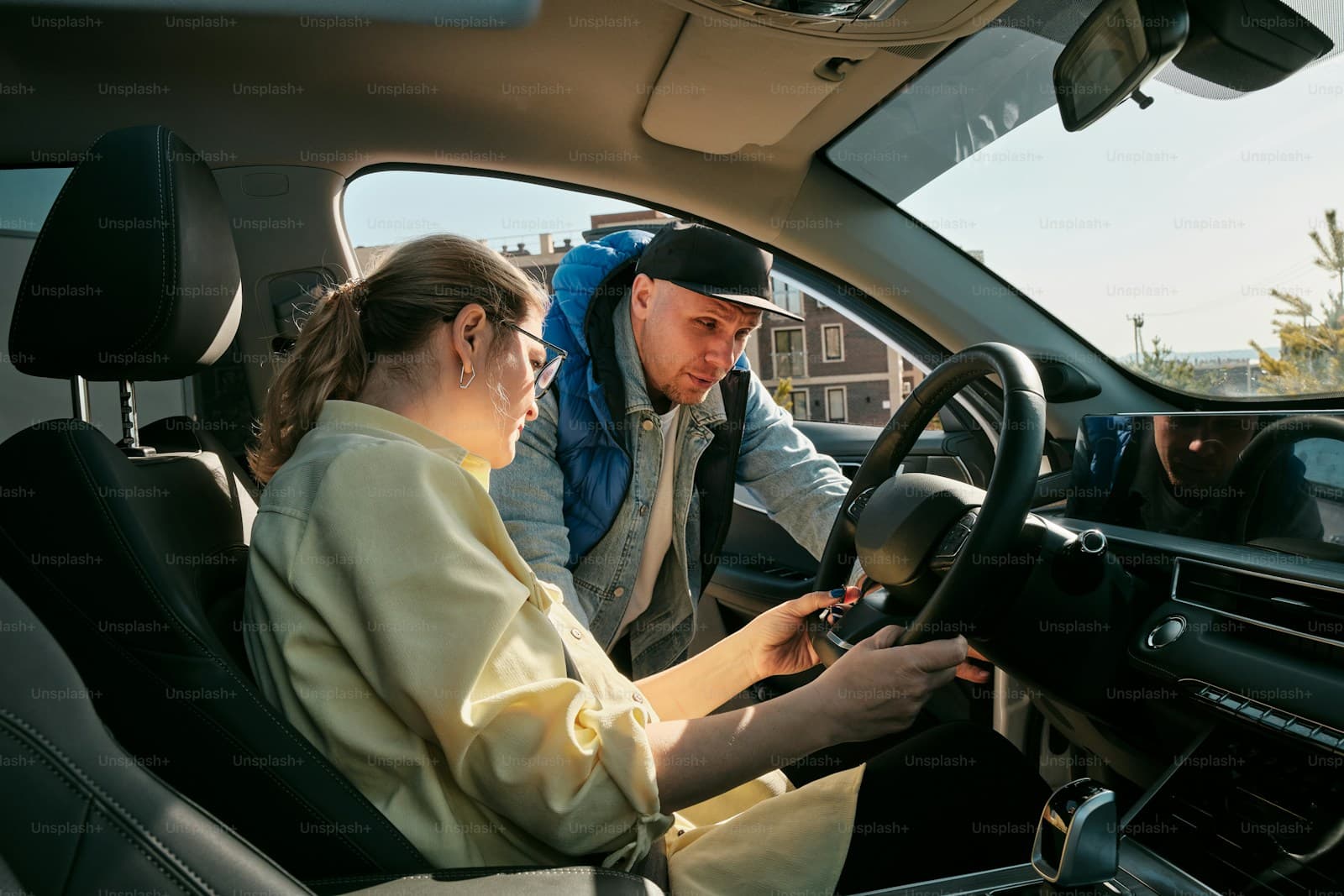
You've driven safely for decades, but your rates keep climbing. Telematics programs let you prove your actual driving behavior to insurers — and the discount potential is significantly larger than most mature driver courses offer.
Why Telematics Discounts Often Beat Traditional Senior Discounts
The mature driver course discount you completed last year likely saved you 5–10% on your premium. A telematics program monitoring your actual driving can deliver 15–30% in ongoing discounts, often stackable with that course completion. The difference matters on a fixed income: on a $1,200 annual premium, that's the gap between saving $60–120 versus $180–360.
Insurers raise rates for drivers over 65 not because of your individual record, but because actuarial tables show increased claim frequency in the 70+ age bracket. Telematics programs let you separate yourself from that statistical group by demonstrating your specific driving patterns: steady speeds, limited night driving, consistent braking, and low annual mileage. You're proving what the actuarial table can't measure.
Most major carriers now offer telematics options. Progressive's Snapshot, State Farm's Drive Safe & Save, Nationwide's SmartRide, Allstate's Drivewise, and GEICO's DriveEasy all monitor similar behaviors. The participation discount alone — before any performance scoring — typically ranges from 5–10%, meaning you save money simply by installing the app or device.
What Telematics Programs Actually Monitor (And What Senior Drivers Do Well)
Telematics programs track four to six driving behaviors, depending on the carrier. Nearly all monitor: hard braking events, rapid acceleration, speed relative to posted limits, time of day you drive, and total miles driven. Some add phone handling while driving or cornering behavior. The monitoring happens either through a smartphone app using GPS and accelerometer data, or a plug-in device connected to your vehicle's diagnostic port.
Senior drivers consistently score well in categories that matter most for discount calculation. You likely drive during daylight hours rather than late night (when 40% of fatal crashes occur, according to NHTSA data). You've probably reduced your annual mileage significantly since retiring — the average working adult drives 12,000–15,000 miles per year, while many retirees drop to 6,000–8,000. Lower mileage directly reduces your exposure to risk and generates measurable savings in these programs.
The scoring systems reward consistency more than performance extremes. A driver who maintains steady speeds, brakes gradually, and avoids trips between midnight and 4 a.m. will outscore a driver with occasional aggressive maneuvers, even if that second driver is decades younger. Your experience translates into predictable, low-risk behavior patterns that these programs are specifically designed to identify and reward.
Compare rates from carriers that specialize in senior drivers
Mature driver discounts, low-mileage rates, and coverage reviews — see what you're actually eligible for.
Get Your Free Quote✓ Mature Driver Discounts✓ No Obligation✓ Licensed Carriers✓ All 50 States
How to Enroll and What the First 90 Days Look Like
Enrollment typically takes 10–15 minutes through your insurer's website or mobile app. You'll download the monitoring app or request a plug-in device (which arrives within 5–7 business days). Most programs include an initial assessment period of 30–90 days during which the insurer establishes your baseline driving profile. Your rate doesn't increase during this period — you're locked into at least your current premium, with discount potential only.
The first month functions as your opportunity to understand what triggers scoring events. A hard brake is usually defined as deceleration exceeding 7–8 mph per second — the equivalent of stopping quickly for a yellow light you misjudged or a car pulling out unexpectedly. One or two per week won't disqualify you from discounts; patterns of daily harsh events will. Most senior drivers report fewer than three hard braking events per month once they're aware the system is monitoring.
After the assessment period, your discount applies at your next renewal. Some carriers (Progressive, Allstate) provide real-time feedback through the app, showing your current projected discount. Others (State Farm, GEICO) provide periodic updates but finalize the discount only at renewal. The typical senior driver in a telematics program qualifies for a 20–25% total discount after six months of monitored driving, combining participation and performance components.
State Programs That Enhance or Complicate Telematics Discounts
California requires insurers to base rates primarily on driving record, miles driven annually, and years of experience — factors that work in favor of senior drivers with clean records and low mileage. Telematics programs in California emphasize mileage verification over behavior scoring, making them particularly valuable if you've dropped below 7,500 miles per year. The state also mandates mature driver course discounts, which stack with telematics savings.
New York prohibits insurers from using age as a direct rating factor after age 25, but allows consideration of factors correlated with age (such as retirement status affecting mileage). Telematics programs offered in New York must disclose exactly which behaviors affect pricing. The state's mandatory mature driver course discount (roughly 10% for three years after completion) combines with telematics for compounded savings.
Florida, Texas, and Pennsylvania have high concentrations of senior drivers and competitive telematics program availability. Florida insurers frequently market these programs to retirees who've relocated and are shopping for new coverage. Texas allows insurers significant pricing flexibility, meaning telematics discounts vary widely between carriers — comparing three quotes often reveals 15–20% premium differences for identical coverage when one includes an active telematics profile.
Privacy Considerations and What Data Actually Gets Shared
Telematics programs collect location data, time stamps, and vehicle behavior measurements. Your insurer receives aggregated trip data: start time, end time, distance, hard braking events, and speed data. Most programs do not record your specific destinations or street-level routes. Progressive's Snapshot, for example, logs that you drove 4.2 miles at 2:15 p.m. with one hard brake, but not that you drove from your home to a medical appointment at a specific address.
You can typically pause monitoring for specific trips if you're lending your car to a family member or driving in an unusual situation (towing a trailer, driving in a snowstorm). The pause function appears in the app and prevents that trip from affecting your score. Most carriers allow 2–4 paused trips per month without penalty.
The data is not shared with third parties for marketing purposes under most carrier privacy policies, but it can be subpoenaed in the event of a serious accident claim or lawsuit. If you're involved in a crash where fault is disputed, your telematics data may be requested as evidence of your speed and braking behavior in the moments before impact. This cuts both ways — it can prove you were driving safely, or it can complicate your claim if the data shows excessive speed.
When Telematics Makes Sense and When It Doesn't
Telematics programs deliver the most value if you drive fewer than 10,000 miles annually, rarely drive late at night, and have a clean record you want to leverage for additional savings beyond standard senior discounts. If you're currently paying $100–150/month for full coverage and your insurer offers a telematics option, the potential annual savings of $300–500 justifies the minor inconvenience of app-based monitoring.
The programs are less advantageous if you frequently drive in dense urban traffic where hard braking is unavoidable, if you regularly drive between 11 p.m. and 5 a.m., or if multiple household members share your vehicle. A grandchild borrowing your car for a weekend can generate enough negative scoring events to erase two months of careful driving. Some carriers allow you to designate excluded drivers, but not all.
If you're considering dropping comprehensive and collision coverage on a paid-off vehicle worth less than $4,000–5,000, the telematics discount applies only to the coverages you retain. You'll still save money on liability, medical payments, and uninsured motorist coverage, but the nominal dollar amount decreases when your total premium drops to $50–70/month for liability-only coverage.
How to Compare Telematics Options Across Carriers
Request quotes from at least three carriers that offer telematics programs, and ask each agent to provide two scenarios: your rate with standard senior discounts (mature driver course, low mileage, good driver) and your projected rate with telematics included. The gap between these quotes reveals how aggressively each carrier prices usage-based programs for senior drivers.
Some carriers front-load the discount (you receive 10% immediately upon enrollment, then earn up to 20% more based on performance), while others back-load it (you receive the full discount only after completing the monitoring period). Front-loaded programs benefit you if you're comparing mid-term switches between insurers. Back-loaded programs can deliver slightly larger total discounts but require patience through the assessment period.
Pay attention to discount caps. Allstate's Drivewise advertises up to 40% savings, but the average participant receives 15–20%. State Farm's Drive Safe & Save emphasizes mileage-based pricing and consistently delivers 20–30% discounts for drivers under 8,000 annual miles. GEICO's DriveEasy focuses heavily on phone distraction monitoring, which may disadvantage drivers who use their phone for navigation even with hands-free mounts.