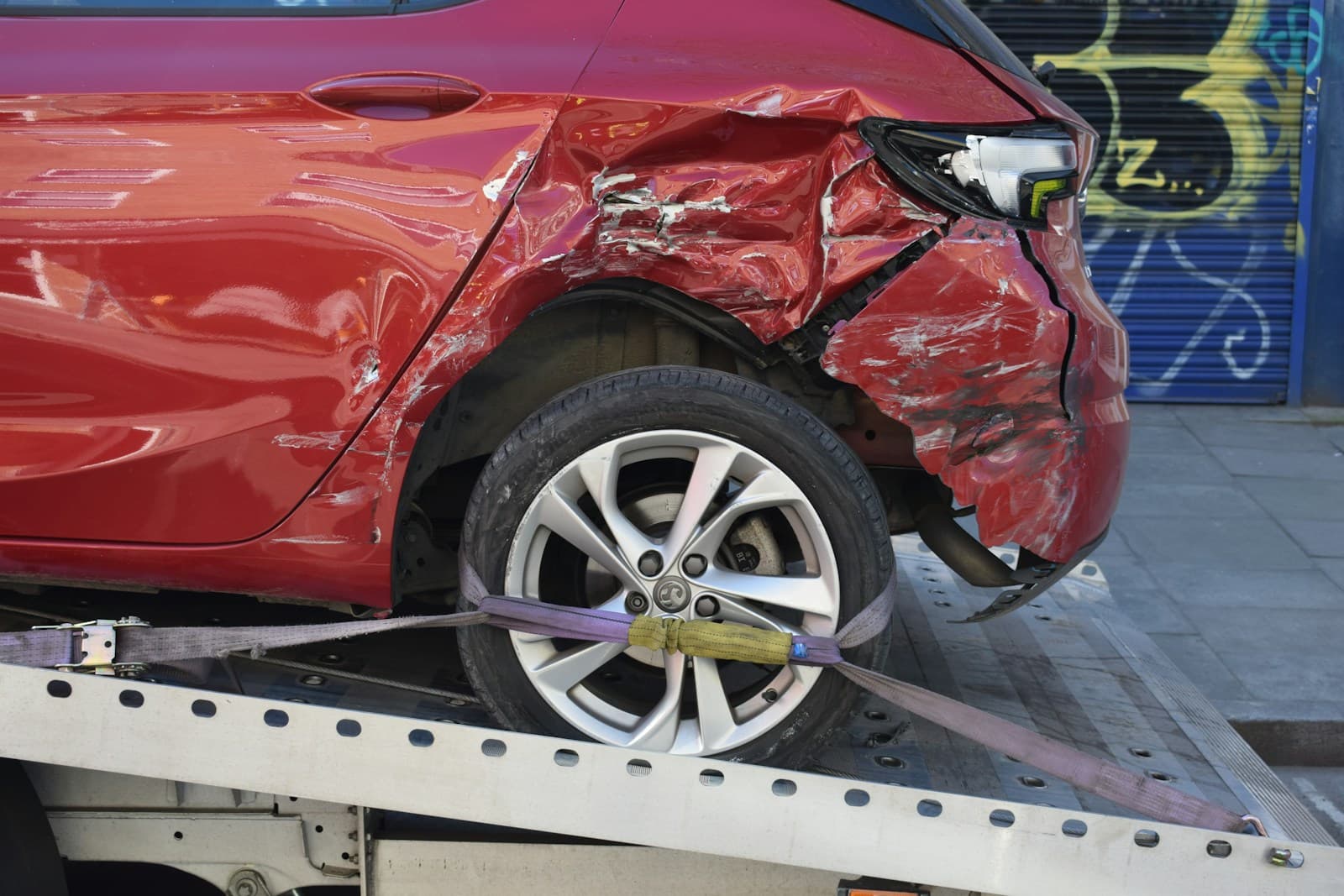
If you're a senior driver with a recent ticket or accident, the vehicle you choose to insure next can shift your premium by 25–40% — and the conventional wisdom about SUVs costing more doesn't always hold once violations enter the equation.
How Violations Change the Vehicle Rating Formula
When you add a moving violation or at-fault accident to your record, insurers recalculate your premium using a multiplier that varies by vehicle type. Most carriers apply a 20–35% surcharge for a first speeding ticket, but the base premium that multiplier acts on depends heavily on repair costs, safety ratings, and historical claim severity for your specific make and model. A 2018 Honda Civic and a 2018 Ford Explorer insured by the same 68-year-old driver might start within $15/mo of each other with clean records — but after a single at-fault accident, the gap can widen to $60–80/mo in many states.
The counterintuitive pattern: large SUVs with strong crash-test ratings and moderate theft rates often absorb violation surcharges more efficiently than compact cars because insurers price the combined risk profile, not the violation in isolation. A Toyota Highlander or Honda Pilot typically qualifies for better base rates in the 65+ age bracket due to lower injury claim frequency, and that structural advantage persists even after a violation. Compact sedans with high theft rates or expensive OEM parts — Civic, Accord, Camry — start from a higher collision and comprehensive baseline, so the violation surcharge lands on top of already-elevated premiums.
This matters most in states that prohibit or limit the use of age as a rating factor but allow full consideration of vehicle characteristics and driver history. California, Hawaii, and Massachusetts restrict age-based pricing, meaning your vehicle choice and violation history carry disproportionate weight in the final quote. A senior driver in Los Angeles with a speeding ticket may pay 18–22% less per month insuring a 2017 Subaru Outback than a 2017 Mazda3, even though the Outback has higher replacement cost.
Timing affects the calculus: violations typically remain surchargeable for three years from the conviction date, but the impact diminishes each year. If you're replacing a vehicle within 18 months of a ticket, choosing a model with favorable base rating can recover $400–700 over the remaining surcharge period compared to a vehicle that starts from a penalized rating class.
State-Specific Violation Surcharges and Vehicle Class Interaction
Violation surcharges are regulated at the state level, and a dozen states cap the percentage increase carriers can apply for specific infractions. North Carolina limits the first speeding ticket surcharge to 25% for drivers over 65, while Texas allows tiered surcharges up to 35% depending on speed over the limit. These caps interact with vehicle rating in ways that shift the cost advantage between SUVs and small cars.
In states with capped surcharges — California, Massachusetts, North Carolina, Hawaii — the vehicle's base premium becomes the dominant variable once you have a violation. A $95/mo base rate on a compact car with a 25% cap yields $118.75/mo; a $108/mo base rate on an SUV with the same cap yields $135/mo. But if the compact car starts at $115/mo due to theft ratings or repair costs, and the SUV starts at $105/mo due to safety discounts, the post-violation totals reverse: $143.75/mo for the compact, $131.25/mo for the SUV.
States without surcharge caps — Florida, Georgia, Louisiana — allow carriers to apply larger multipliers that can reach 40–50% for at-fault accidents or multiple violations. In these markets, the base rate matters less than the violation multiplier the carrier assigns to each vehicle class. Insurers in Florida often apply higher accident surcharges to vehicles with poor roof strength or side-impact scores, which includes older compact sedans and economy cars more often than body-on-frame SUVs or crossovers built after 2015.
Some states mandate mature driver course discounts that partially offset violation surcharges. Florida requires a minimum 10% discount for drivers 55+ who complete an approved course, and that discount applies after the violation surcharge is calculated — effectively reducing the net penalty. If you're choosing between a compact car and a large SUV in a state with mandated mature driver discounts, the SUV may close the cost gap further once you complete the course, because the 10% discount applies to a higher base premium and yields greater absolute savings.
Compare rates from carriers that specialize in senior drivers
Mature driver discounts, low-mileage rates, and coverage reviews — see what you're actually eligible for.
Get Your Free Quote✓ Mature Driver Discounts✓ No Obligation✓ Licensed Carriers✓ All 50 States
Medical Payments and Liability Exposure by Vehicle Size
Senior drivers involved in at-fault accidents face higher medical payments claims than younger drivers due to longer recovery times and pre-existing conditions that complicate injuries. Insurers price this into both the base premium and the violation surcharge, but the adjustment varies significantly by vehicle size and safety equipment. A 70-year-old driver in a newer large SUV with automatic emergency braking and blind-spot monitoring triggers fewer injury claims per mile driven than the same driver in a 2012 compact sedan without those systems — and that difference compounds after a violation, when the carrier is already pricing for elevated accident probability.
Medicare covers most accident-related medical costs for drivers 65+, but medical payments coverage (MedPay) on your auto policy pays first, up to your selected limit, before Medicare processes claims. If you carry $5,000 or $10,000 in MedPay and you're at fault in an accident, your insurer pays your immediate costs and any passenger injuries up to that limit. Vehicles with higher occupant injury rates — typically smaller, older cars with fewer airbags and weaker structural zones — generate more frequent MedPay claims, which insurers price into the base rate and amplify through violation surcharges.
Liability exposure shifts the calculation further: if you're at fault in a compact car and injure occupants of another vehicle, your liability coverage pays their medical costs and lost wages. Insurers assign higher liability multipliers to lighter vehicles because collision physics produce more severe injuries in the other vehicle when a 2,800-pound sedan strikes a 4,500-pound SUV. After a violation, carriers price for the likelihood of a repeat at-fault event, and they apply higher liability surcharges to vehicle classes with poor loss ratios in that category. This often means a small car with a violation costs more to insure at adequate liability limits than a midsize SUV with the same driving record.
If you're maintaining high liability limits — 250/500/100 or greater, which is advisable for senior drivers with accumulated assets — the liability component of your premium becomes the largest line item after a violation. Choosing a vehicle with strong crash-avoidance technology and favorable liability loss history can reduce that component by 12–18%, which translates to $20–35/mo in most states.
Collision and Comprehensive Cost Differences After Violations
Collision coverage pays for damage to your vehicle regardless of fault, and comprehensive covers theft, weather, and animal strikes. Both coverages are priced using your vehicle's actual cash value (ACV), repair cost data, and theft frequency for your ZIP code. A violation doesn't directly increase comprehensive premiums, but it raises collision premiums by 25–40% because you're statistically more likely to file an at-fault collision claim in the three years following a ticket or accident.
Large SUVs generally cost more to repair per incident due to higher parts prices and labor hours, but they're stolen less frequently and suffer fewer total-loss claims from minor accidents because their size absorbs impacts that would total a compact car. A 2016 Toyota RAV4 and a 2016 Honda Fit might have similar retail values around $16,000–$18,000, but the Fit generates 30–40% more comprehensive claims per insured vehicle year due to higher theft rates in urban markets. After you add a violation, the Fit's collision premium rises from an already-elevated base, while the RAV4's collision surcharge applies to a lower starting point.
If your vehicle is paid off and worth less than $5,000–$6,000, dropping collision and comprehensive coverage eliminates the surcharge on those components entirely. Many senior drivers continue carrying full coverage out of habit, even when the annual premium exceeds 15–20% of the vehicle's value. A 2010 Ford Escape worth $4,500 with a $500 deductible might cost $45/mo for collision and comprehensive; after a violation, that could rise to $60–$65/mo, or $780/year to insure a vehicle you'd receive at most $4,000 for if totaled. Dropping to liability-only in that scenario saves the full surcharge and makes the violation's financial impact 35–45% smaller.
Newer large SUVs with factory-installed telematics or theft-deterrent systems qualify for comprehensive discounts of 5–15% that partially offset violation surcharges. A 2020 Chevrolet Tahoe with OnStar or a 2019 Ford Explorer with FordPass may cost $8–12/mo less in comprehensive premiums than older models without connected systems, and that discount persists through the violation surcharge period. If you're shopping for a replacement vehicle while carrying a violation, prioritizing models with these systems can claw back some of the penalty.
Shopping Strategy: When to Switch Vehicle Types
If you're currently insuring a compact or midsize sedan and you've recently acquired a violation, running quotes on comparable large SUVs or crossovers before your next renewal can surface cost inversions that wouldn't exist with a clean record. Carriers re-rate your entire policy at renewal when a violation enters your record, and that's the moment to test whether your vehicle choice is working against you. Request quotes for the same coverage limits on a Honda CR-V, Toyota RAV4, Subaru Outback, or Ford Escape — models with strong safety ratings and moderate theft rates — and compare the total six-month or annual premium, not just the monthly payment.
The breakeven calculation depends on your state's surcharge duration and the vehicle's base rating spread. In most states, a violation affects your premium for three years (36 months). If switching from a compact car to a midsize SUV saves you $30/mo after the violation surcharge is applied, that's $1,080 in recovered costs over the surcharge period. Subtract the transaction costs — vehicle purchase price difference, registration, sales tax — and determine whether the insurance savings justify the switch. For senior drivers on fixed income who drive fewer than 8,000 miles per year, the insurance cost often outweighs fuel economy differences between vehicle classes.
Timing matters: violations are typically reported to insurers within 30–45 days of conviction, and the surcharge takes effect at your next renewal after the violation posts to your motor vehicle record. If your renewal is 60–90 days out, you have a narrow window to shop for replacement vehicles and bind new coverage before the surcharge applies. Switching vehicles and carriers simultaneously can reset your rating class and occasionally reduce the effective surcharge if the new carrier prices the violation differently or offers first-policy discounts that offset the penalty.
Some carriers specialize in post-violation pricing for senior drivers and apply smaller surcharges to specific vehicle types. Regional carriers and farm bureaus in the Midwest and South — such as Auto-Owners, Farm Bureau, and Grange — often price large SUVs and trucks more favorably than national carriers for drivers over 65 with one violation, because their actuarial data reflects rural and suburban driving patterns where these vehicles dominate. If you're moving from a compact car to an SUV after a violation, quoting with three regional carriers in addition to national brands can uncover $400–$600 in annual savings that wouldn't appear in standard comparison tools.
Long-Term Cost Recovery and Violation Forgiveness
Violation surcharges decline over time in most states, even if the violation remains on your record for the full three-year period. Many carriers reduce the surcharge by 30–40% in the second year and by 50–60% in the third year, provided you don't acquire additional violations. The vehicle you choose at the time of the violation remains a cost factor throughout the surcharge period, so a poor initial choice compounds across 36 months of elevated premiums, while a favorable choice amplifies your savings as the surcharge tapers.
Accident forgiveness programs, available from most major carriers, waive the surcharge for your first at-fault accident if you've been claim-free for a specified period — usually three to five years. Some carriers extend forgiveness automatically to drivers over 65 with long tenure; others require you to purchase it as an endorsement for $3–$8/mo. If you're choosing between a compact car and a large SUV and you qualify for accident forgiveness, the vehicle's base premium becomes the primary variable, because the accident surcharge won't apply. In that scenario, SUVs with strong safety discounts and low theft rates often cost less to insure than compact cars with high theft and repair frequencies, even before considering the violation.
Mature driver course discounts — mandated in 30 states and optional in most others — provide 5–15% premium reductions that apply for three years after course completion. Combining this discount with a vehicle switch can reduce your net violation penalty to single digits in percentage terms. A $140/mo premium on a compact car with a 30% violation surcharge rises to $182/mo; completing a mature driver course for a 10% discount brings it to $163.80/mo. Switching to an SUV with a $125/mo base rate, applying the same 30% surcharge and 10% mature driver discount yields $146.25/mo — a $17.55/mo difference, or $211/year, that persists through the entire surcharge period.
Some carriers offer diminishing deductibles or claims-free discounts that accrue over time and reduce your collision premium incrementally. If you're insuring a newer large SUV and you remain claim-free for 12 months post-violation, carriers like Nationwide and Travelers may reduce your deductible by $50–$100 or apply a 5% claims-free discount at your next renewal. These programs reward vehicle choices that minimize claims frequency — which large SUVs with advanced safety systems tend to do — and accelerate your cost recovery compared to higher-claim-frequency vehicle classes.