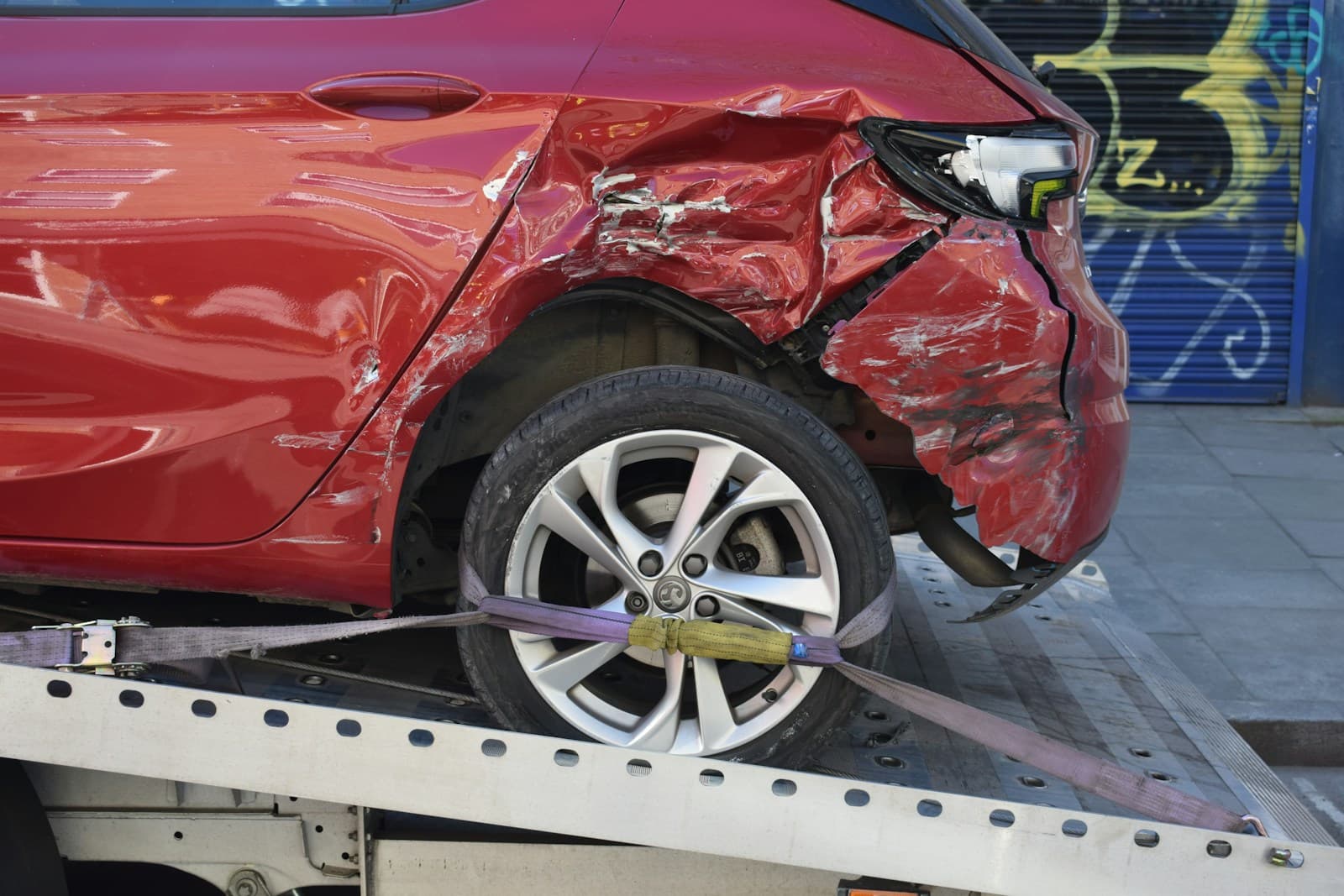
If you've been declined by multiple insurers or dropped after a claim, assigned risk pools and surplus lines carriers exist specifically to cover drivers no standard company will accept — but the process and costs differ drastically from the market you're used to.
Why Standard Carriers Decline Senior Drivers — and What Triggers the Extreme Risk Category
Standard insurance companies use actuarial models that flag certain risk combinations as unprofitable to underwrite. For senior drivers, extreme risk typically means multiple serious violations within three years (DUI, reckless driving, at-fault accidents with injuries), license suspensions requiring SR-22 filing, or a pattern of lapses in coverage combined with recent claims. A single DUI after age 65 often triggers declination because the statistical probability of policy loss exceeds what standard pricing can accommodate.
The threshold is lower than you might expect. Two at-fault accidents within 24 months, even without injuries, can move you from preferred to declined status at many carriers. AARP reports that roughly 8% of drivers over 70 who apply for standard coverage are declined or offered only high-risk policies, compared to 3% of drivers aged 50-64. The difference isn't age alone — it's that violations after 65 carry more underwriting weight because they can't be offset by years of future premium payments the way they are for younger drivers.
If you've received declination letters from three or more standard carriers, you're effectively in the residual market — the industry term for drivers who can't secure coverage through voluntary means. This doesn't mean you're uninsurable. It means you're now shopping a different tier of the market with different rules, different pricing structures, and often different application processes that require working through specialized agents rather than direct comparison tools.
Assigned Risk Pools: How State-Mandated Programs Work When No Carrier Will Accept You
Every state operates either an assigned risk pool or a reinsurance facility to ensure drivers can meet legal liability requirements even when declined by voluntary carriers. These are not insurance companies — they're mechanisms that force participating insurers to share the cost of insuring high-risk drivers. You apply through a licensed agent, who submits your application to the state pool. The pool then assigns your policy to a participating carrier on a rotating basis, and that carrier must issue you coverage at state-approved rates.
Assigned risk premiums typically run 40% to 150% higher than standard market rates for the same coverage. A senior driver in California paying $1,200 annually through a standard carrier might pay $1,700 to $2,400 through the assigned risk pool for minimum liability limits. You cannot purchase comprehensive or collision coverage through most assigned risk programs — only liability, and sometimes uninsured motorist coverage. If you still owe money on your vehicle, this creates a problem because your lender requires physical damage coverage.
The coverage period is typically six months, and the carrier assigned to you has no obligation to renew. At renewal, you re-enter the pool and may be assigned to a different carrier. This churn makes it difficult to build the kind of stable relationship that sometimes leads to rate reductions or coverage improvements. State pages detail specific assigned risk program names and rate ranges — for example, California uses the California Automobile Assigned Risk Plan (CAARP), while Florida operates the Florida Automobile Joint Underwriting Association (FAJUA). Application processing takes 10 to 20 business days in most states, so plan ahead if your current policy is near expiration.
Compare rates from carriers that specialize in senior drivers
Mature driver discounts, low-mileage rates, and coverage reviews — see what you're actually eligible for.
Get Your Free Quote✓ Mature Driver Discounts✓ No Obligation✓ Licensed Carriers✓ All 50 States
Surplus Lines Carriers: The Higher-Cost Alternative That Offers More Coverage Flexibility
If you need comprehensive and collision coverage, or if your state's assigned risk pool has declined you due to an extraordinarily severe record, surplus lines carriers become your next option. These are non-admitted insurers — companies licensed to operate in the state but not bound by standard rate regulations. They charge higher premiums but can offer broader coverage types and higher limits than assigned risk pools allow.
Surplus lines policies for senior drivers with extreme risk histories typically cost 150% to 300% more than standard market rates. A policy that would cost $1,800 annually with a standard carrier might run $4,500 to $7,200 through a surplus lines insurer. However, you can purchase full coverage including comprehensive, collision, and medical payments — critical if you still carry a car loan or lease, or if you drive a vehicle worth more than $10,000 and can't afford to replace it out of pocket after a total loss.
You must work through a licensed surplus lines broker to access these carriers — they don't sell direct to consumers. The broker's fee, typically $50 to $150, is added to your premium. Surplus lines policies don't contribute to your state's guaranty fund, meaning if the carrier becomes insolvent, you have no state-backed protection for unpaid claims. This risk is real but statistically small; focus on working with brokers who place business with A.M. Best-rated carriers whenever possible. According to the National Association of Insurance Commissioners, about 6% of high-risk auto policies are written through surplus lines markets, with the highest concentration in states where assigned risk pools have restrictive eligibility or coverage limits.
What You'll Pay and How Long You'll Stay in the High-Risk Market
The duration of extreme risk classification depends on your state's lookback period and the severity of your violations. Most states use a three-year window for moving violations and at-fault accidents, and a five-year window for DUIs and major violations. A senior driver with a DUI at age 68 can expect to remain in the high-risk market until age 73, assuming no additional violations during that period. Each new incident resets the clock.
Monthly costs in the assigned risk pool for minimum liability coverage typically range from $140 to $280 per month for senior drivers, compared to $80 to $140 per month in the standard market. If you're using a surplus lines carrier for full coverage on a financed vehicle, expect $375 to $600 per month. These figures assume minimum state liability limits — if you carry assets worth protecting and increase liability to $100,000/$300,000 or higher, the premium increase in the high-risk market is steeper than in the standard market.
Your path back to standard coverage requires maintaining continuous insurance without lapses, completing any court-ordered programs, and letting time elapse. Some senior drivers find that completing a state-approved defensive driving course can shave 6 to 12 months off their high-risk classification, but this varies by state and violation type. After three years with no new violations, begin shopping standard carriers again — your assigned risk or surplus lines policy won't automatically transition you back to lower rates. You must proactively seek quotes from voluntary market carriers to escape the high-risk tier.
State-Specific Senior Programs That May Still Apply in the Residual Market
Even in the assigned risk pool, state-mandated mature driver course discounts usually apply if your state requires insurers to offer them. California, Florida, and New York all mandate that assigned risk carriers honor mature driver discounts, typically 5% to 10% off liability premiums. The course must be state-approved — AAA and AARP both offer programs that meet requirements in most states, with course fees ranging from $20 to $35 for online versions.
Low-mileage programs are less common in the residual market but not impossible. Some surplus lines carriers offer usage-based pricing if you drive fewer than 5,000 miles annually and agree to telematics monitoring. The discount is modest — 8% to 12% — but on a $5,400 annual premium, that's $430 to $650 in annual savings. Assigned risk pools rarely offer mileage-based pricing because their rate structures are set by state formula rather than individual carrier underwriting.
Medicare interaction with medical payments coverage becomes more critical in the high-risk market because you're paying premium dollars on a fixed income. If you carry Medicare Parts A and B, adding medical payments coverage through your auto policy duplicates some benefits. However, medical payments coverage pays immediately without deductibles or copays, while Medicare coverage includes cost-sharing. For senior drivers on tight budgets in the assigned risk pool, dropping medical payments coverage from $5,000 to $1,000 or eliminating it entirely can reduce premiums by $15 to $40 per month — money better spent on higher liability limits if you own a home or have retirement savings at risk in a lawsuit.
How to Apply and What Documentation You'll Need
Applying for assigned risk coverage requires working through a licensed insurance agent — you cannot apply directly to the state pool. The agent will need your driver's license number, a three-year motor vehicle record (MVR), details of all violations and accidents, and proof of any completed driver improvement courses or SR-22 filings if applicable. If you've been declined by standard carriers, bring those declination letters — some states require proof of declination before accepting an assigned risk application.
The application process takes 10 to 20 business days in most states. During this period, if your current policy is expiring, ask your existing carrier for a short-term extension or purchase a temporary binder through the agent to avoid a coverage lapse. A lapse of even one day will be noted on your insurance record and can add another 10% to 15% to your assigned risk premium. If you're applying for surplus lines coverage, the broker may be able to bind coverage immediately, but expect to pay the first month's premium plus the broker fee upfront — often $500 to $800 — before the policy activates.
For senior drivers who've had their license suspended and need SR-22 coverage after a serious violation, the assigned risk pool is often the only path to reinstatement. The pool carrier will file the SR-22 form with your state DMV as part of policy issuance. You'll need to maintain that SR-22 filing without lapse for the period specified by your state — typically three years — or your license will be suspended again. The SR-22 filing itself doesn't add to your premium, but it marks you as a high-risk driver, which is why you're in the pool in the first place.
When Self-Insurance Bonds or Cash Deposits Become the Final Option
If your driving record is so severe that even the assigned risk pool declines you — typically after multiple DUIs, a recent felony involving a vehicle, or a pattern of uninsured accidents — most states allow you to meet financial responsibility requirements through a surety bond or cash deposit with the state. The bond amount equals your state's minimum liability limits, usually $25,000 to $50,000. You pay an annual bond premium of 1% to 15% of the bond amount depending on your credit and driving record, meaning $250 to $7,500 per year.
This is not insurance. If you cause an accident, you're personally liable for all damages. The bond or deposit only proves to the state that you have some financial resources available. If a claimant wins a judgment against you that exceeds the bond amount, they can pursue your personal assets — home equity, retirement accounts, wages. For this reason, surety bonds and cash deposits are last-resort mechanisms for senior drivers who absolutely must maintain a license for medical appointments or essential errands and have exhausted all insurance market options.
Cash deposit programs, available in some states, require you to deposit the full bond amount with the state treasurer. That money sits untouched unless you cause an accident and fail to pay a claim, at which point the state releases funds to the injured party. You receive no interest on the deposit, effectively losing years of investment returns on $25,000 to $50,000. For a senior driver on a fixed income, this approach is financially punishing and should only be considered if bond premiums are prohibitively expensive and you have liquid assets available that aren't earmarked for living expenses or medical costs.