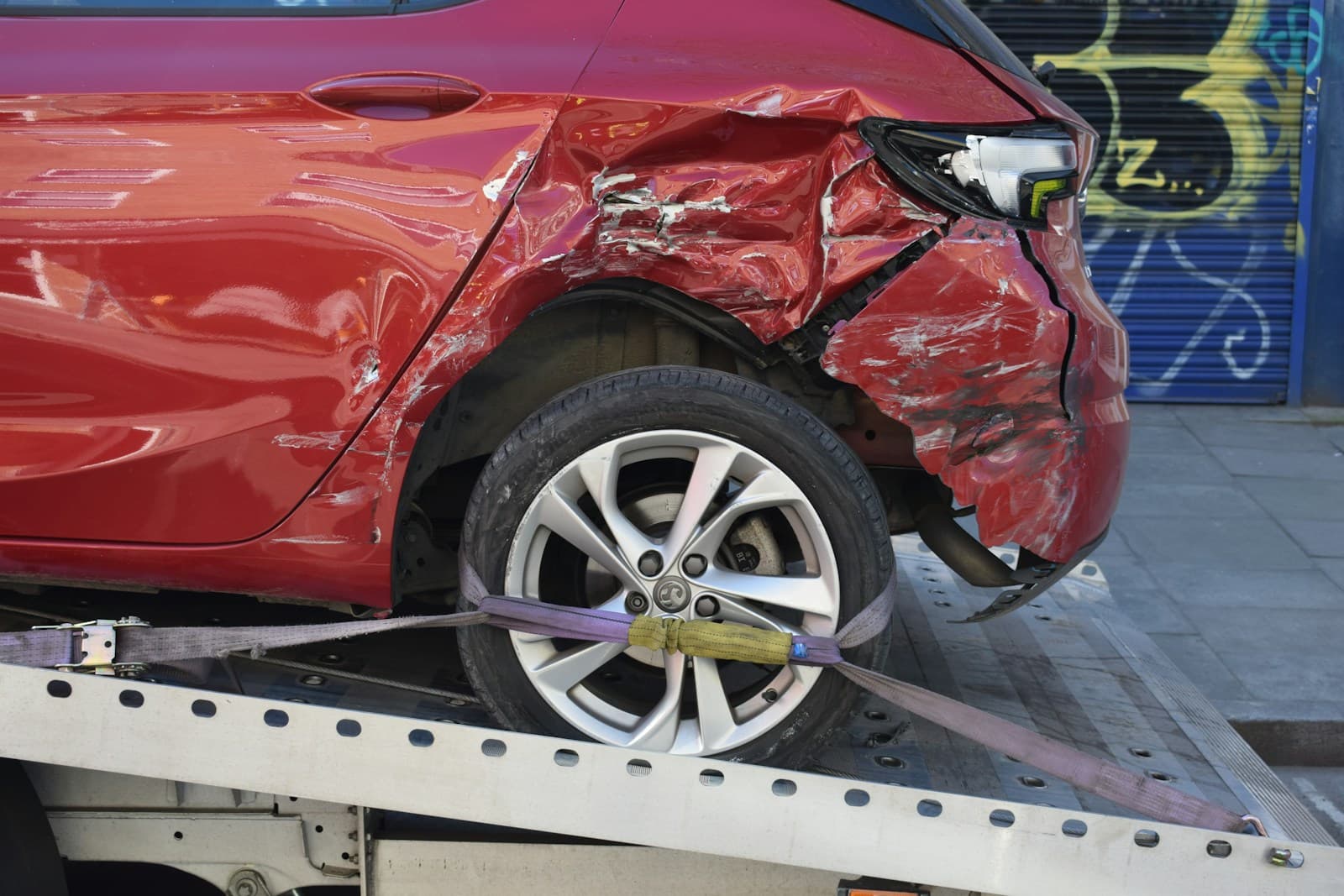
Medicare covers most medical costs, but it won't pay immediately after a car accident — and that gap can create serious financial stress for senior drivers on fixed incomes. Medical Payments coverage fills the space between the accident and Medicare reimbursement.
The Coverage Gap Medicare Doesn't Close After an Accident
Medicare Part B covers accident-related injuries, but it functions as secondary coverage when auto insurance is involved — meaning it pays only after your auto policy limits are exhausted or if you carry no medical coverage at all. More critically, Medicare operates on a reimbursement model with deductibles and co-insurance that can leave you paying 20% of costs out-of-pocket. For a senior driver hospitalized after an accident with $15,000 in medical bills, that 20% co-insurance equals $3,000 in immediate expenses, even with Medicare.
Medical Payments coverage (MedPay) operates differently. It pays immediately after an accident regardless of fault, covers you and any passengers in your vehicle, and requires no deductible. For senior drivers, this means MedPay can cover your Medicare deductible (currently $226 for Part B in 2024), your 20% co-insurance, ambulance costs that Medicare may only partially cover, and immediate expenses like emergency room co-pays before Medicare processes claims. These are not hypothetical gaps — they are the expenses that create financial strain in the weeks following an accident.
The cost differential makes this coverage particularly valuable for seniors on fixed incomes. MedPay policies typically range from $5,000 to $25,000 in coverage limits, with premiums averaging $8–$15 per month for $5,000 in coverage in most states. That's $96–$180 annually to eliminate the risk of a $3,000–$5,000 out-of-pocket burden during the most stressful period after an accident.
What MedPay Covers That Medicare Delays or Denies
MedPay covers medical expenses incurred within one to three years of an accident, depending on your policy terms. This includes ambulance transport, emergency room visits, hospital stays, surgery, X-rays and imaging, dental work necessitated by the accident, and professional nursing services. Critically for senior drivers, it also covers funeral expenses if the accident proves fatal — a coverage component Medicare does not provide.
Medicare's coverage timeline creates the practical problem MedPay solves. Medicare typically processes claims within 30 days, but complex accident-related claims involving liability determination can take 60–90 days. During that period, providers may bill you directly, and some require payment or payment arrangements before Medicare adjudicates the claim. MedPay pays within days of claim submission, eliminating the cash flow problem that forces many seniors to carry credit card balances or delay necessary follow-up care.
Passenger coverage represents another significant gap. If you're driving a grandchild, a spouse, or a friend and the accident injures them, Medicare covers only your own injuries. MedPay covers all passengers in your vehicle regardless of their age or insurance status. For senior drivers who regularly transport other family members, this distinction matters — one accident involving multiple injuries could exhaust your liability limits and expose you to lawsuits if passengers' medical costs exceed your coverage.
Compare rates from carriers that specialize in senior drivers
Mature driver discounts, low-mileage rates, and coverage reviews — see what you're actually eligible for.
Get Your Free Quote✓ Mature Driver Discounts✓ No Obligation✓ Licensed Carriers✓ All 50 States
How MedPay and Medicare Coordinate After an Accident
When you carry both MedPay and Medicare, MedPay typically pays first as primary coverage up to its policy limit. Medicare then pays as secondary coverage for costs exceeding your MedPay limit, subject to its usual deductibles and co-insurance. This coordination means a $5,000 MedPay policy can cover all immediate costs for moderate injuries, allowing Medicare to never enter the picture — and avoiding the 20% co-insurance you'd otherwise pay.
The coordination becomes more complex in no-fault states that require Personal Injury Protection (PIP) instead of or in addition to MedPay. Twelve states operate under no-fault systems: Florida, Hawaii, Kansas, Kentucky, Massachusetts, Michigan, Minnesota, New Jersey, New York, North Dakota, Pennsylvania, and Utah. In these states, PIP pays first, then MedPay if you carry it, then Medicare. PIP coverage limits and terms vary significantly by state — Michigan's PIP, for example, historically provided unlimited medical coverage but recent reforms allow seniors to opt for lower limits if they have Medicare. Understanding your state's specific requirements determines whether MedPay adds meaningful value or duplicates existing coverage.
Senior drivers in non-PIP states face a simpler decision: whether to carry MedPay as a hedge against Medicare's gaps. The math favors coverage in most scenarios. A $10,000 MedPay policy typically costs $12–$20 per month, or $144–$240 annually. One moderate accident requiring emergency transport, imaging, and overnight observation can generate $8,000–$12,000 in bills, of which Medicare would leave you responsible for deductibles and 20% co-insurance — easily $2,000–$2,500 out-of-pocket. The premium pays for itself with a single incident.
State-Specific MedPay Requirements and Availability
MedPay is optional in most states, but a handful mandate it or include it automatically in liability policies. New Hampshire and Maine require insurers to offer MedPay, though drivers can reject it in writing. Pennsylvania requires a minimum of $5,000 in medical benefits coverage, which can be satisfied through MedPay or PIP depending on the policy structure. In these states, you'll see MedPay listed on your declarations page unless you've explicitly waived it.
Availability and typical limits vary regionally. In states with high healthcare costs — Massachusetts, New York, California — carriers more commonly offer $10,000, $25,000, and even $50,000 MedPay limits. In states with lower medical costs and more limited tort systems, $5,000 policies are standard and higher limits may not be available at all. Senior drivers in expensive healthcare markets should consider higher limits; the premium increase from $5,000 to $10,000 coverage typically adds only $3–$6 per month.
Some states integrate MedPay into broader medical benefits requirements that interact with Medicare in specific ways. Understanding how your state structures these coverages requires checking your state's Department of Insurance guidance or reviewing your policy declarations page carefully. If you're uncertain whether your current policy includes medical coverage or how it coordinates with Medicare, your state page will clarify the specific requirements and typical costs for senior drivers in your area.
When MedPay Makes Sense on a Fixed Income
The financial test for MedPay is straightforward: can you comfortably absorb $2,000–$5,000 in unexpected medical expenses within 30–60 days of an accident without disrupting your retirement budget, taking on debt, or delaying other necessary care? If the answer is no, MedPay is likely cost-justified. For most seniors on fixed incomes relying on Social Security and retirement distributions, that threshold represents a significant financial event.
The value calculation changes if you maintain a Health Savings Account (HSA) with substantial reserves or carry a Medicare Supplement (Medigap) policy that covers Part B co-insurance and deductibles. Medigap Plan F and Plan G, for example, cover the 20% co-insurance Medicare leaves unpaid, eliminating one of MedPay's primary functions. However, even with Medigap, MedPay still covers passengers, pays immediately without claim submission delays, and functions regardless of whether Medicare ultimately covers the expense. The two coverages overlap but serve different timing and scope functions.
For senior drivers who've reduced coverage on older paid-off vehicles, MedPay offers disproportionate value. If you've dropped collision and comprehensive coverage to reduce premiums, you've already accepted financial responsibility for vehicle damage. But medical costs from accidents don't decline with your vehicle's age — a 2008 sedan produces the same injury severity in a collision as a 2024 model. Maintaining MedPay while dropping physical damage coverage represents a rational risk prioritization: protecting yourself financially from high-probability, high-cost medical scenarios while self-insuring the vehicle.
How to Add or Increase MedPay Coverage
MedPay can be added to your existing auto policy at any time — you don't need to wait for renewal. Contact your current insurer or agent, request Medical Payments coverage, and specify your desired limit. Most carriers offer $1,000, $2,500, $5,000, $10,000, and $25,000 limits. The coverage becomes effective immediately upon payment of the adjusted premium, which is typically prorated to your next renewal date.
When selecting a limit, consider your Medicare Part B deductible ($226 in 2024), typical emergency room and imaging costs in your area ($2,000–$4,000 for a moderate accident), and potential ambulance charges ($800–$1,500 depending on distance and service level). A $5,000 limit covers most single-occupant accidents without hospitalization; $10,000 provides margin for overnight stays or multiple passengers. Few senior drivers require limits above $10,000 unless they regularly transport multiple family members or have specific health conditions that increase injury severity risk.
If you're comparing insurers or considering switching carriers for better rates, verify that any quote includes MedPay at your current limit — not all comparison tools include optional coverages by default. A quote that appears $20 per month lower may simply be excluding the MedPay you currently carry. Request declarations pages or coverage summaries that itemize all coverages and limits before making switching decisions based on price alone.