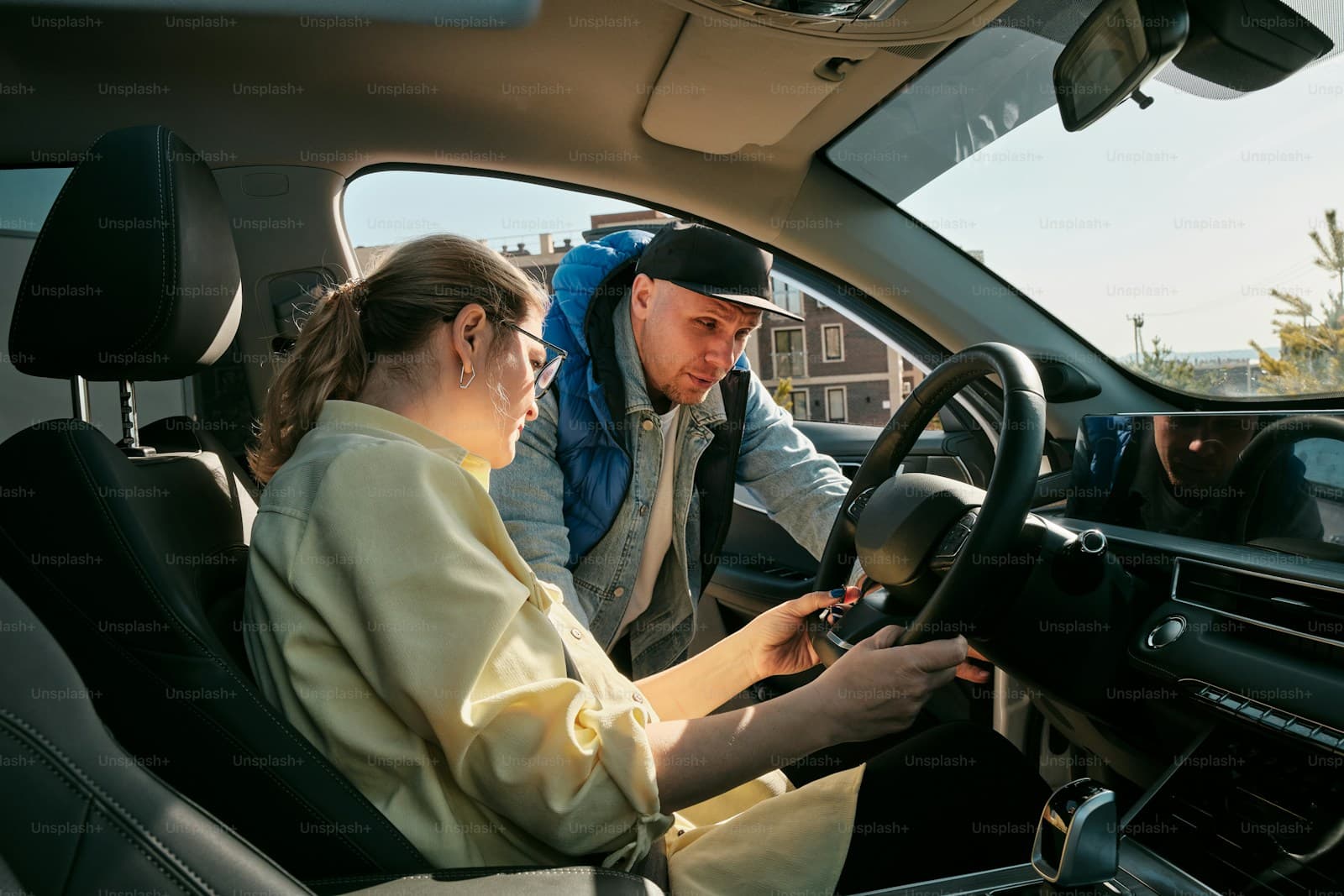
If you no longer own a vehicle but frequently borrow a family member's car or drive a spouse's vehicle, named non-owner insurance may cost less than being added as a rated driver on someone else's policy — particularly if you're over 70.
What Named Non-Owner Coverage Actually Covers When You Borrow Vehicles
Named non-owner insurance provides liability coverage when you drive a vehicle you don't own and don't have regular access to. It follows you as the driver, not the car, covering bodily injury and property damage you cause to others. The borrowed vehicle's insurance pays first in an accident, and your non-owner policy acts as secondary coverage if the owner's limits are exhausted.
This matters significantly for senior drivers who have sold their vehicle after retirement but still drive occasionally — borrowing an adult child's car for errands, using a spouse's vehicle when theirs is unavailable, or driving a friend's car to medical appointments. Without your own policy, you're relying entirely on the vehicle owner's coverage, which may carry only state minimum liability limits of $25,000/$50,000 in many states.
Most non-owner policies provide liability limits from $50,000/$100,000 up to $250,000/$500,000, plus uninsured/underinsured motorist coverage in states that require it. They do not include collision or comprehensive coverage because you don't own the vehicle being insured. The annual cost typically ranges from $200 to $500 for seniors with clean driving records, compared to $400 to $900 to be added as a rated driver on someone else's full-coverage policy.
When Non-Owner Coverage Costs Less Than Being Added to a Family Policy
The pricing advantage becomes clearest when you're over 70 and would be added to a family member's policy that includes collision and comprehensive coverage on a newer vehicle. Insurance carriers apply age-based rating to all listed drivers on a policy, and in most states, drivers over 70 face rate increases of 15–25% compared to drivers aged 60–69. When you're added to a policy with full coverage on a $30,000 vehicle, that age factor applies to the entire premium — including the expensive collision and comprehensive components.
A non-owner policy, by contrast, includes only liability coverage, which is significantly cheaper to insure. A 72-year-old with a clean record in Florida might pay $280 annually for a $100,000/$300,000 non-owner policy, while being added to a daughter's policy with full coverage on a 2020 sedan could increase that policy's annual cost by $650 to $850. The savings compound if you drive infrequently — most carriers don't offer mileage-based discounts to secondary drivers on a standard policy, but some now offer usage-based pricing on non-owner policies.
The math shifts if the vehicle you're borrowing carries only liability coverage or is older. Adding a senior driver to a liability-only policy on a 2012 vehicle with 140,000 miles might cost $350–$500 annually, making the pricing comparable to a non-owner policy. In that scenario, the decision hinges more on whether you want your own continuous coverage history and higher liability limits independent of the vehicle owner's choices.
Compare rates from carriers that specialize in senior drivers
Mature driver discounts, low-mileage rates, and coverage reviews — see what you're actually eligible for.
Get Your Free Quote✓ Mature Driver Discounts✓ No Obligation✓ Licensed Carriers✓ All 50 States
How Non-Owner Policies Interact With Medicare and Existing Health Coverage
Senior drivers often ask whether they need medical payments coverage on a non-owner policy when they already have Medicare. The borrowed vehicle's medical payments or personal injury protection (PIP) coverage applies first to your injuries as the driver, and Medicare acts as secondary coverage for any remaining costs. A non-owner policy does not typically include medical payments coverage, which eliminates one potential source of duplicate benefits.
This differs meaningfully from being a named driver on someone else's policy, where you'd be covered under that policy's medical payments or PIP regardless of whether you need it. In no-fault states like Michigan, Florida, or New Jersey, PIP coverage is mandatory on the vehicle owner's policy and covers you as the driver, paying medical costs regardless of fault up to the policy limit — often $10,000 to $50,000 depending on the state. Those benefits coordinate with Medicare, typically paying first for accident-related medical expenses.
The key coverage gap to consider is liability protection when you're at fault. Medicare covers your own injuries but does nothing for the other driver's medical bills, vehicle damage, or potential lawsuits. If you borrow a car with only $25,000/$50,000 liability limits and cause an accident resulting in $80,000 in injuries to the other driver, the vehicle owner's policy pays the first $50,000, and you're personally liable for the remaining $30,000 unless you carry your own non-owner policy with higher limits.
State-Specific Rules That Change the Non-Owner Calculation
California, Massachusetts, and Pennsylvania prohibit insurers from using age as a rating factor after age 65, which eliminates one of the primary pricing advantages of non-owner coverage for senior drivers in those states. In these states, being added to a family member's policy as a driver over 70 doesn't trigger the same rate increase it would in Florida, Texas, or Arizona. A senior driver in California might pay nearly the same amount whether they purchase a non-owner policy or are added to a daughter's standard policy, making the decision more about coverage preferences than cost.
Several states require continuous proof of insurance to maintain vehicle registration, even if you no longer own a car. If you plan to purchase another vehicle within 6–12 months, maintaining a non-owner policy preserves your continuous coverage history and may prevent a coverage lapse surcharge when you buy your next auto policy. In Virginia, drivers can pay an uninsured motorist fee instead of carrying insurance, but this leaves you personally liable for any accident costs and doesn't satisfy the continuous coverage requirement that many insurers use for preferred pricing.
New York, New Jersey, and Michigan — all no-fault states — have complex interactions between non-owner policies and the state-required PIP coverage. In Michigan, a non-owner policy must include PIP unless you're covered under a spouse's or relative's policy in the same household. In New Jersey, non-owner policies include the state's $15,000 minimum PIP, which may duplicate coverage if you're regularly borrowing a household member's vehicle. These state-specific requirements can add $100 to $300 annually to non-owner policy costs, narrowing or eliminating the price advantage over being added to an existing policy.
Coverage Limits Worth Considering When You're on Fixed Income
The state minimum liability limits — often $25,000 per person and $50,000 per accident for bodily injury — provide inadequate protection for most senior drivers. A single accident involving serious injuries can generate medical bills and lost wage claims exceeding $100,000, and retirees with home equity, retirement accounts, or other assets face particular lawsuit vulnerability. Courts can garnish Social Security income above the protected federal minimum, and retirement account funds become accessible to judgment creditors in many states.
A non-owner policy with $100,000/$300,000 liability limits typically costs only $50 to $80 more annually than a policy at state minimums, while $250,000/$500,000 limits add another $80 to $120 per year. For a senior driver on fixed income with $200,000 in home equity and $150,000 in retirement savings, the incremental cost of higher limits provides meaningful asset protection. The liability coverage on the borrowed vehicle pays first, and your non-owner policy's limits stack on top only if the vehicle owner's coverage is exhausted — but that layered protection matters most in severe accidents where a single policy's limits prove insufficient.
Uninsured and underinsured motorist coverage is included in non-owner policies in the 20+ states that require it, typically matching your liability limits. This coverage protects you if you're injured by a driver with no insurance or inadequate limits — a scenario that has become more common as the percentage of uninsured drivers has risen to 13–14% nationally and exceeds 20% in states like Florida, Mississippi, and New Mexico. The annual cost is typically $40 to $90 for $100,000/$300,000 uninsured motorist limits, and it's among the highest-value coverage components for senior drivers who may face extended recovery periods and ongoing medical costs after an accident.
How Major Carriers Price Non-Owner Policies for Senior Drivers
GEICO, State Farm, and Nationwide actively write non-owner policies and typically offer competitive rates for drivers over 65 with clean records. GEICO's non-owner policies have historically been priced 20–30% below adding a senior driver to a family member's full-coverage policy in states where age-based rating applies. State Farm offers similar pricing but may require the non-owner policy to be written through the same agent handling the vehicle owner's policy if you're borrowing a household member's car frequently.
Progressive and Allstate write non-owner coverage but price it less competitively for older drivers, often within 10–15% of the cost of being added as a named driver to a standard policy. USAA offers non-owner policies to members and their families at rates comparable to GEICO, with the added benefit of allowing you to maintain continuous USAA membership even after selling your vehicle — which matters if you plan to purchase another car later and want to preserve your member discount eligibility.
Several major carriers, including Farmers and Liberty Mutual, either don't offer non-owner policies or restrict them to drivers under 65 in many states. This market limitation means senior drivers typically need to request quotes from at least three carriers to identify the lowest price, and rates can vary by $150 to $300 annually for identical coverage limits. Most carriers don't advertise non-owner policies prominently and may require you to call rather than quote online, which adds friction but doesn't affect the underlying pricing.
When You Should Stay on a Family Member's Policy Instead
If you live in the same household as the vehicle owner and drive their car more than twice per week, most insurance contracts require you to be listed as a rated driver on their policy rather than carrying separate non-owner coverage. Insurance companies consider household members to have regular access to vehicles, and attempting to use a non-owner policy instead of being properly listed can result in claim denials. This household vehicle rule applies even if the car is titled solely in your spouse's or adult child's name.
The coverage is also more comprehensive when you're a listed driver on the vehicle's policy. You're covered for collision and comprehensive damage if you're driving and have an at-fault accident or the car is damaged by weather, theft, or vandalism while in your care. A non-owner policy provides no coverage for physical damage to the borrowed vehicle — you're personally liable for collision damage if you cause an accident, up to the vehicle's full value. For a senior driver borrowing a family member's $25,000 car, that exposure can outweigh the $200–$400 annual savings of a non-owner policy.
Being listed on a family member's policy also simplifies claims. If you're in an accident, there's a single insurer handling the entire claim — your liability to others, your own medical costs under PIP or medical payments coverage, and any damage to the vehicle you were driving. With a non-owner policy, you're coordinating between your liability insurer and the vehicle owner's collision coverage, which can extend claims resolution by weeks and create finger-pointing between carriers about which policy applies primary coverage.