New Hampshire is the only state that doesn't require auto insurance, but senior drivers who go uninsured face financial risks that retirement savings can't recover from — and most carriers won't tell you about the mature driver discounts available even without a mandate.
New Hampshire's No-Mandate Rule and What It Means After 65
New Hampshire remains the only state that doesn't require auto insurance for most drivers, but this exception ends the moment you're in an at-fault accident. If you cause a crash, you must immediately prove financial responsibility — either through insurance or a cash bond covering all damages — and maintain it for three years. For senior drivers on fixed incomes, a single accident without coverage can mean choosing between settling claims and preserving retirement savings.
The state still requires proof of insurance if you've had a prior at-fault accident, DUI, or specific license suspensions. Once you hit 65, insurance rates in New Hampshire typically increase 8–12% by age 70 and another 10–18% by age 75, according to New Hampshire Insurance Department rate filings. But the state's competitive insurance market also means carriers offer mature driver discounts ranging from 5–15% that partially offset these increases — discounts that aren't automatic and won't appear unless you ask.
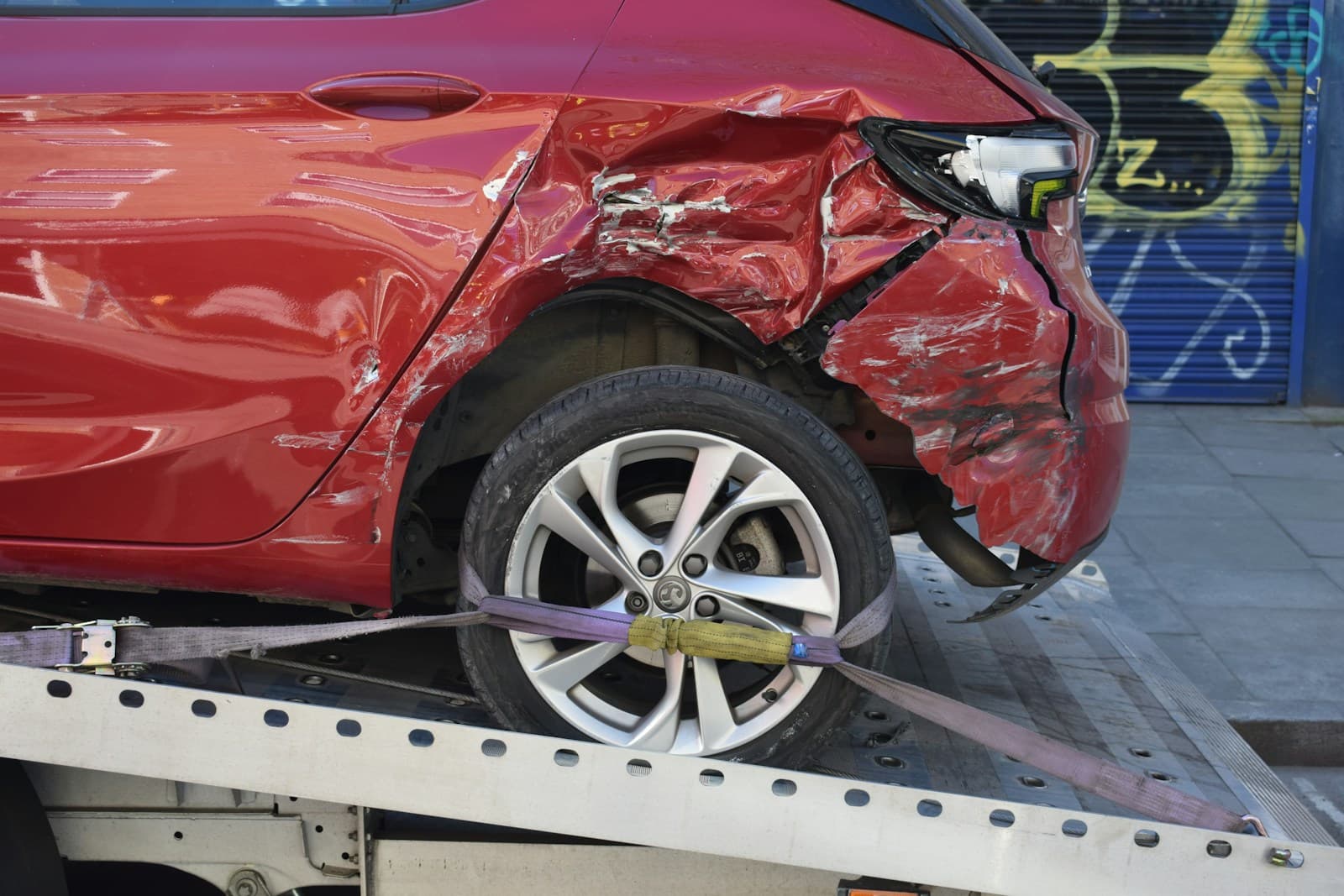
Most senior drivers who drop coverage in New Hampshire do so assuming their clean record protects them. It doesn't. New Hampshire law requires you to pay all damages from an at-fault accident immediately, and the state will suspend your license until you do. For a driver with $200,000 in retirement savings, a serious injury accident could consume half that amount in a state where the average bodily injury settlement exceeds $85,000.
Mature Driver Course Discounts: The Program New Hampshire Doesn't Require But Carriers Reward
New Hampshire does not mandate that insurers offer mature driver course discounts, but nearly every major carrier operating in the state provides them anyway — typically 8–15% off your premium for completing an approved defensive driving course. AARP Smart Driver and AAA Safe Driving for Mature Operators are the most widely accepted programs, both available online and usually completed in 4–6 hours.
The discount applies at renewal after you submit your completion certificate, but it's not automatic. If you completed a course two years ago and never told your insurer, you've been overpaying every month since. Most carriers allow the discount to continue for three years before requiring recertification, and the course fee ($20–$35 for AARP members, $25–$45 for non-members) is recovered within the first two months of reduced premiums for drivers paying $800+ annually.
Carriers differ on whether the discount stacks with other senior discounts or replaces them. Geico and Progressive typically allow stacking with low-mileage and loyalty discounts; State Farm often applies the largest single discount only. Call your agent before enrolling to confirm your specific stacking rules — a 10-minute conversation can clarify whether the course saves you $80 or $180 per year.
Compare rates from carriers that specialize in senior drivers
Mature driver discounts, low-mileage rates, and coverage reviews — see what you're actually eligible for.
Get Your Free Quote✓ Mature Driver Discounts✓ No Obligation✓ Licensed Carriers✓ All 50 States
How Medicare Interacts with Medical Payments Coverage in New Hampshire
New Hampshire does not require Medical Payments (MedPay) or Personal Injury Protection (PIP) coverage, but for senior drivers on Medicare, carrying at least $5,000–$10,000 in MedPay often makes sense. Medicare covers most accident-related medical bills, but it doesn't cover deductibles, copays, or services received in the first 24–48 hours before Medicare processes the claim. MedPay fills those gaps immediately, without a deductible.
If you're injured in an accident and transported by ambulance, Medicare Part B typically covers 80% of the ambulance cost after you meet your annual deductible. The remaining 20% — often $200–$400 for a local transport — comes out of pocket unless you have MedPay. The same applies to emergency room copays and follow-up specialist visits in the weeks after an accident. MedPay costs roughly $3–$8 per month for $5,000 in coverage, and it pays directly to you or the provider without affecting your auto insurance rates.
Medicare does not cover injuries to passengers in your vehicle who aren't Medicare-eligible, such as a visiting grandchild or friend. MedPay extends to all occupants in your car regardless of age or insurance status, making it a low-cost way to avoid liability if someone riding with you is injured and their health insurance denies the claim as auto-related.
Low-Mileage and Telematics Programs for Retired Drivers
If you're no longer commuting and drive fewer than 7,500 miles per year, you likely qualify for a low-mileage discount of 5–20% depending on the carrier and your annual mileage. In New Hampshire, where the average driver logs 12,000+ miles annually, retired drivers who use their vehicle primarily for errands, medical appointments, and occasional trips represent lower actuarial risk — but only if the insurer knows your reduced mileage.
Progressive's Snapshot, Geico's DriveEasy, and Nationwide's SmartMiles are the most widely available telematics programs in New Hampshire. Snapshot and DriveEasy monitor driving behavior (hard braking, speed, time of day) and mileage; SmartMiles charges a low base rate plus a per-mile fee, making it ideal for drivers logging under 5,000 miles per year. Initial discounts range from 10–15%, with potential increases to 25–30% after six months of safe, low-mileage driving.
Some senior drivers resist telematics due to privacy concerns or unfamiliarity with the app-based setup. If that describes you, ask your insurer about odometer-based low-mileage discounts instead. Most carriers will reduce your rate 5–10% if you submit an annual odometer photo proving mileage under 7,500. It's manual, it's simple, and it doesn't require a smartphone.
When Full Coverage No Longer Makes Financial Sense
If your vehicle is paid off and worth less than $4,000–$5,000, the annual cost of comprehensive and collision coverage often exceeds the maximum payout you'd receive after the deductible. New Hampshire seniors driving 2010–2015 model-year sedans in good condition typically face this calculation between ages 68 and 72, when the vehicle's depreciated value falls below the threshold where full coverage is cost-justified.
Comprehensive and collision premiums for a $4,000 vehicle in New Hampshire average $40–$70 per month combined. With a standard $500 deductible, the maximum net payout after a total loss is $3,500. If you've been claim-free for five years, you're paying $2,400–$4,200 in premiums to protect an asset that maxes out at $3,500 in recovery. The math shifts heavily toward liability-only coverage once the vehicle value drops below $5,000.
Before dropping collision and comprehensive, confirm you have sufficient savings to replace the vehicle out of pocket if it's totaled or stolen. For senior drivers with $10,000+ in accessible emergency savings, self-insuring a $4,000 vehicle is financially sound. For those with limited liquid assets, maintaining comprehensive at least — which covers theft, vandalism, and weather damage for $15–$25/month — provides peace of mind without the cost of collision coverage.
State-Specific Programs and Resources for New Hampshire Senior Drivers
New Hampshire does not offer state-funded mature driver programs, but the New Hampshire Department of Safety coordinates with AARP and AAA to provide in-person and online defensive driving courses year-round. These courses satisfy the requirements for insurer discounts and also qualify for a safe driver point reduction if you've accumulated minor violations.
The New Hampshire Insurance Department maintains a rate comparison tool that allows you to compare premiums across carriers for identical coverage levels. This tool is particularly useful for senior drivers evaluating whether their current insurer remains competitive after age-based rate increases. Comparing quotes annually takes 15–20 minutes and frequently uncovers savings of $300–$600 per year for drivers over 70 who haven't shopped rates in five years.
If you're considering whether to maintain insurance in New Hampshire despite the lack of a mandate, consult the state's financial responsibility guidelines published by the Department of Safety. The minimum proof-of-responsibility threshold is $25,000 per person and $50,000 per accident for bodily injury, and $25,000 for property damage — figures that sound modest but represent the floor, not the ceiling, of your financial exposure in a serious crash.