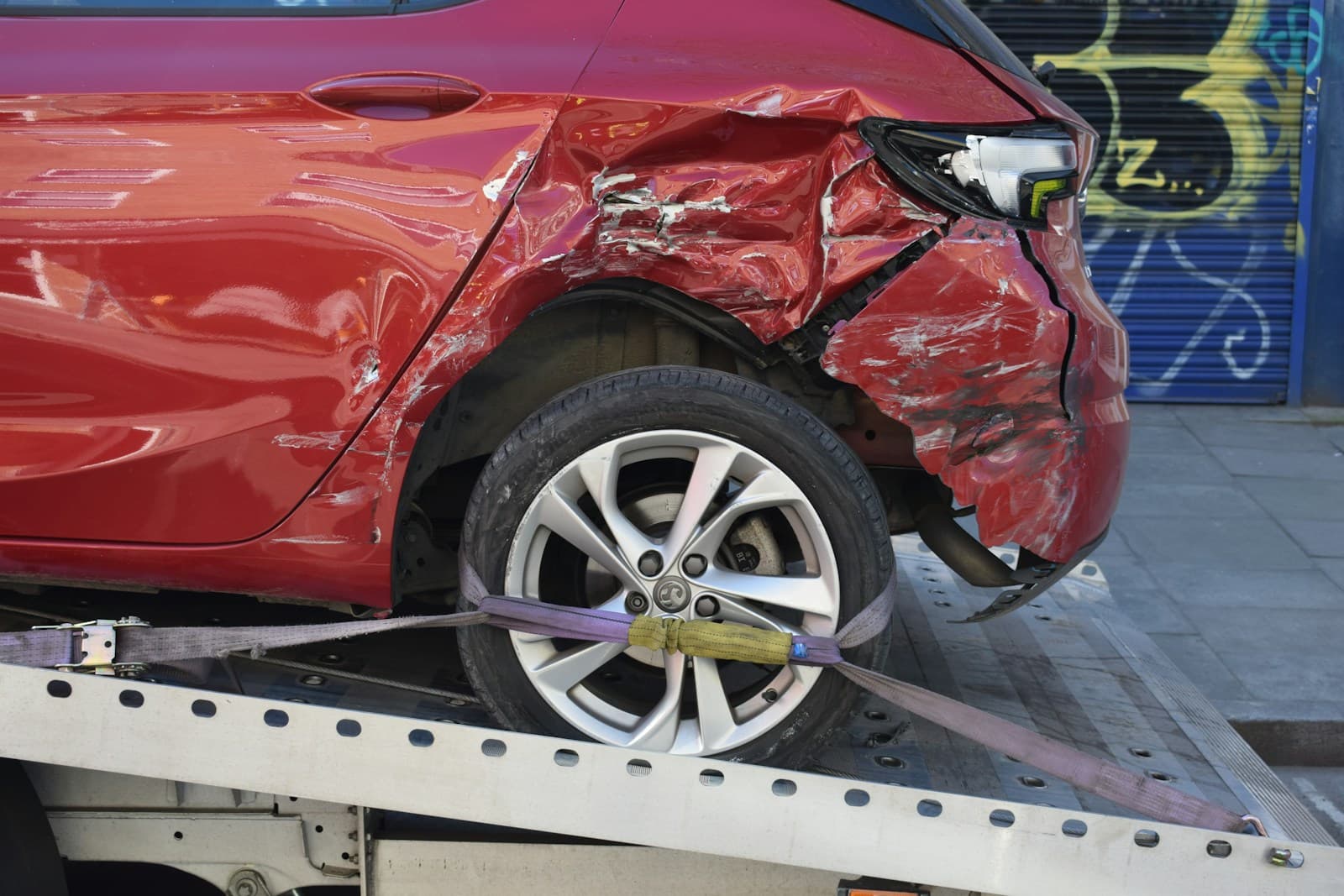
If you've been labeled high-risk after decades of safe driving, the underwriting process works differently than it did when you were younger — and understanding what underwriters actually review can help you find coverage at rates that don't assume you're the same risk as a 22-year-old with a DUI.
Why Senior Drivers Enter High-Risk Pools — And How It Differs From Younger Drivers
The high-risk classification triggers differently for drivers over 65 than for younger adults, yet most underwriting explanations treat all high-risk drivers identically. A senior driver typically enters high-risk status through one of three paths: a single serious violation after decades of clean driving (such as an at-fault accident with injuries), accumulation of minor violations within a short window (two speeding tickets in 18 months, for example), or a medical event that triggered a state reporting requirement and subsequent license restriction.
Unlike younger high-risk drivers who often carry patterns of risky behavior, underwriters reviewing senior applicants focus heavily on recency and context — a 70-year-old with a single at-fault accident after 40 years of clean driving presents entirely different actuarial risk than a 25-year-old with the same violation. Most carriers apply a three-year lookback window for violations, meaning an accident from four years ago won't factor into your current high-risk classification even if it felt recent to you.
The financial impact varies significantly by state and violation type. A senior driver in California with a single at-fault accident typically sees rates increase 30-40% at renewal, while the same violation in Florida might trigger a 45-55% increase. A DUI at age 68 produces average rate increases of 80-120% depending on state, but unlike younger drivers, seniors rarely face outright policy cancellation from their current carrier for a first offense — they're moved to a high-risk tier within the same company.
What most senior drivers don't realize: many states require insurers to offer reinstatement pathways specifically designed for older drivers. These programs allow you to exit high-risk status faster than standard timelines if you complete state-approved defensive driving courses or agree to telematics monitoring that demonstrates safe driving patterns over 6-12 months.
What Underwriters Actually Review When You Apply as a Senior High-Risk Driver
The underwriting file for a senior high-risk applicant contains more data points than most drivers expect, and understanding what carries the most weight helps you present your situation accurately. Underwriters pull your motor vehicle record (MVR) directly from your state DMV, which shows all moving violations, at-fault accidents, and license suspensions from the past 3-5 years depending on state retention rules. They also review your CLUE report (Comprehensive Loss Underwriting Exchange), an insurance industry database that tracks all claims you've filed across all carriers for the past seven years, including comprehensive claims like hail damage that don't affect your driving record but do signal claims frequency.
Your credit-based insurance score appears in most states' underwriting files and often surprises senior applicants — it's not your FICO credit score, but a proprietary calculation that correlates bill-paying patterns with insurance claim likelihood. Senior drivers with excellent credit can see rate reductions of 20-30% even in high-risk pools, which partially offsets violation surcharges. Five states (California, Hawaii, Massachusetts, Michigan, and Maryland) prohibit using credit in auto insurance pricing, meaning senior high-risk drivers in those states face underwriting based purely on driving record and claims history.
Underwriters also evaluate coverage continuity, which works in favor of most senior drivers. If you've maintained continuous insurance for decades without lapses, that history demonstrates financial responsibility and reduces your risk classification even with a recent violation. A 72-year-old with 50 years of continuous coverage and one recent accident will typically receive better rates than a 40-year-old with 15 years of coverage and an identical violation.
Less obvious factors include annual mileage (critical for seniors who no longer commute), vehicle safety ratings (newer vehicles with advanced safety features can reduce high-risk premiums by 10-15%), and in some states, completion of state-approved mature driver courses. The AARP Smart Driver course or AAA Senior Drivers course completion shows on some state MVRs and gives underwriters a measurable offset against violation points — yet fewer than 15% of eligible senior high-risk drivers have taken these courses before applying for coverage.
Compare rates from carriers that specialize in senior drivers
Mature driver discounts, low-mileage rates, and coverage reviews — see what you're actually eligible for.
Get Your Free Quote✓ Mature Driver Discounts✓ No Obligation✓ Licensed Carriers✓ All 50 States
State-Specific High-Risk Programs for Senior Drivers You Won't Hear About from Standard Agents
Every state maintains an assigned risk pool or shared market mechanism for drivers who cannot obtain coverage in the voluntary market, but 17 states operate specialized programs or rate modifications specifically for senior drivers classified as high-risk — and these programs rarely appear in standard agent quotes unless you explicitly ask. These aren't broadly advertised because they're regulatory requirements, not profit centers.
California operates the California Automobile Assigned Risk Plan (CAARP), but senior drivers over 65 with a single violation and no prior high-risk history often qualify for the Good Driver Discount even while in CAARP, reducing premiums by 20%. Florida's requirement that all carriers writing in the state participate in the Florida Automobile Joint Underwriting Association means senior high-risk drivers have access to dozens of participating insurers, creating actual price competition even in the assigned risk market — rates can vary by 40-60% between FAJUA participants for identical coverage.
New York requires insurers to offer accident forgiveness after three years of claim-free driving to policyholders over 65, even those previously classified as high-risk. This means a senior driver who entered high-risk status at 68 due to an at-fault accident can return to standard rates by age 71 if no additional violations occur. Pennsylvania mandates mature driver course discounts of at least 5% for drivers 55 and older, and these discounts apply even to high-risk policies — a detail most agents omit because it requires additional paperwork.
Texas operates a tiered high-risk system where seniors with medical-related license restrictions face different underwriting than those with violation-based restrictions, and the medical restriction pool typically offers 15-25% lower rates because the restrictions themselves (such as daylight-only driving or limited radius) reduce actuarial risk. Illinois, Michigan, and Ohio offer similar medical restriction carve-outs that standard underwriting tools don't automatically surface.
How to Navigate the Application Process to Get the Most Accurate Quote
The high-risk application process for senior drivers requires more preparation than standard applications because errors or omissions trigger automatic declines that take 30-60 days to appeal. Before contacting any carrier or entering information into an online form, obtain your official MVR from your state DMV (costs $5-15 in most states, available online in 43 states) and your CLUE report from LexisNexis (free once per year at personalreports.lexisnexis.com). These documents show exactly what underwriters will see, and discrepancies between your memory and official records are common — especially for accident dates and violation classifications.
When completing the application, the effective date matters more than most senior drivers realize. If you're currently uninsured due to a carrier non-renewal, every day without coverage adds to a coverage gap that underwriters treat as a separate risk factor. However, if you're applying 15-30 days before your current policy expires, you can lock in rates while still covered and avoid any gap notation. Starting coverage mid-month versus on the first can shift your premium by 8-12% in some states due to how insurers calculate pro-rated high-risk surcharges.
Be exhaustively specific about annual mileage, because high-risk underwriting for seniors often includes mileage verification requirements that don't apply to standard policies. If you estimate 8,000 miles annually, the insurer may require odometer photos at policy inception and renewal. Underestimating mileage to reduce premiums can void claims later — but accurately reporting low mileage (under 5,000 miles annually) qualifies many senior high-risk drivers for low-mileage program tiers that reduce rates by 15-25%.
Disclosure of defensive driving course completion must happen during application, not after policy issuance — most state regulations require the discount to apply from policy inception if the course was completed within 36 months of the application date. Bring your course completion certificate to the application meeting or have the certificate number ready for online applications. The discount typically ranges from 5-15% depending on state mandate, and it applies for three years before requiring course renewal.
Rate Structures for Senior High-Risk Drivers: What You'll Actually Pay
High-risk auto insurance premiums for senior drivers vary more widely by state, carrier, and individual violation profile than standard-risk coverage, making national averages nearly meaningless — but understanding the typical range and surcharge structure helps you evaluate whether a quote is competitive or inflated. A 68-year-old driver with a single at-fault accident and minimum state liability coverage might pay $95-140/mo in North Carolina, $160-225/mo in Michigan, or $210-290/mo in Nevada for identical coverage limits.
Violation surcharges stack differently than most drivers expect. An at-fault accident typically adds a 25-40% surcharge to your base premium, which persists for three years in most states. A speeding ticket (15+ mph over limit) adds 15-25%. If you have both, the surcharges often compound rather than simply adding — a base premium of $100/mo becomes $125/mo with the accident surcharge, then that $125/mo is increased by the speeding surcharge, resulting in roughly $150/mo rather than the $140/mo you'd get from simple addition. DUI violations carry flat surcharges rather than percentage increases in most high-risk pools, typically adding $800-1,400 annually regardless of your base premium.
Full coverage (liability plus comprehensive and collision) on a paid-off vehicle often doesn't make financial sense for senior high-risk drivers once the vehicle reaches 8-10 years old. If you're paying $185/mo for high-risk full coverage on a 2014 sedan worth $6,500, you're paying $2,220 annually for collision/comprehensive coverage with a $500-1,000 deductible — meaning you'd need to total the vehicle to break even, and even then you'd net only $5,500-6,000 after the deductible. Dropping to liability-only in this scenario typically reduces premiums to $90-115/mo, a savings of $840-1,140 annually.
Medical payments coverage deserves special attention for senior high-risk drivers because it coordinates with Medicare in ways that affect out-of-pocket costs after an accident. Medicare is always secondary to auto insurance medical coverage, meaning if you carry $5,000 in medical payments coverage and incur $8,000 in accident-related medical bills, your auto policy pays the first $5,000 and Medicare covers eligible remaining costs. Without medical payments coverage, you face Medicare deductibles and co-pays immediately. In high-risk policies, medical payments coverage typically adds $8-15/mo for $5,000 in coverage, which is cost-effective for most seniors given Medicare's cost-sharing structure.
How Long You'll Remain in High-Risk Status and What Reduces That Timeline
The duration of high-risk classification isn't a fixed term — it's a rolling window based on when violations age off your record and when you meet carrier-specific criteria for reclassification. Most moving violations remain on your MVR for three years from the conviction date (not the violation date), while at-fault accidents typically remain for three to five years depending on state reporting rules. A DUI stays on your record for 5-10 years in most states, with California, Florida, and New York maintaining 10-year DUI lookback periods.
You don't automatically exit high-risk status when a violation ages off your record — you must request re-underwriting or shop for new coverage. Many senior drivers remain in high-risk pools and pay elevated premiums for years after violations have disappeared from their MVR simply because they didn't proactively seek reclassification. Setting a calendar reminder for 37 months after your violation conviction date (allowing one month buffer beyond the standard three-year window) prompts you to request fresh quotes when you're most likely to qualify for standard rates again.
Completing a state-approved defensive driving course can accelerate your exit from high-risk status in 22 states that mandate point reduction or violation dismissal for course completion. In New York, completing a DMV-approved Point and Insurance Reduction Program removes up to four points from your record, which can shift you from high-risk to standard classification immediately if those points were the only factor elevating your risk tier. Texas allows one violation dismissal every 12 months through defensive driving course completion for drivers who haven't used the option in the prior 12 months — a 70-year-old with a recent speeding ticket can have it removed entirely by completing the course before the conviction appears on their MVR.
Telematics programs (usage-based insurance) increasingly offer senior high-risk drivers a data-driven path to rate reduction without waiting for violations to age off. Programs like Allstate Drivewise, Progressive Snapshot, or State Farm Drive Safe & Save monitor braking patterns, speed, time of day, and mileage. Senior drivers who demonstrate consistently safe driving behavior through telematics can earn 10-25% rate reductions within the first six months, even while violations remain on their record — the real-time data overrides historical risk assessment. These programs particularly benefit seniors whose violation was a one-time incident rather than a pattern, which describes the majority of senior high-risk drivers.