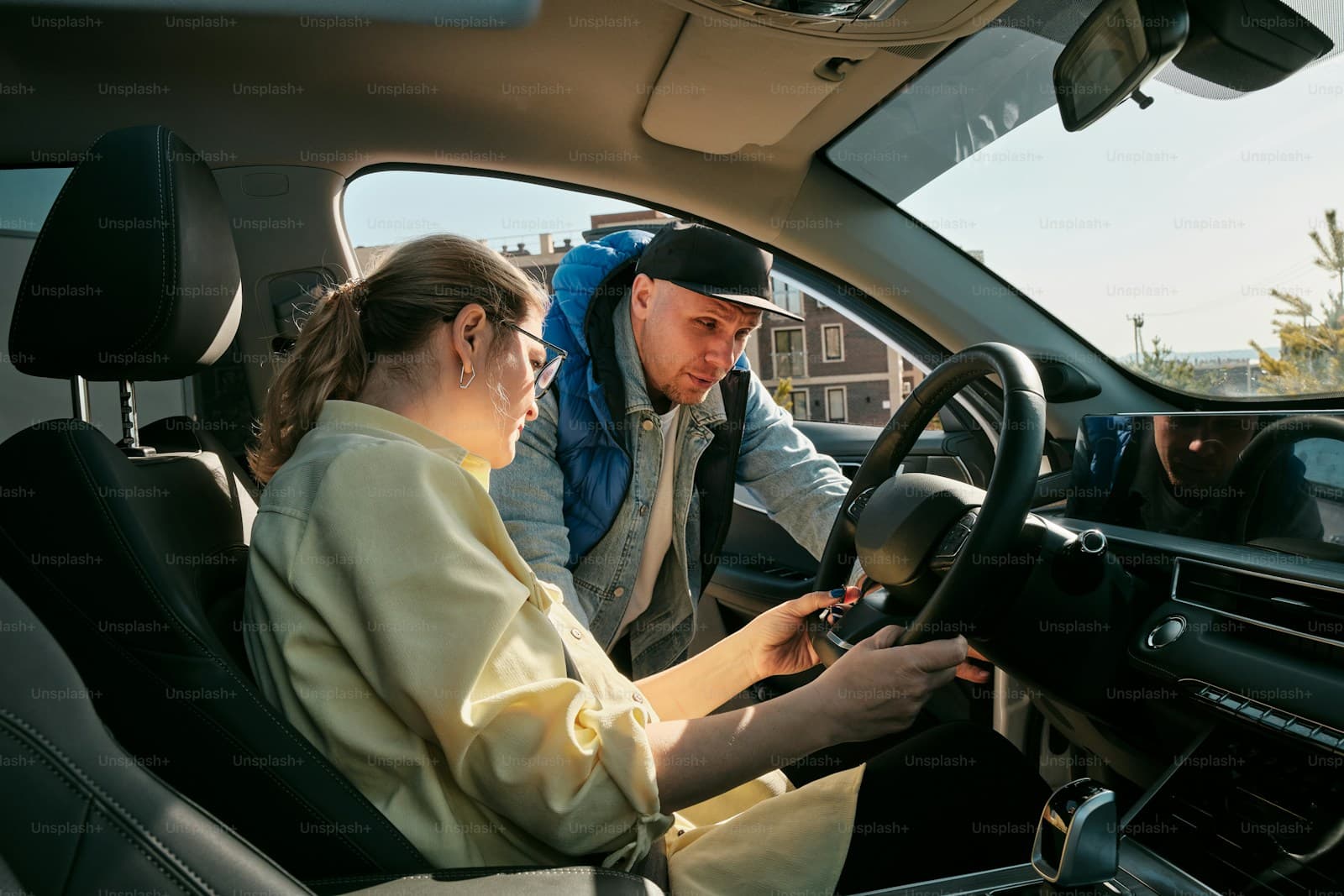
Many insurers offer discounts when you voluntarily limit your driving — avoiding highways, night driving, or long trips — but most won't honor restrictions documented informally or after the fact.
Why Carriers Discount Voluntary Restrictions — and Why Documentation Timing Matters
Insurance companies price risk based on exposure. When you voluntarily restrict your driving to daylight hours only, avoid highways, or limit trips to within 10 miles of home, you're reducing the statistical likelihood of certain claim types. Nighttime accidents account for roughly 50% of fatal crashes despite representing only 25% of miles driven, according to the National Safety Council. Highway driving increases both claim frequency and severity compared to local streets.
The discount exists because the data supports it — but only if the restriction is documented before the policy period begins or at renewal. Carriers treat post-claim restrictions as inadmissible because they can't verify whether the restriction was actually in place when the accident occurred. A carrier that offers a 10% discount for daylight-only driving won't apply it retroactively if you mention the restriction only after filing a claim.
Most voluntary restriction discounts range from 5% to 15% depending on the restriction type and your base premium. For a senior driver paying $1,200 annually, that's $60 to $180 saved each year — but only if the documentation process is completed correctly and updated at every renewal.
What Qualifies as Accepted Documentation
Carriers require restrictions to be logged in your driver profile or policy record using their specific forms or online portals. An email to your agent saying "I don't drive at night anymore" is not sufficient documentation in most cases. The restriction must be entered into the underwriting system as a formal policy endorsement or profile notation, with your signature or electronic acknowledgment confirming the limitation.
Accepted methods typically include: carrier-specific driver profile updates completed through your online account, signed restriction endorsement forms provided by your agent and attached to your policy documents, or participation in a usage-based insurance program that electronically verifies compliance with the stated restriction. Some carriers allow restrictions to be added mid-term, but the discount applies only from the date the restriction is formally logged — not retroactively.
Informal documentation fails because it doesn't create an auditable record tied to your policy number and effective dates. A note in your agent's file, a verbal agreement during a phone call, or a personal letter you keep in your glove box won't pass underwriting review if your premium or claim is later audited. The restriction must exist in the carrier's system as a rated factor.
Compare rates from carriers that specialize in senior drivers
Mature driver discounts, low-mileage rates, and coverage reviews — see what you're actually eligible for.
Get Your Free Quote✓ Mature Driver Discounts✓ No Obligation✓ Licensed Carriers✓ All 50 States
Common Voluntary Restrictions and Their Discount Ranges
Daylight-only driving is the most common voluntary restriction among drivers 65 and older who no longer commute. This restriction typically excludes driving between sunset and sunrise, with exact hours defined by your policy. Discounts range from 5% to 12% depending on the carrier and your location. States with higher nighttime accident rates, such as Florida and Arizona, often see the upper end of that range.
Mileage caps represent another category. If you drive fewer than 5,000 miles per year — common for retirees who no longer commute — many carriers offer low-mileage discounts of 10% to 20%. This requires either self-reporting your odometer reading at renewal or participation in a telematics program that verifies actual mileage. Self-reported mileage must be documented with photos of your odometer or through your carrier's mobile app; estimates are not accepted.
Geographic restrictions limit your driving to a defined radius from your home address, such as within 10 or 25 miles. These are less common but can yield 8% to 15% discounts if your carrier offers them. Highway avoidance — agreeing not to drive on interstate highways or roads with speed limits above 55 mph — is offered by some regional carriers and typically provides 6% to 10% off. Each restriction requires a separate endorsement and must be documented individually; you cannot bundle informal agreements into a single discount.
How State Requirements Affect Voluntary Restrictions
Some states mandate that carriers offer specific discounts when drivers voluntarily restrict their coverage or usage, while others leave it entirely to the carrier's discretion. California, for example, requires insurers to offer a low-mileage discount to drivers who fall below certain annual mileage thresholds, and the discount must be clearly disclosed at application and renewal. In contrast, states like Texas and Georgia treat voluntary restriction discounts as optional carrier programs with no mandated structure.
States with mature driver course mandates — such as Florida, New York, and Illinois — sometimes tie those course completions to voluntary restriction discounts. Florida requires carriers to offer a course discount but allows them to structure it as a reduction tied to defensive driving behaviors, which may include documented restrictions. The course completion certificate alone doesn't trigger the restriction discount; you must separately document the specific behavior change.
Documentation requirements also vary by state. Some states require carriers to provide written notice of available restriction discounts at renewal, while others place the burden entirely on the policyholder to inquire. If you live in a state with mandated discount transparency — such as Maryland or Pennsylvania — your renewal notice should list available restriction options. In states without this requirement, you'll need to ask your agent directly which restrictions your carrier recognizes and what documentation process they require.
How to Request and Document a Restriction with Your Current Carrier
Contact your agent or carrier's customer service line at least 30 days before your renewal date and ask specifically which voluntary driving restrictions they offer and what the documentation process requires. Do not assume your carrier offers all restriction types; many regional insurers limit options to mileage caps and daylight-only driving. Request the formal endorsement form or portal link where you'll complete the restriction.
Complete the documentation during the same call or within 48 hours. If your carrier uses an online portal, log in and navigate to your driver profile or policy endorsements section. Look for options labeled "driver restrictions," "usage limitations," or "discount qualifications." Enter the restriction details exactly as defined by the carrier — vague descriptions like "mostly daytime driving" will be rejected. If the process requires a signed form, return it by certified mail or upload it through the carrier's document portal to create a timestamp.
Verify the discount appears on your next renewal declaration page before the new policy period begins. Your declaration page should list the restriction as a rated factor with the corresponding discount percentage or dollar amount. If it does not appear, contact your agent immediately — the restriction was not successfully logged. Do not assume silence means approval; if the discount isn't printed on your declaration page, it isn't active on your policy.
What Happens If You Violate a Documented Restriction
Violating a voluntary restriction does not automatically void your coverage, but it does expose you to claim denial or premium adjustment depending on the circumstances of the violation. If you documented a daylight-only restriction and are involved in an accident at 9 p.m., the carrier will investigate whether the restriction was material to the claim. If the accident was caused by low visibility or conditions specific to nighttime driving, they may deny the claim or reduce the payout proportionally.
Carriers handle violations differently. Some treat a single violation as a policy breach that triggers removal of the discount going forward, while others assess violations on a case-by-case basis. If you're caught driving outside your documented restrictions multiple times — verified through telematics data or claims history — most carriers will remove the discount at your next renewal and may reclassify you as a standard-risk driver, which can increase your premium by 15% to 25% beyond just losing the discount.
If your circumstances change and you can no longer maintain a restriction — for example, you need to resume nighttime driving to care for a family member — contact your carrier immediately to remove the restriction from your policy. You'll lose the discount, but you'll avoid claim denial or fraud allegations if an accident occurs. Most carriers allow mid-term restriction removal with premium adjustment effective the date you request the change. Document the removal request the same way you documented the original restriction: through formal endorsement or portal update, not a phone call alone.
When Voluntary Restrictions Make Sense for Your Situation
Voluntary restrictions offer the best value when your actual driving behavior already aligns with the restriction and you can sustain it for at least 12 months. If you genuinely drive only during daylight hours and have no foreseeable need to change that pattern, a 10% discount on a $1,400 annual premium saves you $140 per year with no behavior modification required. The restriction simply formalizes what you already do.
Restrictions become less practical if your driving patterns are inconsistent or seasonal. If you avoid highways most of the year but take a 200-mile interstate trip twice annually to visit family, a highway restriction will either force you to use secondary roads — adding hours to your trip — or require you to violate the restriction and risk claim complications. Similarly, daylight-only restrictions don't work well for drivers in northern states during winter months when daylight ends at 4:30 p.m. and you still need to drive to evening appointments.
Before committing to a restriction, track your actual driving for 30 days using a simple mileage log or your vehicle's trip computer. Note the time of day, distance, and road types for every trip. If 95% or more of your trips fall within the proposed restriction, it's worth pursuing. If you're regularly outside the restriction boundaries — even for legitimate reasons — the discount isn't worth the claim risk or the stress of monitoring every trip.