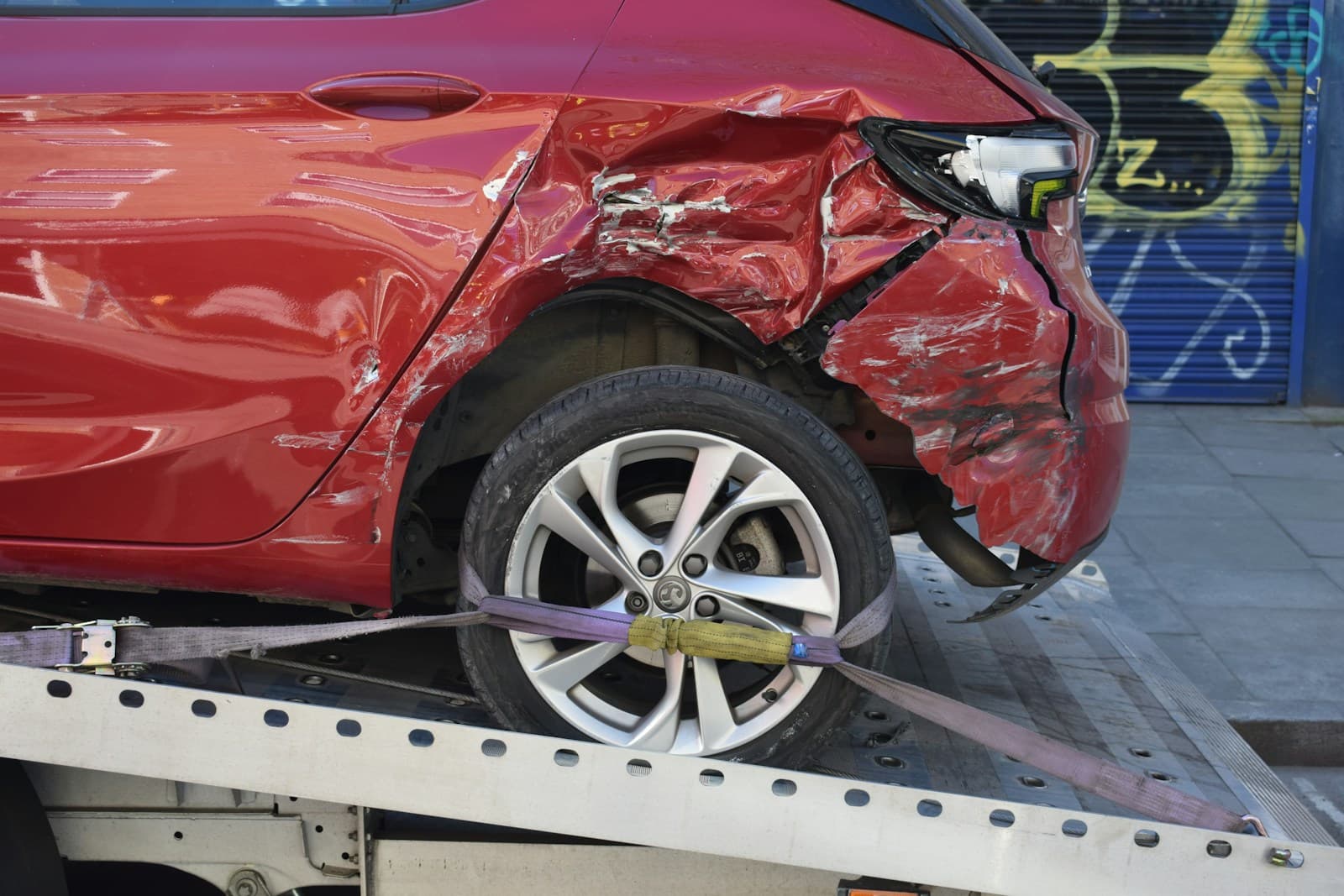
A medical episode at the wheel doesn't automatically cancel your policy, but how you report it and whether your doctor files a DMV notification can determine whether your rates spike, your coverage continues, or your license enters review.
How Your Insurance Company Learns About a Medical Episode
Insurers don't receive automatic notifications when you have a medical episode while driving. They learn about it through three specific channels: an accident report filed by law enforcement, a claims filing you initiate for vehicle damage or injury, or a state DMV notification that triggers a license review. The sequence matters because filing a claim for an accident caused by a medical episode typically raises rates 20–40% at renewal, while a license suspension from unreported medical conditions can make you uninsurable with standard carriers.
Most states require physicians to report specific conditions to the DMV — epilepsy, syncope, severe diabetes, dementia, and cardiac arrhythmias are common triggers — but the reporting threshold and physician discretion vary widely. California and Oregon mandate reporting for conditions likely to cause loss of consciousness, while states like Florida and Texas leave reporting entirely to physician judgment. If your doctor files a report, the DMV may initiate a license review before your insurer ever learns about the episode.
The gap between the medical event and insurance consequences creates a window where you can address the underlying condition, complete required medical clearances, and potentially avoid both license suspension and rate increases. If you experience a medical episode that doesn't result in an accident or police report, your insurer won't know unless the DMV suspends your license or you voluntarily disclose it when renewing your policy.
What Happens to Your Policy Immediately After an Episode
Your policy remains active after a medical episode unless your license is suspended or you file a claim that reveals the medical cause. Insurers cannot cancel a policy mid-term in most states without proof of license suspension, material misrepresentation, or nonpayment. If you were involved in an accident during the episode and file a collision or liability claim, the claims adjuster will document the medical event in your file, but your current policy term continues through its expiration date.
The rating impact appears at renewal. If the medical episode caused an at-fault accident, expect the same surcharge you'd receive for any at-fault collision — typically 20–40% depending on your state and carrier. If the episode resulted in a citation for reckless or careless driving, some insurers apply an additional violation surcharge of 10–25%. The medical nature of the episode doesn't reduce the surcharge; carriers rate the accident itself, not the cause.
If your license enters medical review and the DMV imposes restrictions — daytime-only driving, limited radius, required annual medical certifications — most standard insurers will continue coverage but may decline to renew if restrictions remain at your policy expiration. High-risk carriers that specialize in restricted licenses typically charge 30–60% more than standard rates for drivers with medical restrictions.
Compare rates from carriers that specialize in senior drivers
Mature driver discounts, low-mileage rates, and coverage reviews — see what you're actually eligible for.
Get Your Free Quote✓ Mature Driver Discounts✓ No Obligation✓ Licensed Carriers✓ All 50 States
State-Specific DMV Medical Reporting and License Review Timelines
The speed and severity of DMV response varies dramatically by state. In California, a physician-reported medical condition triggers a Driver Safety hearing within 30–60 days, during which your license remains valid unless the DMV issues an immediate suspension for conditions posing imminent public risk. You can drive while awaiting the hearing, but your insurer may learn of the pending review if you're involved in any subsequent incident requiring a license verification.
States with mandatory reporting requirements — including California, Delaware, Nevada, New Jersey, Oregon, and Pennsylvania — process medical notifications faster than states relying on voluntary reporting. In Pennsylvania, the DMV's Medical Advisory Board reviews reported conditions within 45 days and can impose restrictions or require medical clearance before renewal. New Jersey requires annual medical recertification for drivers over 65 with reported conditions, which creates an ongoing documentation requirement your insurer may eventually discover during policy underwriting.
If you're notified of a pending DMV medical review, contact your insurance agent immediately. Some insurers offer assistance navigating the medical clearance process, and early disclosure prevents the appearance of concealment if the DMV later suspends your license. Waiting until your license is actually suspended forces you into the high-risk market, where rates average $180–$240/mo for liability-only coverage compared to $90–$130/mo for standard senior rates with the same coverage limits.
How Medical Payments Coverage and Medicare Interact After an Episode
If you're injured during a medical episode while driving, your auto policy's medical payments coverage (MedPay) or personal injury protection (PIP) pays first, before Medicare. This matters because Medicare has subrogation rights — if Medicare pays your accident-related medical bills and your auto insurance later pays a claim, Medicare can demand reimbursement. MedPay coverage of $5,000–$10,000 can cover initial emergency treatment and prevent Medicare subrogation complications.
For senior drivers, the interaction becomes more complex if the medical episode itself required treatment. If you had a stroke while driving and the resulting accident caused additional injuries, your auto insurance typically covers only accident-related injuries — the collision trauma, not the underlying stroke treatment. Medicare covers the stroke itself. Insurance adjusters often dispute which injuries resulted from the accident versus the precipitating medical event, which can delay claims and create billing confusion.
Some states require PIP coverage that pays regardless of fault and coordinates with Medicare differently than MedPay. In Michigan and Florida, PIP is mandatory and pays before Medicare, but both states have complex coordination-of-benefits rules that can leave gaps if your PIP limits are exhausted. Seniors in PIP states should verify whether their policy includes a Medicare offset provision, which reduces PIP payments by amounts Medicare will cover — this effectively shifts costs to Medicare and may trigger subrogation later.
Whether You Must Disclose a Medical Episode When Renewing or Changing Carriers
Standard renewal applications rarely ask directly about medical episodes. They ask whether your license has been suspended, whether you've had accidents or violations, and sometimes whether you have conditions that impair your ability to drive safely. You must answer these questions truthfully, but you're not required to volunteer information the application doesn't request. If your license wasn't suspended and the episode didn't result in an accident or citation, most renewal applications won't capture it.
When shopping for new coverage, applications typically ask: "Do you have any physical or mental condition that affects your ability to operate a vehicle safely?" This question requires disclosure if your physician has diagnosed a condition likely to recur while driving, even if you've had no accidents. Failure to disclose can void coverage if you later file a claim following another episode. Insurers can deny claims for material misrepresentation if they can prove you knowingly concealed a relevant medical condition at application.
The disclosure calculus changes if your doctor has cleared you to drive or if you've completed treatment that resolves the underlying condition. A one-time episode — a medication reaction, dehydration-induced syncope, or a cardiac event now controlled by a pacemaker — may not require disclosure if your physician documents you're medically cleared to drive without restrictions. Obtain written medical clearance and keep it with your insurance documents in case your insurer later questions your application answers.
How to Manage Insurance Costs After a Medical Review or License Restriction
If the DMV imposes medical restrictions on your license, your first renewal with those restrictions is the critical pricing moment. Standard carriers typically non-renew policies for drivers with significant restrictions — commercial-vehicle-only prohibitions, required annual medical certifications, or limited-area permissions. Before your policy expires, request quotes from high-risk carriers that specialize in medically restricted drivers, including The General, Progressive's high-risk division, and state assigned-risk pools.
High-risk premiums for restricted licenses average 40–70% higher than standard rates, but you can offset some of the increase by adjusting coverage. If you drive a paid-off vehicle worth less than $5,000 and your comprehensive and collision premiums exceed $40–$50/mo combined, dropping those coverages saves $480–$600 annually. Maintain liability limits at your current levels — 100/300/100 is standard for senior drivers with assets to protect — but eliminate physical damage coverage that no longer makes economic sense.
Some states offer formal medical review programs that can restore full driving privileges after a waiting period with no incidents. California's Negligent Operator Treatment System (NOTS) allows drivers to petition for restriction removal after 12–18 months of violation-free driving. Successfully removing restrictions restores access to standard-market insurance. During the restriction period, maintain a clean record meticulously — even a minor speeding ticket can extend restrictions and justify non-renewal by high-risk carriers already covering you at elevated rates.